

















Hyderabad is poised to transform into a major high-speed rail hub as the Union government unveils plans for three new bullet train corridors connecting the city to Chennai, Bengaluru, and Pune. Announced by Union Minister for Railways Ashwini Vaishnaw on July 11, 2026, this infrastructure push is backed by a **₹5,400 crore budget allocation** specifically for railway development in Telangana, as part of a massive **five trillion rupee nationwide investment** in high-speed rail projects.
- Strategic Connectivity: New corridors will link Hyderabad to Bengaluru, Chennai, and Pune with travel times reduced to approximately 2 hours 35 minutes, 3 hours, and 2 hours respectively.
- Project Status: The Detailed Project Report (DPR) for the Pune-Hyderabad line is ready, while DPRs for the 705-km Chennai and 626-km Bengaluru routes are expected between September 2026 and March 2027.
- Technical Specifications: Trains will run on elevated, standard-gauge tracks at speeds of up to 320 kmph, using a fully indigenous ‘Make in India’ ecosystem.
Advancing High-Speed Infrastructure
The South Central Railway (SCR), in coordination with RITES, has already commenced final locational surveys. The National High-Speed Rail Corporation Limited (NHSRCL) has refined the route alignments to optimize efficiency, notably reducing the Hyderabad-Chennai corridor’s length within Telangana to 123 km. These lines will be entirely independent of existing rail networks to ensure seamless, high-velocity operations comparable to the Mumbai-Ahmedabad bullet train project.
Land Acquisition and Operational Hubs
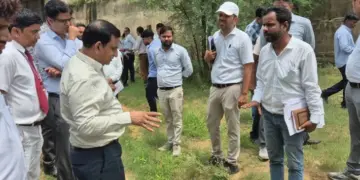
Land acquisition processes are currently in progress to facilitate these ambitious routes. Requirements include approximately **93 km of land for the Hyderabad-Pune-Mumbai route** and **123 km for the Hyderabad-Bengaluru and Hyderabad-Chennai corridors**. To support these operations, new depots are planned for Kokapet and Shamshabad, with the latter serving as a critical operational center for the network. By prioritizing these corridors, the government aims to revolutionize regional connectivity and significantly boost economic mobility across Southern and Western India.