



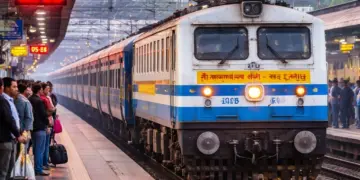


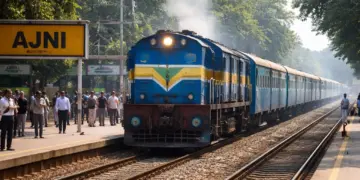



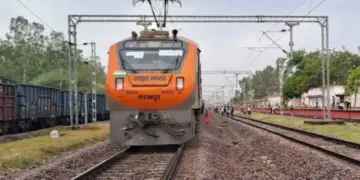
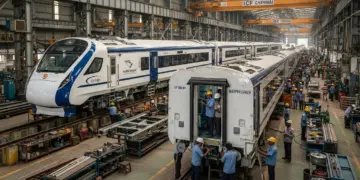
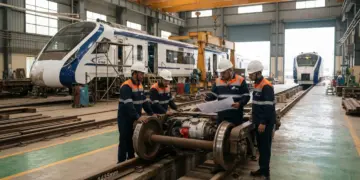
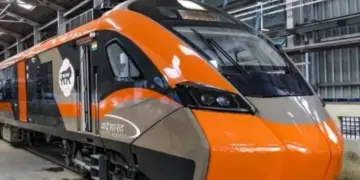





India has officially entered the era of sustainable rail transport with the launch of the ‘Namo Green Rail,’ the nation’s first hydrogen-powered train. Flagged off by Prime Minister Narendra Modi, the train began its journey on the Jind-Sonipat route in Haryana on July 17, 2026, with commercial operations successfully commencing on July 20, 2026. This milestone aligns India with global leaders in hydrogen technology, including Germany, Japan, and the United States.
Key highlights of the Namo Green Rail include:
- Route: Operates on an 89-kilometer stretch between Jind and Sonipat.
- Technology: Utilizes Proton Exchange Membrane (PEM) Fuel Cell technology for zero-emission travel.
- Performance: Total propulsion capacity of 2,400 kW with a maximum design speed of 110 km/h.
- Sustainability: Emits only water vapor and heat, supporting the Indian Railways’ Net-Zero Carbon goal by 2030.
- Fares: The 89 km journey costs ₹25, with a minimum fare starting at ₹5.
Technical Specifications and Infrastructure
The ‘Namo Green Rail’ consists of a 10-coach trainset featuring two hydrogen-driven power cars and eight trailer coaches. Each power car generates 1,200 kW, allowing the train to maintain an operational speed of 75 km/h. To support this innovation, India has constructed its largest railway hydrogen storage and refueling facility in Jind, capable of holding approximately 3,000 kilograms of hydrogen.
The project, which saw an investment of $12 million, is designed to carry approximately 2,600 passengers. The train consumes roughly 300 kg of hydrogen daily while completing two return trips, totaling 356 km. While the project is a testament to ‘Make in India’ initiatives, certain core components like the fuel cells were sourced internationally.
Safety and Regulatory Standards
Passenger safety remains a priority for the Ministry of Railways. The train has undergone rigorous independent technical evaluations by Germany’s TÜV SÜD and received necessary licenses from the Petroleum and Explosives Safety Organization (PESO). Inside the carriages, commuters are protected by a sophisticated safety suite, including 15 hydrogen leak detectors, seven heat detectors, and three flame detectors. By integrating these advanced safety protocols, Indian Railways continues to demonstrate its commitment to both technological modernization and passenger security as it transitions toward a greener future.