

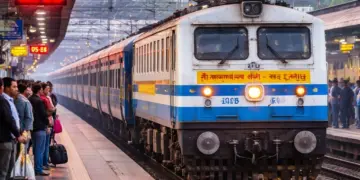




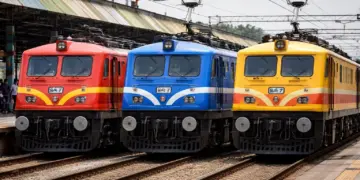




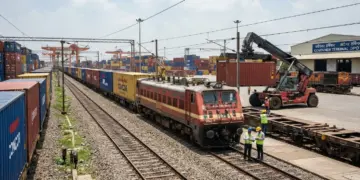
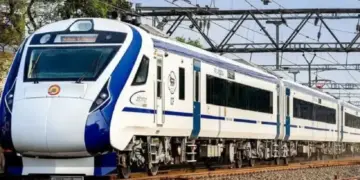


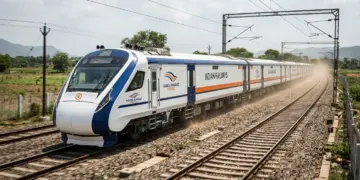
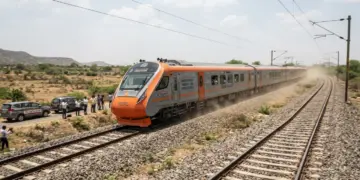



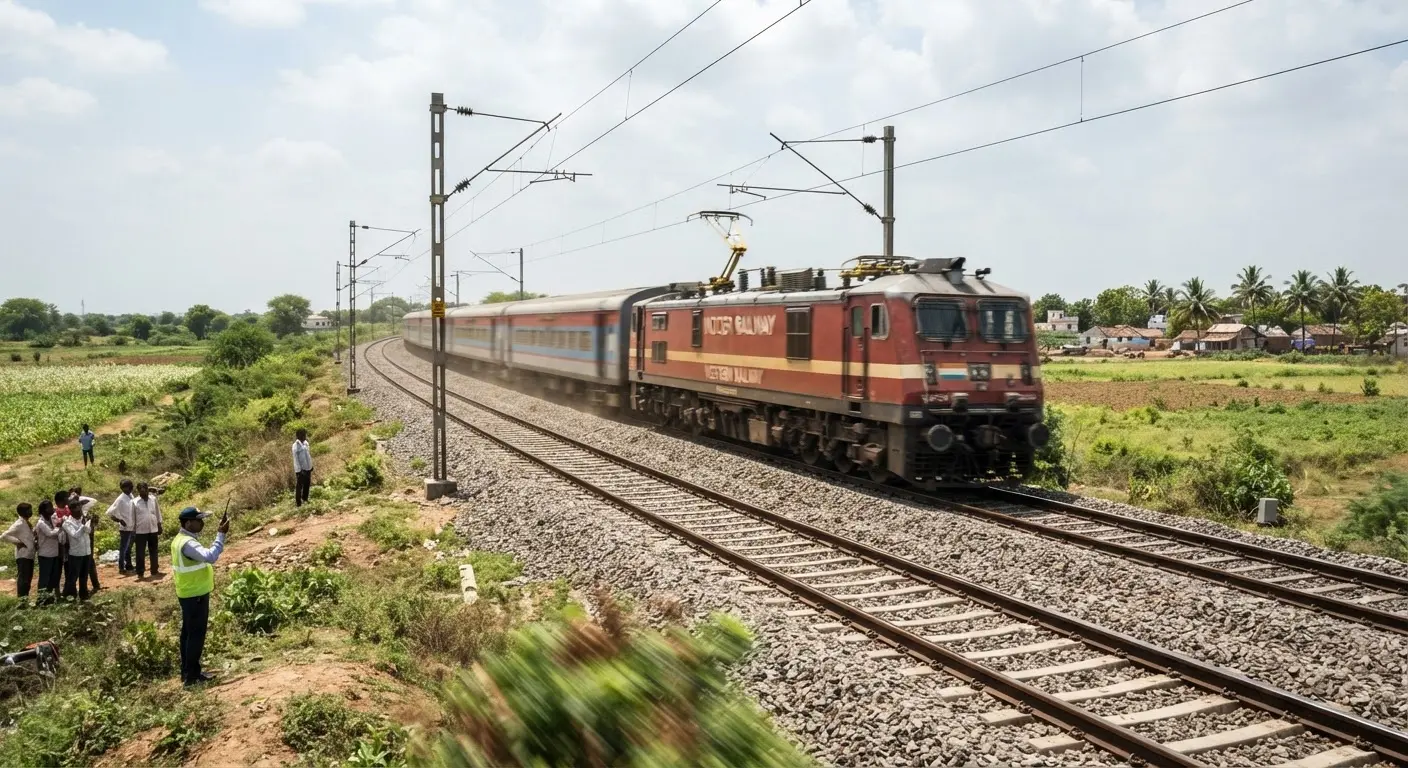

The Western Railway has achieved a major infrastructure milestone with the successful completion of a 120 km/h high-speed trial on the newly developed Katosan Road-Becharaji-Ranuj broad-gauge section. This 63-kilometer stretch, falling under the Ahmedabad Division, underwent a comprehensive three-day statutory safety inspection led by the Commissioner of Railway Safety (Western Circle), E. Srinivas, concluding on July 11, 2026. This successful trial marks the final phase before the commencement of regular passenger train services on the route.
Key highlights of the project include:
• A total project length of 63 kilometers connecting Katosan Road, Becharaji, and Ranuj.
• Successful high-speed trial conducted at 120 km/h on July 11, 2026.
• Infrastructure includes 14 railway stations, 9 large bridges, 100 small bridges, and 47 Road Under Bridges (RUB/LHS).
• A joint venture project between Indian Railways and G-RIDE with an estimated cost of INR 1,000 crore.
Project Background and Infrastructure Details
This ambitious project, which received approval in 2017, represents a significant collaborative effort between Indian Railways and the Gujarat Rail Infrastructure Development Corporation Limited (G-RIDE). The construction involved complex engineering, including the management of 16 curves and the installation of modern signaling and telecommunication systems. During the inspection, officials—including Ahmedabad Divisional Railway Manager Ved Prakash and G-RIDE Director Rajkumar—thoroughly evaluated the track quality, Overhead Electrification (OHE), and interlocking systems to ensure the route meets the highest safety standards for public travel.
Benefits for Passengers and Regional Connectivity
Once operational, this rail link is set to transform travel in the Mehsana and Patan districts. By providing a reliable alternative to road transport, the line will significantly improve access to key areas such as Becharaji, Khambhel, and Chanasma. A major highlight of this route is the improved connectivity to the Shri Bahuchar Mata Temple in Becharaji, which is expected to provide a seamless travel experience for thousands of pilgrims. Beyond religious tourism, the new line will serve as a vital lifeline for local residents, students, industrial workers, and traders, fostering economic growth in the region. Passenger services are expected to flag off officially as soon as the final safety clearance certificate is issued by the Commissioner of Railway Safety.