










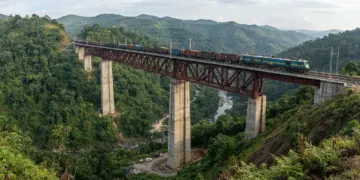











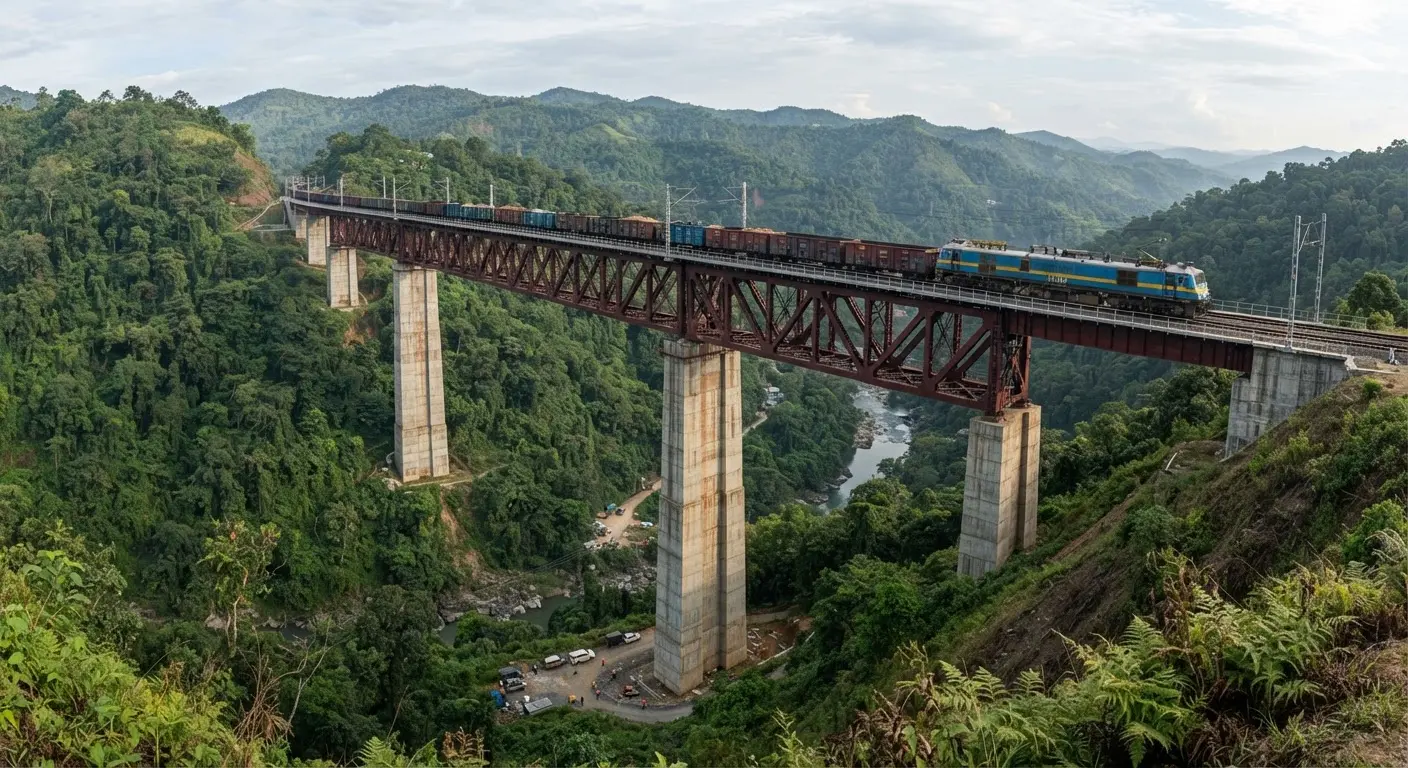

The Bairabi-Sairang rail line in Mizoram has achieved a significant milestone with the completion of Bridge No. 144, a structure that showcases the incredible capabilities of modern Indian engineering. Rising to a staggering height of 114 meters, this bridge is a vital link in connecting the North-Eastern state to the rest of the national rail network. To put its massive scale into perspective, the structure stands 42 meters taller than the iconic Qutub Minar in New Delhi, making it a standout feature of the ambitious project.
- Height: 114 meters, surpassing the Qutub Minar by 42 meters.
- Project: Part of the strategic Bairabi-Sairang rail connectivity initiative.
- Location: Built across challenging hilly terrain and deep valleys in Mizoram.
- Significance: Represents a blend of modern construction technology and national integration.
A Feat of Engineering in Difficult Terrain
Constructing a bridge of this magnitude in the rugged landscape of Mizoram is no small task. The region is known for its deep valleys and complex geological conditions, which have historically posed challenges for large-scale infrastructure projects. By successfully erecting Bridge No. 144, Indian Railways has demonstrated its ability to overcome extreme geographical hurdles using sophisticated construction techniques. This bridge is not just a transit point; it is a testament to the dedication and technical prowess of the engineers involved.
Connecting Mizoram to the Nation
The wider Bairabi-Sairang rail project is a transformative endeavor for the state of Mizoram. The project includes a series of tunnels and large-scale bridges designed to navigate the mountainous terrain, ensuring that the rail line remains efficient and safe. Bridge No. 144 serves as the crown jewel of this network, symbolizing the government’s commitment to bringing rail connectivity to the remote corners of Northeast India. As the project nears completion, the bridge stands as a powerful symbol of progress, promising to boost local trade, tourism, and passenger movement while integrating Mizoram into the broader Indian economy.