












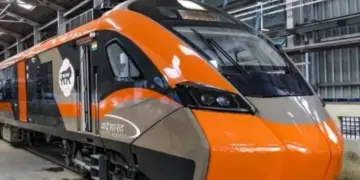


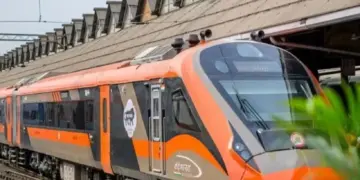
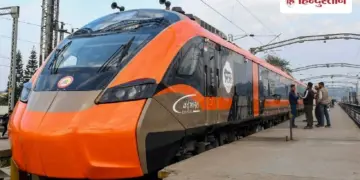



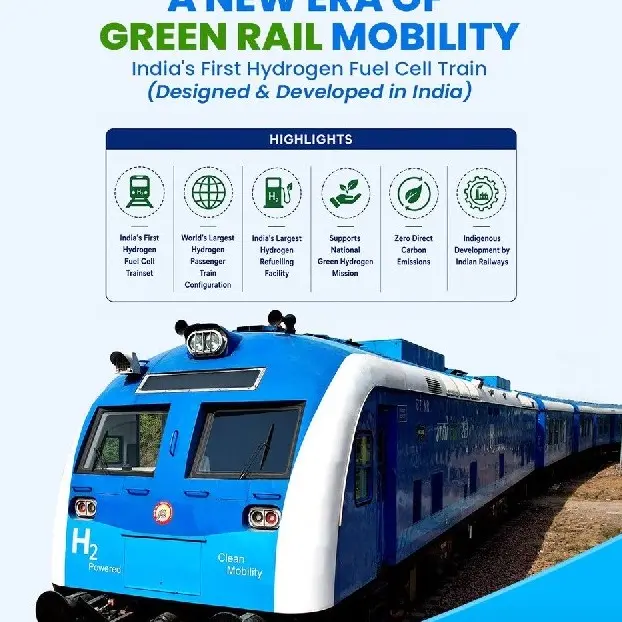

India has officially entered the era of sustainable rail travel with the launch of the ‘NaMo Green Rail,’ the nation’s first indigenous hydrogen-powered train. Prime Minister Narendra Modi inaugurated the service on July 17, 2026, from Jind railway station in Haryana, marking a milestone in the nation’s journey toward green mobility and self-reliance.
Key highlights of the NaMo Green Rail launch include:
- Route: Operates between Jind and Sonipat, covering 89 kilometers.
- Technology: Uses hydrogen fuel cell technology with zero emissions other than water vapor.
- Capacity: The 10-car trainset can accommodate approximately 2,600 passengers.
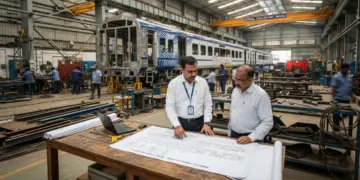
- Development: Built by the Integral Coach Factory (ICF) with system integration by Medha Servo Drives.
- Infrastructure: Jind now hosts India’s largest railway hydrogen storage and refueling facility.
Engineering and Performance Specs
The NaMo Green Rail is a technological marvel, utilizing a hybrid propulsion system that combines Proton Exchange Membrane Fuel Cells (PEMFC) with lithium iron phosphate (LFP) batteries. Powered by a 1,200 kW hydrogen fuel cell system per DPC, it is described by officials as the world’s most powerful hydrogen train. The train is approved for a maximum speed of 75 kmph, providing a clean, efficient alternative to traditional diesel locomotives.
The project underscores a massive collaborative effort. While the train was developed in India with RDSO design approval, it adheres to global safety benchmarks. The system underwent rigorous third-party safety assessments by Germany’s TÜV SÜD, and the necessary licenses for hydrogen storage were granted by the Petroleum and Explosives Safety Organisation (PESO). The pilot project was completed at a cost of approximately Rs 112 crore ($12 million).
Clarification on Recent Reports
Following its successful launch, Indian Railways had to address misinformation circulating on social media. On July 21, 2026, authorities issued a formal clarification debunking a viral video that falsely claimed the NaMo Green Rail was subjected to stone-pelting. Railway officials confirmed that the footage was old and featured a different locomotive. They reiterated that the hydrogen train is operating safely and continues to run strictly according to its scheduled timetable, reinforcing the commitment of Indian Railways to maintaining the integrity of this landmark project as India joins global leaders like Germany, Japan, and the US in hydrogen rail innovation.