











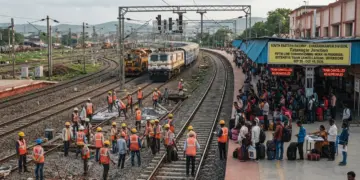










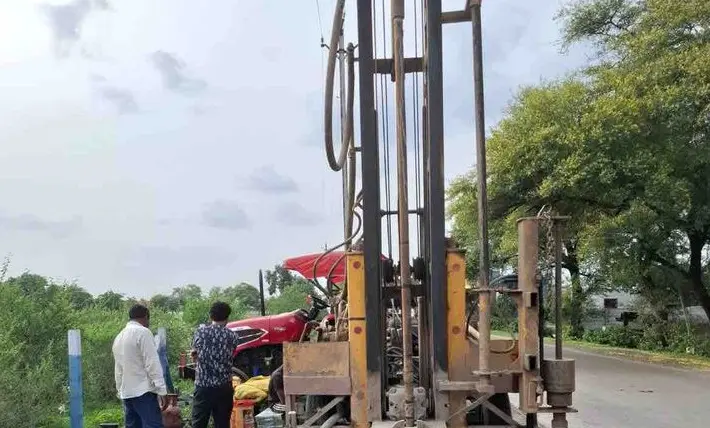

The Indian Railways has officially commenced the preliminary survey for the highly anticipated 41.4-kilometer third and fourth rail line project between Ratlam and Nagda in Madhya Pradesh. This infrastructure milestone, which carries an estimated cost of ₹1,018 crore, is a major step toward decongesting one of the busiest corridors in the country. Approved by the Cabinet Committee on Economic Affairs in May 2025, the project is part of the PM-Gati Shakti National Master Plan and is scheduled to be completed by the 2029-30 fiscal year.
Key highlights of the project include:
- A 41.4-kilometer expansion adding two new tracks to the corridor.
- A total investment of ₹1,018 crore to boost capacity.
- Target completion set for the 2029-30 timeline.
- Reduction of line capacity utilization from 116% to 65%.
- Significant environmental impact, including a reduction of 38 crore kg of CO₂ emissions.
Strategic Importance and Network Efficiency
Union Minister for Railways Ashwini Vaishnaw has highlighted that this project is vital for strengthening connectivity across major economic corridors. By expanding the infrastructure in the Ratlam division, the Railways aims to resolve the current bottleneck where lines are operating at 116% capacity. Once the third and fourth lines are operational, this utilization is expected to drop to a more sustainable 65%, allowing for smoother movement of both freight and passenger trains.
Economic and Environmental Impact
The Ratlam-Nagda expansion is not just about tracks; it is a major economic driver for the region. The project is expected to generate **28 lakh human-days of employment** during its construction phase. By improving rail linkages to industrial hubs like the Indore SEZ and the Delhi-Mumbai Industrial Corridor, the project will significantly speed up freight movement toward West Coast ports.
From an environmental perspective, the project is a green initiative. In its first year of operation, it is projected to save **7.5 crore liters of diesel** and prevent **38 crore kg of CO₂ emissions**, an environmental impact equivalent to planting 1.5 crore trees. Furthermore, the improved network will provide seamless connectivity for passengers traveling between Madhya Pradesh, Uttar Pradesh, and Delhi, enhancing access to key tourist and religious destinations across the heart of India.