












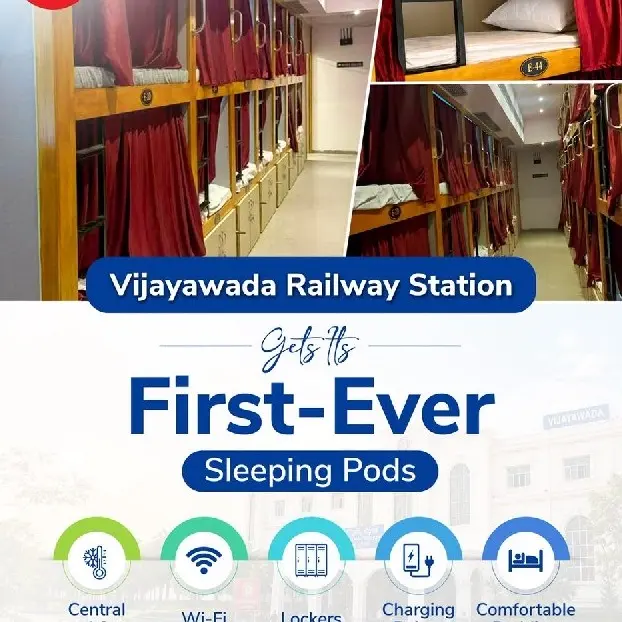

Indian Railways has officially launched a state-of-the-art sleeping pod facility at Vijayawada Railway Station to enhance the passenger experience for transit travelers. The facility, which commenced operations on July 8, 2026, features 168 modern pods located conveniently on Platform No. 1. Designed to provide a comfortable, safe, and hygienic environment, these units are equipped with central air conditioning, high-speed Wi-Fi, personal lockers, mobile charging points, and quality bedding.
Key features of the new facility include:
- 168 modern sleeping pods located on Platform No. 1 for easy access.
- Specialized options including pods for women and designated family cabins.
- Affordable pricing starting at ₹200 for up to three hours and ₹400 for up to twelve hours.
- Additional amenities like hot water, packaged food, and beverages available for an extra charge.
- Requirement of a valid train ticket and government ID for booking via station counters or phone.
Focus on Passenger Comfort and Revenue
Railway officials highlighted that the initiative aims to serve the lakhs of passengers who pass through the busy Vijayawada junction every month. By offering a secure space to rest at budget-friendly rates, the Railways intends to improve the overall transit experience while simultaneously generating a new stream of non-fare revenue. This project aligns with the national transporter’s broader strategy to modernize station infrastructure across the country.
Expansion of Micro-stay Services
The introduction of these pods at Vijayawada follows a successful rollout of similar services in other key stations. The network has seen positive responses to similar installations in Guntur (January 2026), Visakhapatnam, and Charlapalli. This latest addition builds upon the momentum created by the initial micro-stay air-conditioned room service that was first introduced at the Vijayawada station in December 2023. As Indian Railways continues to expand these facilities, passengers can expect more comfortable and convenient options during their long-distance journeys across the network.