





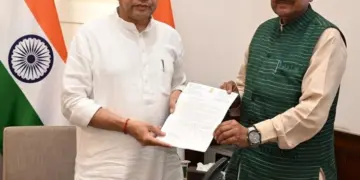


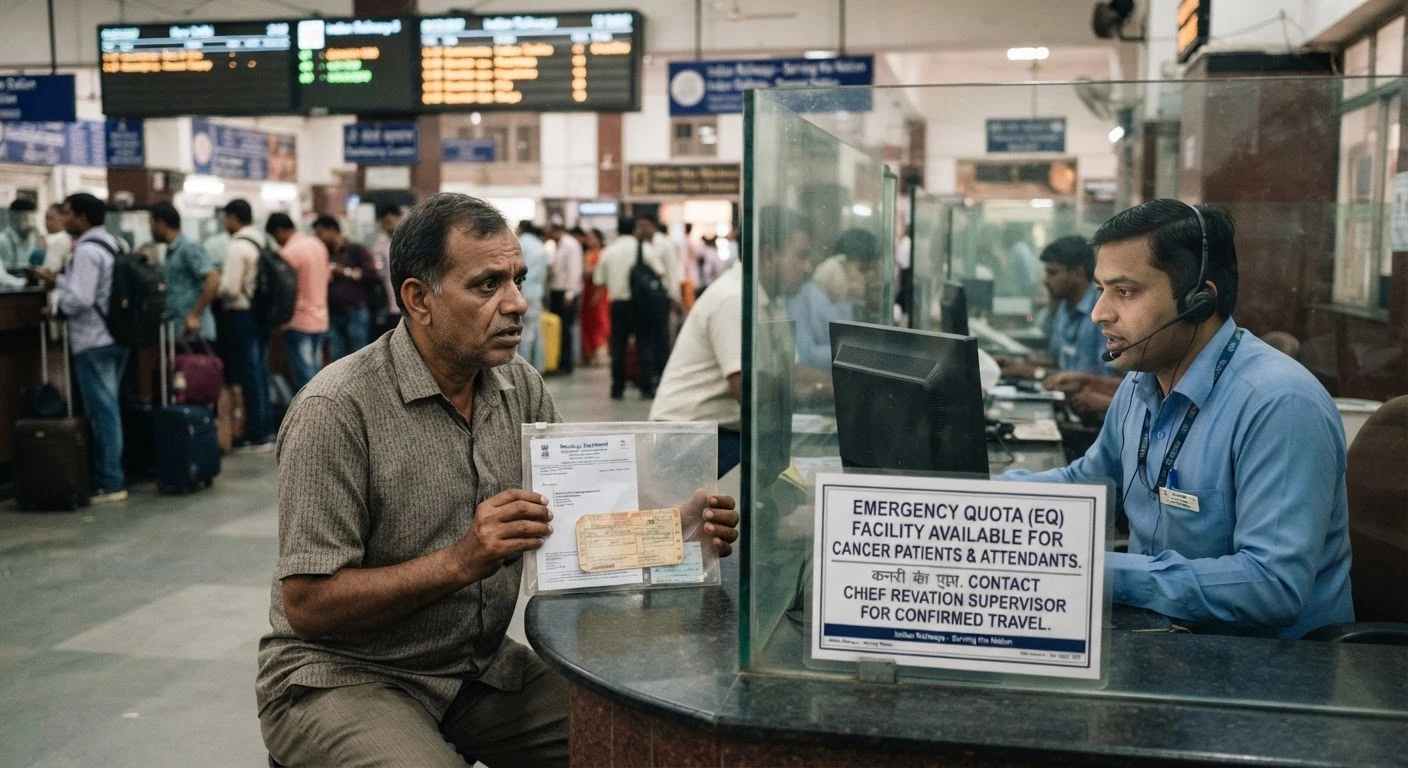

Indian Railways continues to prioritize medical accessibility by offering an Emergency Quota (EQ) facility for cancer patients and their attendants. Recently reaffirmed by Railway Minister Ashwini Vaishnaw in the Rajya Sabha, this provision ensures that individuals requiring urgent transit for medical treatment, hospital admissions, or follow-up examinations can secure confirmed train travel. This facility remains a vital support system for patients throughout 2025 and 2026.
Key details of the Emergency Quota facility include:
• Applications must be submitted in person at computerized Passenger Reservation System (PRS) counters.
• Patients require a concession certificate from a government-approved hospital or an Anti-Retroviral Therapy Center for AIDS patients.
• A total of 12 berths are allocated under EQ across various classes in eligible trains.
• Requests should ideally be submitted at least one day in advance of the scheduled departure.
How to Apply for Emergency Quota
To access this facility, passengers must visit a PRS booking counter, as online applications are not currently supported. It is essential to carry a valid concession certificate, relevant medical records confirming the treatment or appointment, and a government-issued photo identity proof. For trains departing between midnight and 2 PM, applications must reach the EQ cell by noon on the preceding day of travel to be processed effectively.
Berth Allocation and Important Considerations
Indian Railways has streamlined the distribution of these seats to ensure equitable access. The 12 reserved berths are divided as follows: two berths each in First Class, AC 2-Tier, AC 3-Tier, and AC Chair Car, along with four berths in Sleeper Class. This quota is designed to accommodate the patient and one accompanying attendant.
It is important for passengers to note that while the Emergency Quota significantly increases the probability of obtaining a confirmed ticket, it does not serve as a 100% guarantee. Final confirmation remains subject to the overall availability of accommodation, the specific train type, the requested class, and a thorough verification of the submitted medical documentation by railway officials. By maintaining this system, the national transporter continues its commitment to assisting those traveling for critical medical needs.