










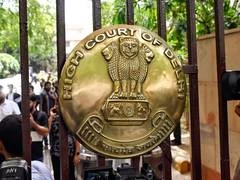

The Delhi High Court has directed the central government and railway authorities to submit their formal responses regarding a petition filed by a 37-year-old man suffering from Parkinson disease who is challenging the rejection of his application for a Railway Divyangjan Concession Card. Justice Amit Bansal presided over the hearing and ordered the respondents including the Union of India, the Divisional Railway Manager of Northern Railways, and the Ministry of Social Justice and Empowerment to reply by the next hearing scheduled for October 12.
- Petitioner Dhananjay Kumar was diagnosed with Parkinson disease in 2022 and has a 60 percent disability assessment.
- He holds a permanent disability certificate and a Unique Disability ID card issued on March 19, 2025.
- He also obtained a railway concession certificate on April 7, 2025, from a Senior Consultant in Orthopaedics at M.M.G. District Hospital, Ghaziabad.
- His application for the railway concession card was rejected on December 22, 2025, due to specific disability category criteria issues.
Background of the Petition
The petitioner Dhananjay Kumar faced rejection from railway authorities on December 22, 2025, on the grounds that his condition did not meet the specific disability category criteria of the railways. Following this decision, Kumar actively pursued justice through multiple official channels including appeals filed directly with railway authorities and the Centralised Public Grievance Redress and Monitoring System.
Disability Recognition and Railway Rules
While the Rights of Persons with Disabilities Act of 2016 formally recognizes Parkinson disease as a qualifying disability, the Indian Railways continues to utilize its distinct E-Ticketing Photo Identity Card system for fare concessions. According to official government guidelines, while UDID cards help passengers travel smoothly in designated Divyangjan coaches on Mail and Express trains, the railways maintain a separate photo identity card verification process for fare concessions to ensure complete transparency. Meanwhile, the Ministry of Railways has recently reiterated its dedication to inclusive travel, noting that authorities are actively taking action against unauthorized occupancy in reserved compartments to properly protect accessibility for all genuine beneficiaries.