



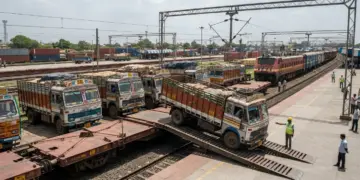


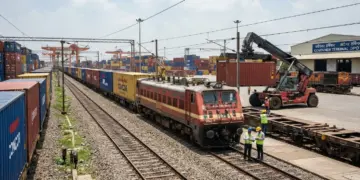



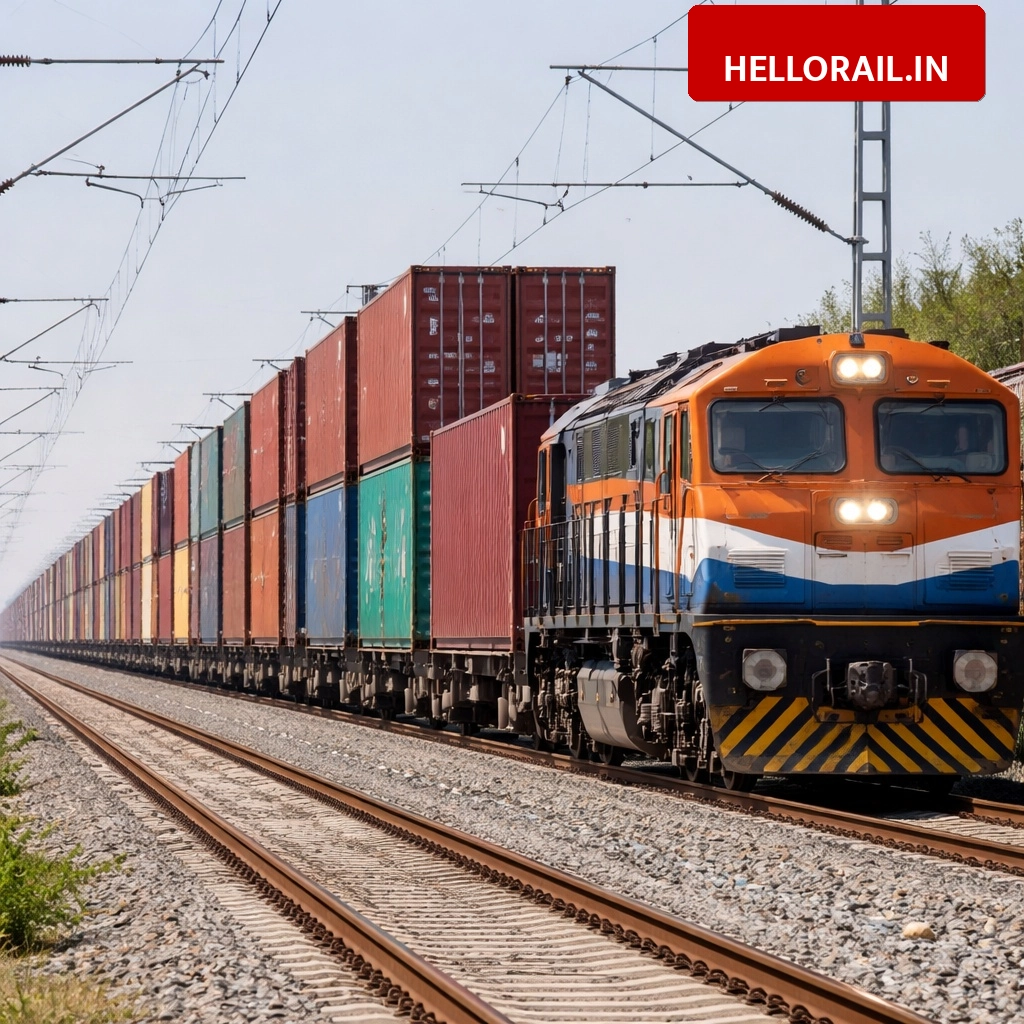

Indian Railways achieved a major milestone with the first double-stack container train from Jawaharlal Nehru Port Trust (JNPT). The train was loaded on June 20, 2026, and dispatched on June 21, 2026, by the Central Railway’s Mumbai Division. This operation used the Western Dedicated Freight Corridor (WDFC) to move a massive amount of cargo in a single trip.
What are the key details of the first double-stack train?
The inaugural train carried 180 containers (TEUs) with a total weight exceeding 2544 tonnes. It traveled 232 km along the WDFC route to reach the Sanjan Gati Shakti Multi Modal Terminal. To handle this load, the railways used 45 specialized BLCM A/B wagons designed by the Research Designs and Standards Organisation (RDSO).
Who were the main partners in this operation?
| Entity | Role |
|---|---|
| JNPA/JNPT | Originating port for the services |
| Central Railway (Mumbai) | Responsible for dispatching the rake |
| DFCCIL | Managed the Western Dedicated Freight Corridor |
| CONCOR & Adani Logistics | Operated double-stack trains to logistics hubs |
How will this impact India’s logistics sector?
This development will make port evacuation faster by moving more cargo per trip. According to Dr. Swapnil Nila, CPRO, this is a key part of the National Rail Plan and PM Gati Shakti program. It aims to lower logistics costs, reduce road traffic, and improve the speed of moving goods across the country.
Frequently Asked Questions (FAQs)
What is a double-stack container train?
It is a train that carries shipping containers stacked two-high on specialized wagons. India is the first country to operate these using electric locomotives on a dedicated freight corridor.
Where did the first JNPT double-stack train go?
The inaugural train traveled 232 km via the Western Dedicated Freight Corridor from JNPT to the Sanjan Gati Shakti Multi Modal Terminal.