

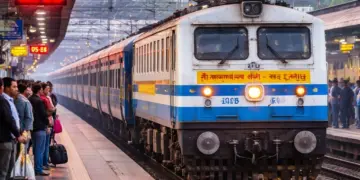

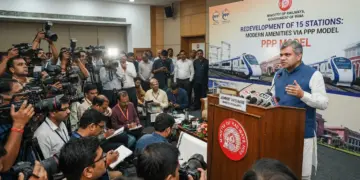
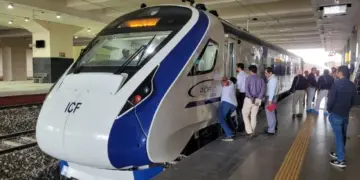
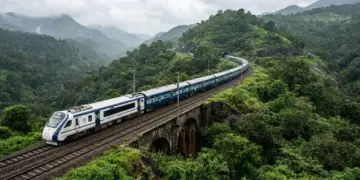
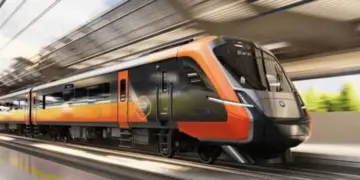
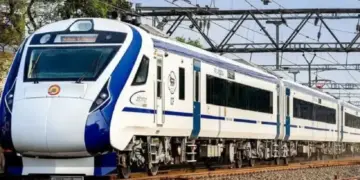
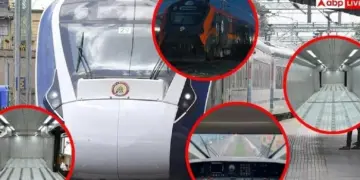



The Union Cabinet has approved the construction of India’s first semi high-speed rail corridor between Sarkhej in Ahmedabad and Dholera. This major infrastructure project by the Ministry of Railways will cost approximately ₹20,667 crore. The corridor is designed to provide fast connectivity to the Dholera Special Investment Region and the upcoming international airport.
ℹ: New Train Announcement: Indian Railways to run two summer special trains via Govindpuri, Kanpur।
What are the key technical details of the project?
The project covers a total length of 134 kilometers with a double-line track using the 1676 mm Broad Gauge system. While the design speed is 220 Kmph, trains will operate at a speed of 200 Kmph. To ensure safety, the indigenous Kavach Automatic Train Protection System will be installed. About 71 kilometers of the route will be built on viaducts, and the project avoids the use of tunnels to keep costs low.
How will this corridor benefit passengers and the region?
The new rail line will significantly reduce travel time for commuters. According to Railway Minister Ashwini Vaishnaw, the journey from Sabarmati to Dholera will take 48 minutes, while the trip from Sarkhej to Dholera will take only 34 minutes. The corridor will feature 13 stations and will benefit around 5 lakh people across 284 villages. It also connects the Lothal National Maritime Heritage Complex.
Why is this project more cost-effective than RRTS?
| Feature | Sarkhej-Dholera Corridor |
|---|---|
| Estimated Cost | ₹20,667 Crore |
| Design Speed | 220 Kmph |
| Track Length | 134 KM |
| Key Tech | Indigenous Kavach |
| Cost Factor | Less than half per km vs Delhi-Meerut RRTS |
Railway officials stated that this project costs less than half per kilometer compared to the Delhi-Meerut RRTS. This is possible because the route does not require expensive tunnels, has lower land acquisition costs, and uses simpler engineering designs.
Frequently Asked Questions (FAQs)
What is the expected travel time from Sarkhej to Dholera?
The travel time from Sarkhej to Dholera is expected to be reduced to 34 minutes, while the journey from Sabarmati to Dholera will take 48 minutes.
Which safety technology will be used in this rail corridor?
The project will use the indigenous Kavach Automatic Train Protection System to ensure safe and secure train operations.