






















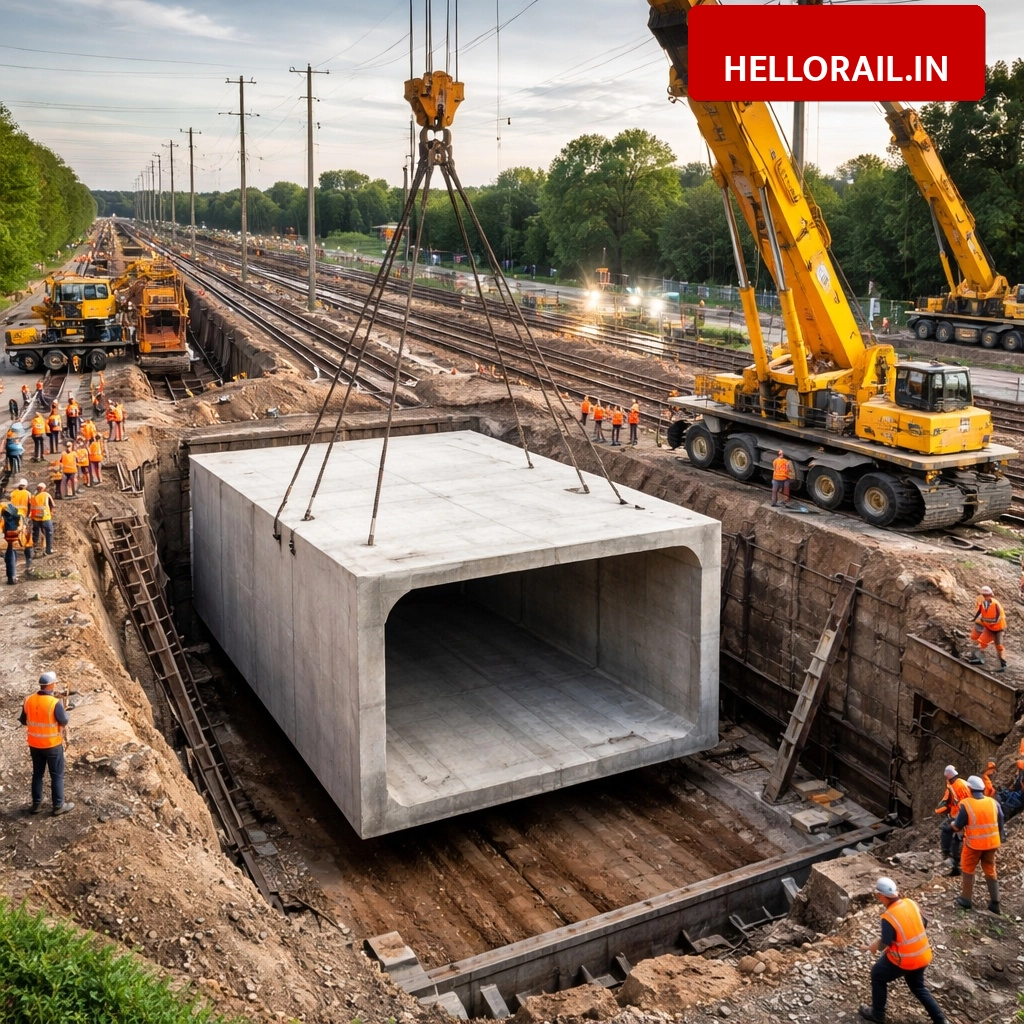

Indian Railways used a specialized engineering method to install a 65-ton precast box beneath a railway track. The entire operation was completed within a strict window of 7 hours. To achieve this, a heavy-duty crane was used to lift a section of the track, allowing the box to be placed underneath.
👉: Morena Train Accident: 4 dead after passengers jump from Udaipur Intercity Express due to fire rumor।
How was the 65-ton box installed?
The process involved lifting a specific part of the railway track using a crane to create space. A precast reinforced concrete box weighing 65 tons was then positioned under the track. This method is typically used for creating underpasses or improving drainage systems to prevent waterlogging during the monsoon season.
What is the Box Pushing Technique?
Railways often use the Box Pushing Technique for Rail Under Bridges (RUB) and Limited Height Subways (LHS). In this method, precast boxes are constructed next to the tracks and pushed under the embankment using hydraulic jacks. This ensures that train services are not disrupted for long periods.
- Time Taken: 7 hours for this specific installation.
- Weight of Box: 65 tons.
- Equipment Used: Heavy-duty cranes and precast concrete.
- Primary Goal: To eliminate level crossings and improve drainage.
Frequently Asked Questions (FAQs)
Why is the box pushing technique used in railways?
It is used to build underpasses (RUB/LHS) without stopping train traffic for long durations, making it safer and faster than traditional construction.
What is the purpose of installing these boxes during monsoon?
These installations often help in creating better drainage systems to prevent water from collecting on the tracks during heavy rains.