




























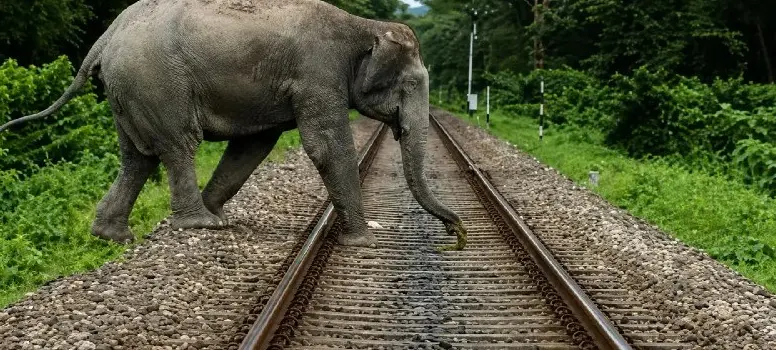

In a landmark achievement for wildlife conservation and railway safety, the integration of Artificial Intelligence (AI) has successfully eliminated elephant fatalities on railway tracks in Coimbatore, Tamil Nadu, for the past two and a half years. This mission, a result of a strategic partnership between the Tamil Nadu Forest Department and Southern Railway, has transformed a once-vulnerable stretch into a model for coexistence between rail infrastructure and wildlife.
- Zero elephant fatalities recorded over the last 30 months.
- Over 7,100 real-time AI alerts generated to track elephant movements.
- Loco pilots prompted to slow down or halt trains 3,280 times.
- Approximately 9,500 safe elephant crossings facilitated since the initiative began.
The AI-Powered Command Center
At the heart of this initiative is the Elephant Control And Command Center located in Puthupathi village, Madukkarai Forest Range. The system utilizes a sophisticated mesh of AI algorithms and thermal imaging cameras that operate 24/7. This high-tech surveillance is bolstered by frontline forest officers and drone operators who provide an extra layer of ground-level and aerial monitoring.
When the system detects the presence of wildlife, a seamless communication loop is triggered. Alerts are instantly relayed to station masters and loco pilots via wireless communication. By receiving these real-time updates, pilots can proactively adjust train speeds or stop operations, ensuring that the animals cross the tracks safely. The system is so precise that it has extended its protective reach to other wildlife, including gaurs, leopards, and deer, effectively creating a comprehensive surveillance grid.
A Commitment to Zero Fatalities
Addressing the success of the project, Supriya Sahu, Additional Chief Secretary for Environment, Climate Change and Forest Department, highlighted that the mission remains focused on the goal of zero deaths. The initiative, which saw significant updates in early July 2026, proves that technological intervention is essential for modern railway safety.
Moving forward, authorities emphasize that the success of this project relies on continuous learning and technological upgrades. By maintaining sustained vigilance and refining AI capabilities, Indian Railways and the Forest Department are ensuring that the region’s rich biodiversity remains protected without compromising the efficiency of train operations. This initiative serves as a blueprint for other forest-adjacent railway corridors across India where wildlife-train collisions pose a recurring challenge.