
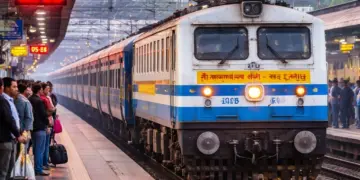






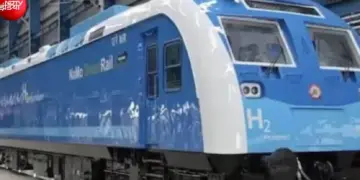



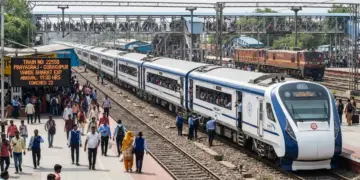

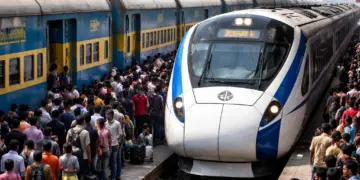
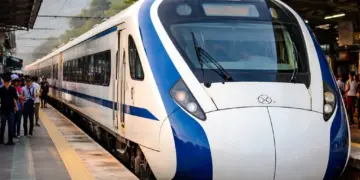




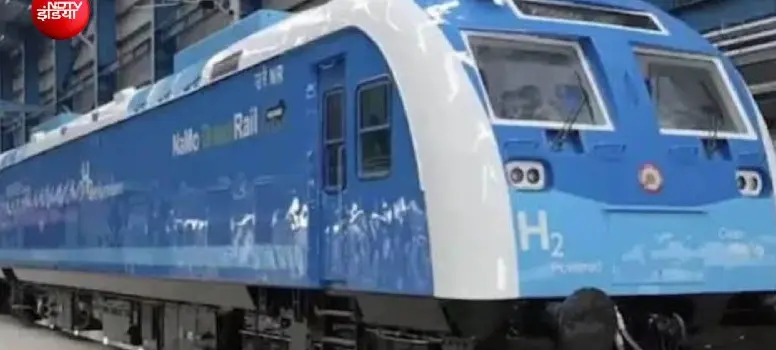

India reached a historic milestone in sustainable transportation on July 17, 2026, as Prime Minister Narendra Modi flagged off the country’s first indigenous hydrogen-powered passenger train from Jind railway station in Haryana. This launch represents a major leap forward for the national rail network, proving that India is ready to embrace cutting-edge green mobility alongside its extensive electrification projects.
- The 10-coach hydrogen train operates on the 89-kilometer Jind-Sonipat section.
- It features an operational speed of 75 kmph and a design speed of 110 kmph.
- The train has a total capacity of approximately 2,600 passengers.
- Equipped with advanced Proton Exchange Membrane (PEM) fuel cell technology, it emits only water vapor and heat.
- A massive hydrogen storage and refueling facility in Jind supports the train with a 3,000 kg daily capacity.
A New Era for Sustainable Rail Travel
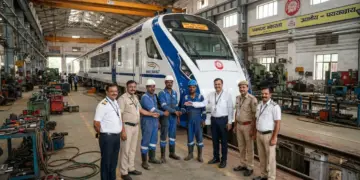
Designed to serve non-electrified routes, this hydrogen train is a testament to the technological prowess of Indian engineers. The train consists of eight passenger coaches and two power cars, completing two round trips daily to cover a total of 356 kilometers. While the Integral Coach Factory (ICF) in Chennai manufactured the coaches and Medha Servo Drives handled the system integration, the critical hydrogen fuel-cell stacks were sourced from Canada’s Ballard Power Systems as the nation builds its domestic production capabilities.
Safety and Infrastructure at the Core
Indian Railways has prioritized safety in this transition to green energy. The train and the refueling station are outfitted with sophisticated sensors for hydrogen leakage, fire, and smoke detection, including an automatic shut-off system for emergency situations. Railway Minister Ashwini Vaishnaw emphasized that this project is a crucial component of the National Green Hydrogen Mission, ensuring that India remains on track to meet its environmental goals under the ‘Viksit Bharat’ vision. By integrating these zero-emission trains, Indian Railways is effectively modernizing transit on routes where electrification remains challenging, setting a global benchmark for sustainable rail corridors.