






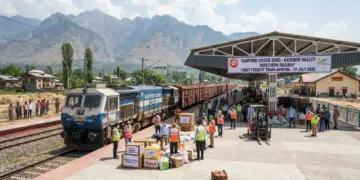













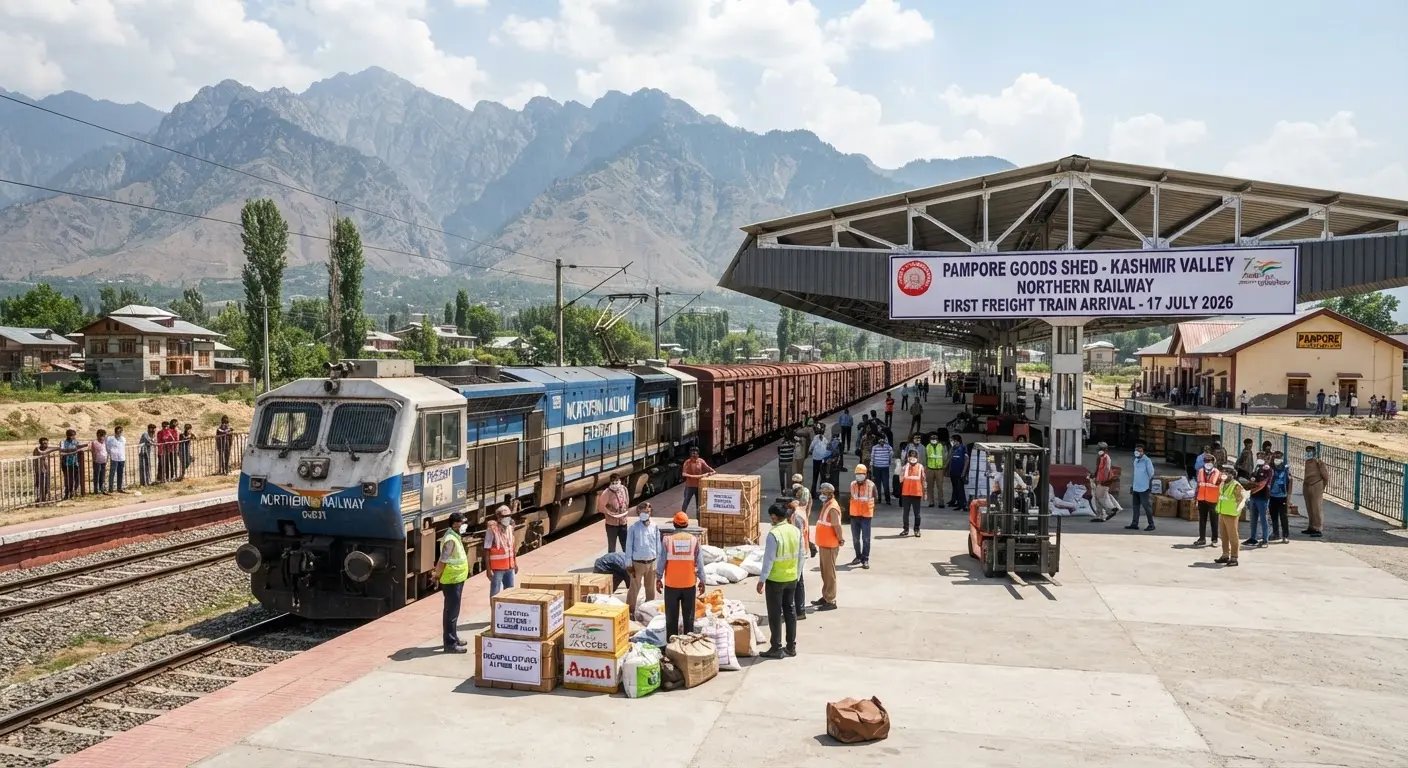

The Kashmir Valley has achieved a significant logistics milestone as the Pampore Goods Shed successfully received its first freight train on July 17, 2026. This new facility, which commenced operations on July 15, 2026, serves as the second major rail freight hub in the region, working alongside the existing Anantnag Goods Shed to streamline the supply chain for local businesses and industries.
Key details regarding this development include:
- The inaugural train carried 42 BCN wagons loaded with cement from UltraTech, ACC, and Ambuja Cement.
- The freight originated from Bharatgarh and Kiratpur Sahib in the Ambala Division.
- The shed operates daily between 6:00 AM and 10:00 PM.
- The facility handles inward and outward half-rake consignments for all commodities, excluding POL and coal.
Strengthening the Regional Supply Chain
Indian Railways officials have hailed the inauguration as a landmark achievement that will serve as a major gift to the local business community. Kapil Sharma, Chief Area Manager, noted that the facility will significantly strengthen the Valley’s network by ensuring the efficient movement of essential commodities. By reducing overall logistics costs and transit times, the railway aims to provide a reliable delivery mechanism for traders and farmers alike. The immediate impact was visible on the very first day, with Uchit Singhal, Senior Divisional Commercial Manager, Jammu Division, confirming that two freight indents were received shortly after the facility opened.
Economic Impact and Compliance
Beyond logistics, the Pampore Goods Shed is expected to act as a catalyst for economic growth in Central Kashmir. By facilitating easier access to rail transport, the station will support trade and industrial development while generating new local employment opportunities.
To ensure sustainable operations, the facility strictly adheres to all operational and commercial guidelines, including mandates set by the National Green Tribunal (NGT) and the State Pollution Control Board. This commitment to environmental standards ensures that the expansion of rail infrastructure in the Kashmir Valley remains balanced with regional ecological safety. As the facility scales its operations, it is poised to become a vital artery for the region’s commercial expansion, offering a faster and more cost-effective alternative for transporting goods into the heart of the Valley.