




























The Indian Railways is witnessing a significant transformation in its logistics landscape through the Gati Shakti Multi-Modal Cargo Terminal (GCT) policy. Since its inception on December 15, 2021, the initiative has successfully streamlined freight operations, reduced transit times, and attracted substantial private capital to modernize rail infrastructure across the country.
Key highlights of the GCT progress include:
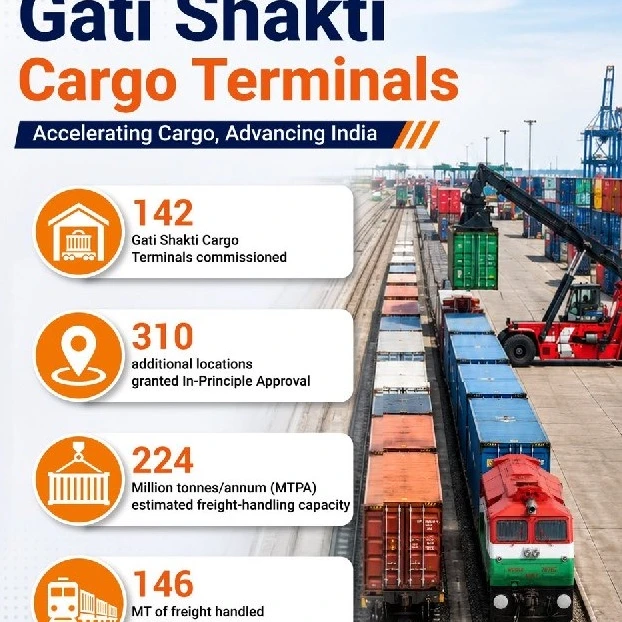
• 142 Gati Shakti Cargo Terminals have already been commissioned nationwide.
• 310 additional locations have received in-principle approval for development.
• The terminals have generated approximately ₹10,000 crore in private investment.
• Current infrastructure supports a freight handling capacity of 224 million tonnes per annum (MTPA).
• During the 2025-26 fiscal year, these terminals successfully handled 146 million tonnes of freight.
Revolutionizing Freight Logistics
Railway Minister Ashwini Vaishnaw has highlighted that the GCT policy is central to the government’s mission of fostering public-private partnerships. By encouraging private players to invest in rail infrastructure, the Railways aims to reduce logistics costs for bulk industries, including steel, cement, power, and agriculture. This modal shift is essential for making Indian products more competitive in the global market and establishing the nation as a premier logistics hub.
Strategic Infrastructure and Efficiency
Each GCT location is selected based on rigorous analysis of industrial demand and existing rail connectivity. To ensure maximum efficiency, these terminals are designed for ‘engine-on-load’ (EOL) operations, which drastically minimize train detention times. The facilities are equipped with modern technology, such as mechanized loading systems and silos, to handle high-volume cargo seamlessly.
To ensure ease of doing business, the Railways has streamlined the approval process. The Divisional Railway Manager (DRM) acts as the Nodal Officer for all GCT-related matters, ensuring that In-Principle Approvals are granted within 20 working days. This rapid administrative turnaround has been a major factor in attracting private firms to invest in sectors like manufacturing, automobiles, and mining. As more terminals become operational, the interconnected network of GCTs is expected to provide a robust backbone for India’s supply chain, ensuring that goods move faster and more reliably across the country.