


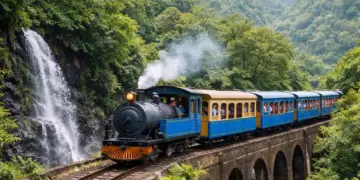









The historic Kangra Valley Railway is facing fresh operational challenges as heavy rainfall and landslides have forced the suspension of train services on August 11 and 12, 2026. Frequent weather-related disruptions have once again impacted this scenic route, leaving passengers and local commuters waiting for updates on restoration efforts.
Key updates regarding the Kangra Valley Railway disruptions:
- Services were suspended on August 11 and 12, 2026, due to track damage.
- Critical damage sites include the area near Pul Number-123 in the Jassur-Talwara section and near Jwalamukhi-Kophalahara.
- Land subsidence and debris near Talara have severely impacted the track between Nurpur Road and Talara railway stations.
- Northern Railway officials have confirmed that safety inspections are currently underway.
A History of Monsoon Challenges
This recent disruption comes shortly after the line had begun to stabilize. Services between Pathankot and Baijnath-Paprola had only just resumed on July 31, 2026, following a 10-day monsoon-related break. The line has been struggling to maintain consistency since the major restoration on June 2, 2026, which marked the return of train operations after a nearly four-year hiatus. That long closure was triggered by the collapse of the Chakki railway bridge in August 2022, a structure that was later rebuilt with expert guidance from IIT Roorkee at a cost of Rs 70 crore.
Safety First Approach
According to a spokesperson for the Northern Railway’s Jammu division, passenger safety remains the top priority. Raghavendra, the PRI of the Jammu Railway Division, has officially confirmed the extent of the track damage. Technical teams are currently deployed to inspect the affected locations. A final decision regarding the resumption of services will only be made once these teams certify that the tracks are safe for train movement.
Local Concerns and Future Outlook
Local residents and regular commuters are expressing growing concern over the recurring nature of these disruptions. Many have urged the authorities to implement special monitoring protocols for sensitive sections of the line during the monsoon season. There is a growing appeal for an adequate budget allocation dedicated to the regular maintenance of this vital rail infrastructure. Local stakeholders have even reached out to the Prime Minister’s office, requesting a permanent solution to ensure that the Kangra Valley Railway remains operational throughout the year without constant weather-related interruptions.