












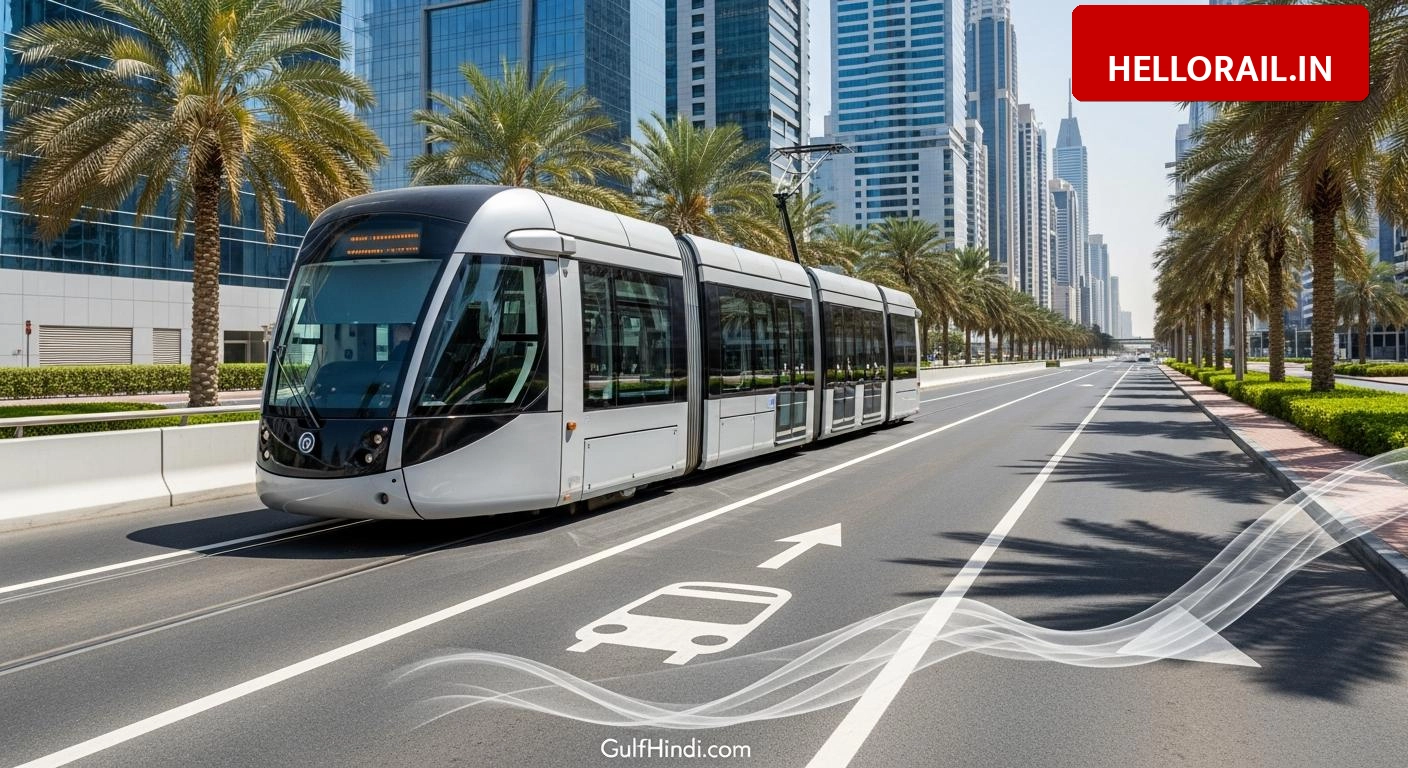

Dubai is taking a massive step towards modernizing its public transport network by introducing Autonomous Rapid Transit (ART), also known as trackless trams. The Roads and Transport Authority (RTA) has confirmed plans to deploy these trams at eight initial locations across the city. Unlike traditional trams, these vehicles use AI and GPS to follow virtual tracks painted on the road, eliminating the need for expensive rail infrastructure.
📰: Delhi-Ambala Rail Project: Center Clears 5,983 Crore Budget for 3rd and 4th Lines to Decongest Route।
Key Locations and Features of the New Trackless Trams
The RTA has designated areas such as Dubai South, Expo City, and Dubai Silicon Oasis as potential hubs for the new tram system. These trams are designed to handle high passenger volumes and provide a smooth link to the existing Dubai Metro network for residents and Indian expats living in these communities.
- Passenger Capacity: Each tram can carry up to 300 people across three carriages.
- Performance: Trams can reach a top speed of 70 km/h with an operational range of 100 km on a single charge.
- Planned Locations: Jumeirah Village Circle (JVC), Dubai Marina link, Mirdif, and Al Warqa are among the study sites.
Expansion of Dedicated Bus Lanes and New Fines
As part of a Dhs16 billion development plan, Dubai is also extending its dedicated bus lane network by 20.1 km. This project aims to improve bus arrival times by nearly 41 percent. Motorists are advised to stay off these red-marked lanes to avoid heavy penalties. The RTA has set a fine of AED 600 for any unauthorized vehicle found driving in these dedicated lanes.
| New Bus Lane Locations | Target Year |
|---|---|
| Sheikh Sabah Al Ahmad St and Al Satwa St | 2026 |
| 2nd of December St and Al Nahda St | 2026 |
| Omar bin Al Khattab St and Naif St | 2026 |
The trackless tram feasibility study is expected to be completed by mid-2026. This project is vital for accommodating Dubai’s growing population and meeting the target of 25 percent autonomous transport by 2030. For the thousands of Indians working in Dubai, these developments mean better connectivity and less time spent in traffic during daily commutes.