





















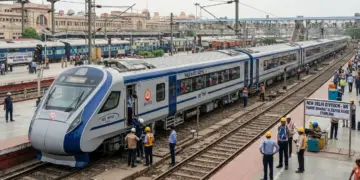





The Dhanbad Rail Division of East Central Railway has implemented strict safety measures on the Barkakana-Barwadih rail section to safeguard elephants. In a major decision to prevent wildlife accidents, the maximum speed for trains in the Khalari region has been limited to 25 kilometers per hour. This move follows recent incidents of elephant-train collisions that highlighted the urgent need for better protection in forest zones.
How the automatic alarm system works
The railway administration is installing an automatic alarm system alongside the speed restrictions to monitor animal movement. This technology uses an Artificial Intelligence-based Intrusion Detection System known as IDS. When elephants approach the tracks, the sensors detect their presence through vibrations and send real-time alerts to loco pilots and station masters. This allows the railway staff to take immediate action and stop the train if necessary.
Railway infrastructure plans for wildlife safety
- The Ministry of Railways has planned 200 underpasses nationwide for elephant corridors.
- Seven underpasses are specifically planned for the Chakradharpur Division area.
- AI detection systems are being expanded to over 141 kilometers of critical tracks.
- Railway officials and the Forest Department are working together to monitor migration routes.
These initiatives are part of a broader policy by the Railway Ministry to reduce human-wildlife conflict. By combining technological solutions like optical fiber-based monitoring with physical measures like speed limits and underpasses, the department aims to ensure that train operations do not harm the local elephant population. The Barkakana-Barwadih section remains a high-priority zone for these safety deployments.