
















The Ministry of Railways has announced a significant engineering milestone on the Mumbai-Ahmedabad High-Speed Rail Corridor. This project is seeing rapid progress with the recent installation of heavy portal beams and the start of Tunnel Boring Machine assembly. These developments bring India closer to its goal of running the first high-speed train by 2027. Official reports suggest that the construction work in both Gujarat and Maharashtra is entering a critical phase.
🚨: Bilaspur Railway Zone: 10 trains cancelled till April 18 on Raipur and Korba routes, check details।
What are the latest engineering achievements on the Bullet Train project?
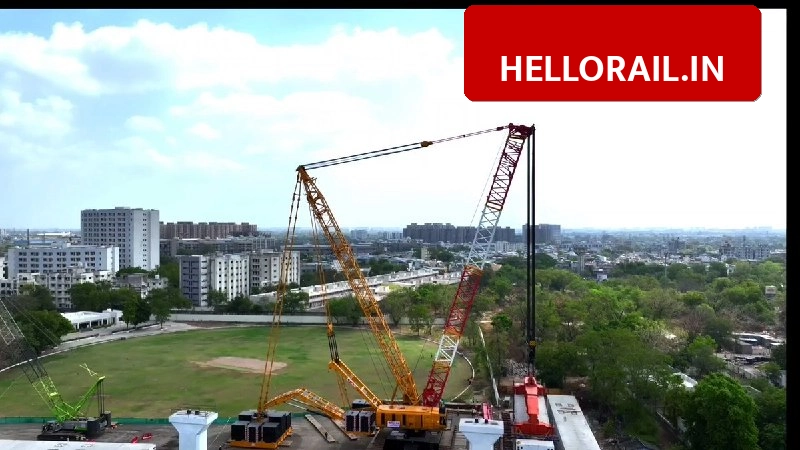
NHSRCL successfully launched a 1,360-metric tonne precast-prestressed portal beam over the Amdavad-Vadodara railway line in Gujarat. This task was finished in a record 3.5 hours on April 8, 2026. Additionally, the assembly of Tunnel Boring Machines has started for the 16 km tunnel section in Maharashtra. This specific section includes the first 7 km undersea tunnel beneath Thane Creek. Significant work is also moving forward on the 21 km tunnel between Bandra Kurla Complex and Shilphata using the New Austrian Tunnelling Method.
Key progress updates and upcoming timelines
The project has reached several infrastructure goals as of early 2026. The implementing agency has reported steady growth in viaduct and pier construction across the corridor. The following table highlights the current status of the Mumbai-Ahmedabad High-Speed Rail project:
| Infrastructure Feature | Progress Status or Target |
|---|---|
| Viaduct Completed | 343 km |
| Pier Work | 434 km |
| River Bridges | 17 Completed |
| Steel Bridges | 13 Completed |
| Indigenous B28 Train Rollout | March 2027 |
| Target for Inaugural Run | August 2027 |
Trial runs for the project are expected to cover a 100 km distance between Surat and Vapi in Gujarat. While Japanese Shinkansen technology remains the backbone, BEML is also working on the indigenous B28 train set. The Ministry aims for a full rollout of the high-speed service by late 2027.