










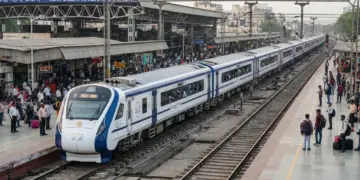

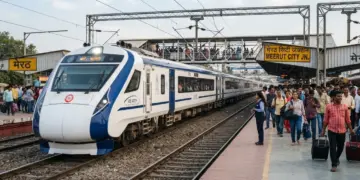
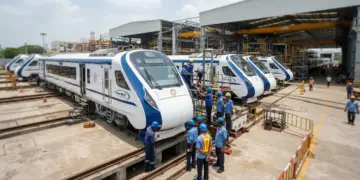
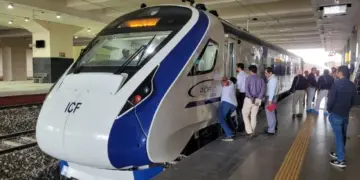
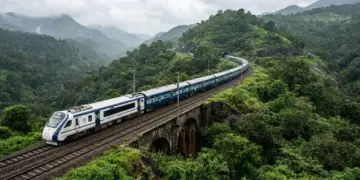
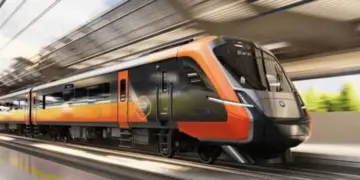
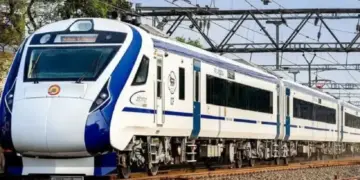


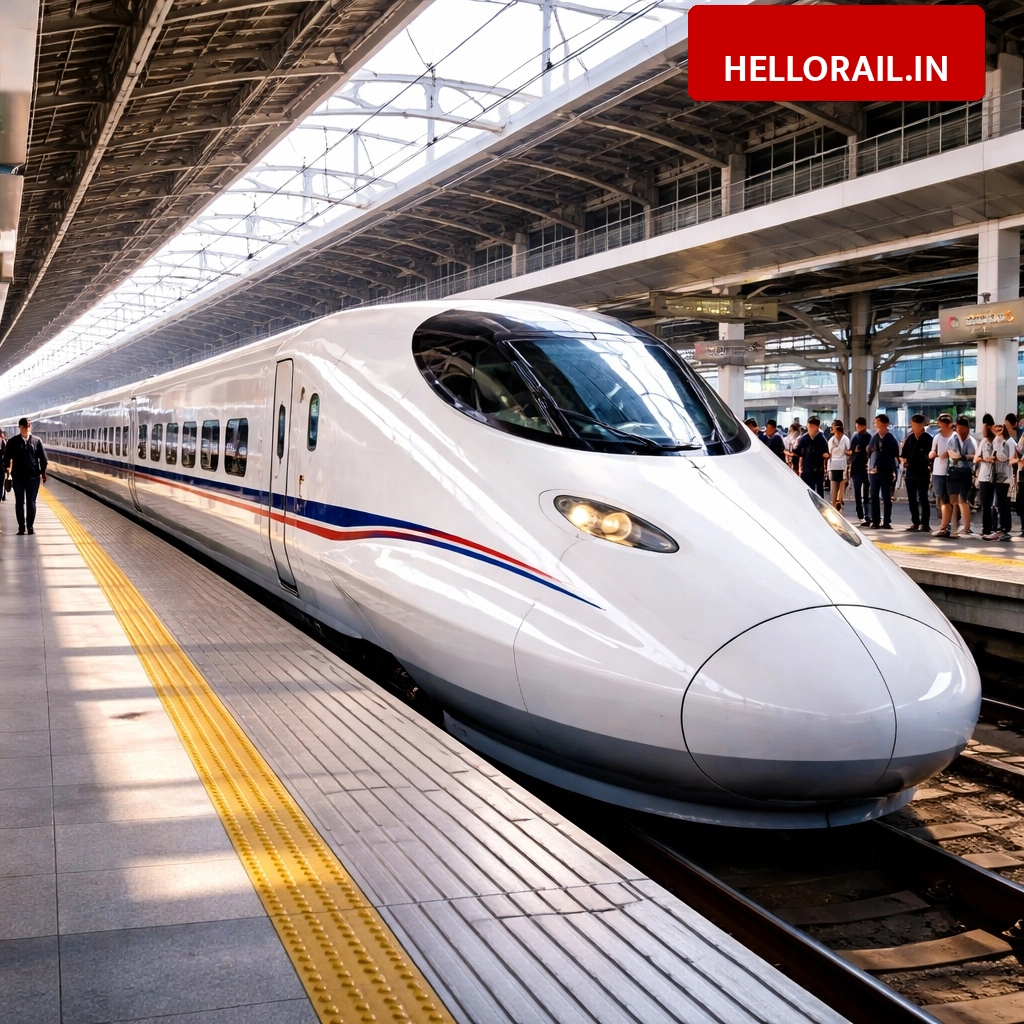

The Government of India has announced a massive high-speed rail project for Uttar Pradesh. Prime Minister Narendra Modi introduced the Bullet Train Corridor in the Union Budget for 2026-27. Union Railway Minister Ashwini Vaishnaw confirmed that work is moving fast to connect major cities across the state and beyond.
What are the travel times on the new Bullet Train route?
The new corridor will significantly reduce travel time between major cities. The trains will operate at speeds between 320 to 350 kmph. Here are the expected travel durations for different segments:
| Route | Travel Time |
|---|---|
| Delhi to Agra | 58 minutes |
| Delhi to Lucknow | 2 hours 12 minutes |
| Delhi to Varanasi | 3 hours 33 minutes |
| Delhi to Ayodhya | 2 hours 47 minutes |
| Lucknow to Prayagraj | 48 minutes |
| Lucknow to Varanasi | 1 hour 21 minutes |
| Lucknow to Ayodhya | 35 minutes |
What is the project cost and connectivity plan?
The Delhi-Varanasi section alone is estimated to cost ₹1.21 lakh crore, with a total investment of around ₹16 lakh crore planned for various corridors. The network will eventually link Delhi, Lucknow, Varanasi, Patna, and Siliguri to improve connectivity with Northeast India. NHSRCL is the agency managing the project, and a new station is planned near Etmadpur Madra village in Agra.
Will the Bullet Train be affordable for common people?
Minister Ashwini Vaishnaw assured that the fares will be kept affordable for the middle class and ordinary citizens. The government aims to use this network as a foundation for a developed India. To ensure the project stays on track, the Standing Committee on Railways has advised that land acquisition and clearances should be completed before final sanctions.
Frequently Asked Questions (FAQs)
Which cities will the Delhi-Varanasi Bullet Train pass through?
The high-speed rail corridor is expected to pass through Noida, Mathura, Agra, Kanpur, Lucknow, Prayagraj, and Ayodhya.
Who is implementing the Bullet Train project in Uttar Pradesh?
The National High-Speed Rail Corporation Limited (NHSRCL), a subsidiary of the Ministry of Railways, is the implementing agency.