







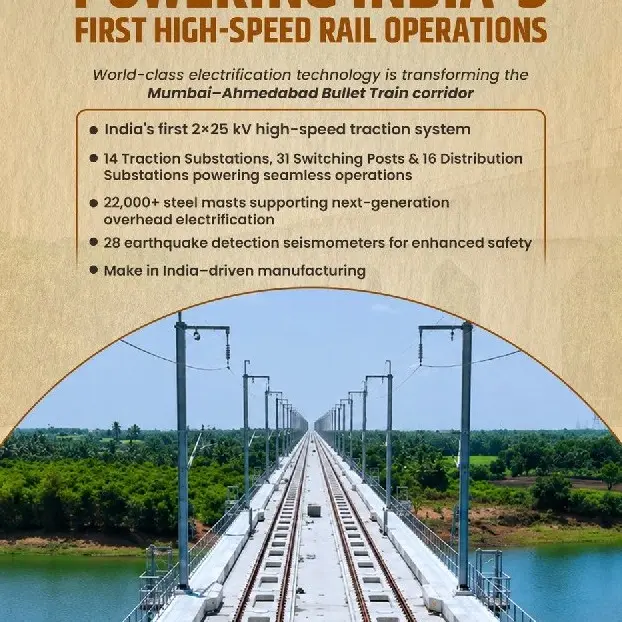

The Mumbai-Ahmedabad High-Speed Rail corridor is hitting significant development milestones, combining advanced global technology with a growing push for indigenous engineering. As the project moves toward its operational goals, it is incorporating a sophisticated 2×25 kV Overhead Traction System to support speeds of up to 320 kmph, marking a first for the Indian railway network.
Key updates on the project include:
- Implementation of a 2×25 kV Overhead Traction System with 14 traction substations.
- Deployment of 28 seismometers for early earthquake detection across Maharashtra and Gujarat.
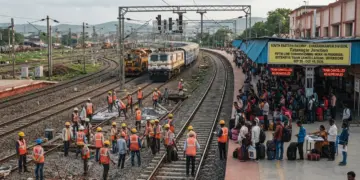
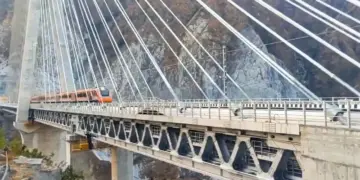
- Completion of 452 km of pier work and 356 km of girder installation on the 508 km route.
- Strategic shift to use indigenous components for transformers, OHE masts, and feeder wires.
- Targeted commencement of the Surat-Vapi section by August 2027.
Advanced Power and Safety Infrastructure
To ensure a stable power supply, the project utilizes electricity from the National Power Grid distributed through 14 traction substations, including facilities in Mumbai, Thane, Virar, Boisar, Vapi, Surat, Vadodara, and Ahmedabad. The corridor also features 31 switching posts for rapid fault isolation. Safety remains a priority, with **28 seismometers installed** to detect seismic activity and trigger automatic emergency braking within seconds. Notably, many core components, including ground wires and protection equipment, are now proudly manufactured in India.
Construction Progress and Future Operations
As of July 22, 2026, the corridor shows impressive physical progress. Out of the total 508 km stretch, **209 km of track bed construction** and 190 km of overhead electric masts are already in place. Work on the challenging 21 km under-sea tunnel is underway, with 4.8 km already completed between Ghansoli and Shilphata. In the Surat-Vapi section, all civil works are finished, with 86% of the track bed laid.
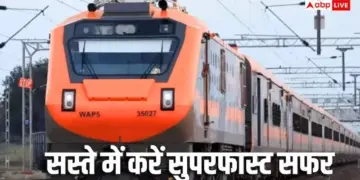
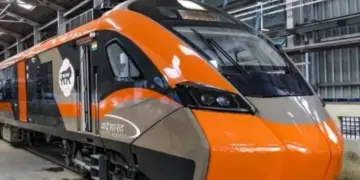
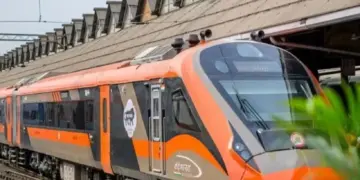
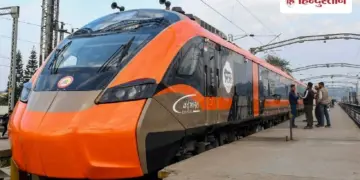
While the project initially faced land acquisition hurdles in Maharashtra, momentum picked up significantly after 2022. Railway Minister Ashwini Vaishnaw confirmed that the **first 100-km section between Surat and Vapi is slated to open by August 2027**, with the full corridor expected to be functional by 2028 or 2029. Although Japanese Shinkansen trains are expected in the 2030s, initial operations will feature **indigenous high-speed trains developed by BEML and the Integral Coach Factory (ICF)**, boasting speeds of 280 kmph.