


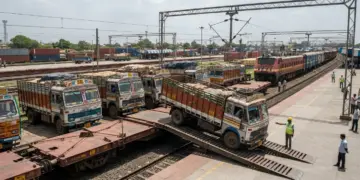
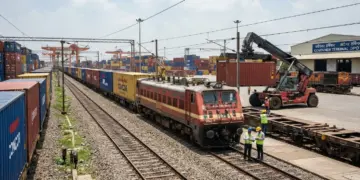



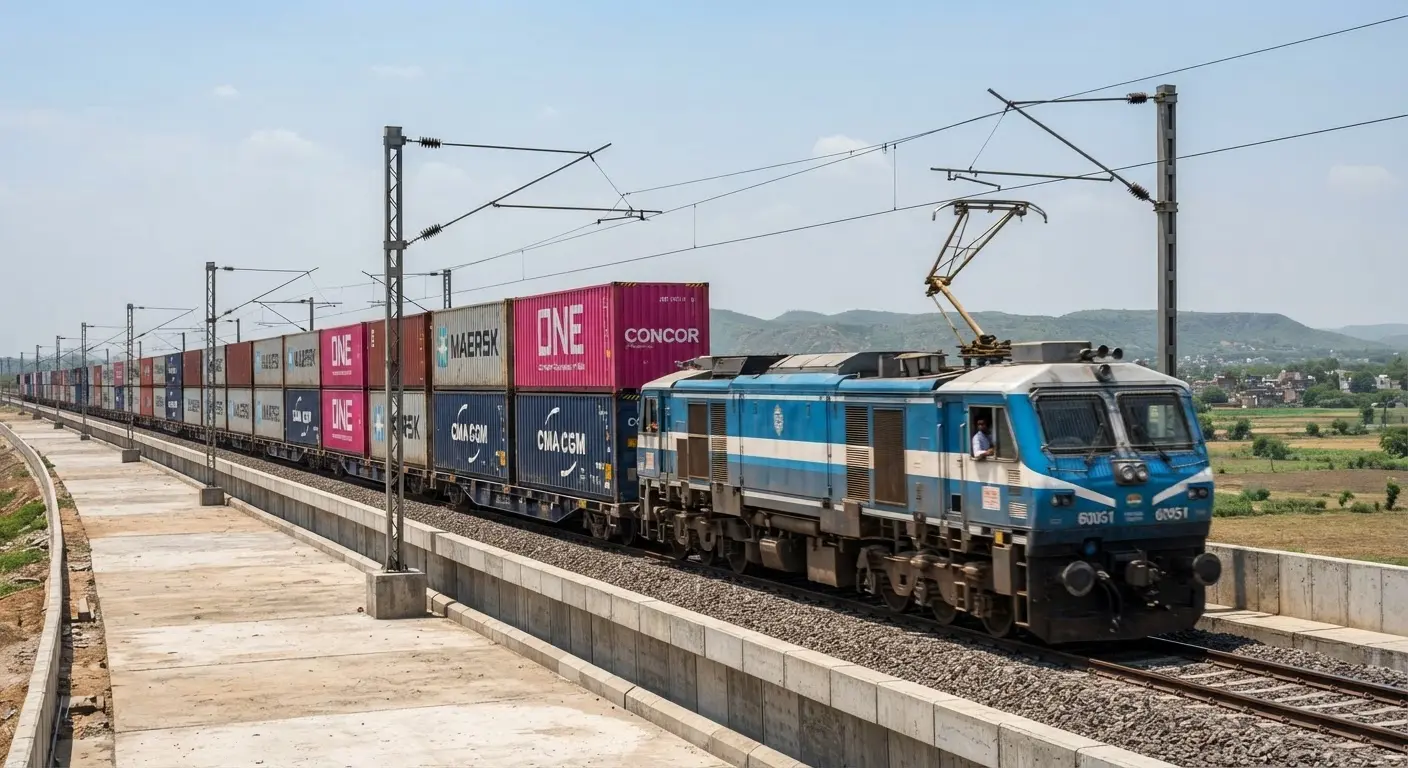

India has officially set a new global benchmark in logistics and rail infrastructure by successfully launching the world’s first electrified double-stack container trains. Operational on the Western Dedicated Freight Corridor (WDFC) since June 2026, this achievement represents a monumental shift in how cargo is transported across the nation. By stacking two containers vertically, Indian Railways is set to increase cargo capacity by up to 50% per journey while simultaneously driving down logistics costs.
Key highlights of this achievement include:
• Successful operation of electrified double-stack trains on the WDFC since June 2026.
• Implementation of a specialized 7.45-meter high-rise overhead equipment (OHE) system.
• Deployment of high-powered electric locomotives featuring advanced high-reach pantographs.
• Successful trial runs completed on the critical 102 km section between JNPT and New Saphale in March 2026.
• Collaborative success involving DFCCIL, CONCOR, and RDSO.
Engineering the Future of Freight
To make this vision a reality, Indian engineers had to overcome the challenge of overhead electrification. Conventional railway electrification is not tall enough to accommodate two stacked containers. To solve this, the team designed a unique High-Rise Overhead Equipment (OHE) system with contact wires installed at approximately 7.45 meters. This height is significantly greater than standard railway electrification, providing the necessary clearance for vertical stacking.
Supporting this structural change, the project utilizes specially developed high-powered electric locomotives equipped with advanced high-reach pantographs. These modifications ensure that the trains can maintain consistent power contact while navigating the high-rise lines, ensuring seamless and safe operations.
A Sustainable Leap Forward
The success of this initiative is a collective effort led by the Dedicated Freight Corridor Corporation of India Limited (DFCCIL), with the Container Corporation of India (CONCOR) and the Research Designs and Standards Organisation (RDSO) playing essential roles in wagon design and operational logistics. Beyond the immediate capacity gains, this development is a major win for the environment. By shifting more freight to high-capacity electric rail, India expects to see a significant reduction in fuel consumption and carbon emissions.
As India looks toward the future, the success of these electrified double-stack trains has opened the door for even more ambitious projects, including potential trials for triple-stack dwarf containers on specific routes. With these advancements, India is firmly establishing its position as a global leader in high-capacity, eco-friendly rail freight solutions.