
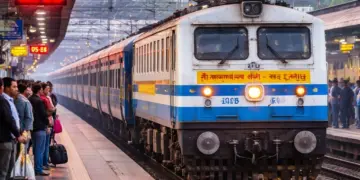

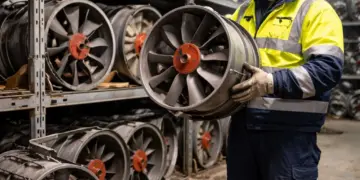







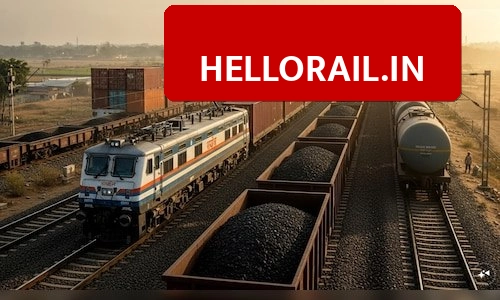

Indian Railways has seen a massive jump in bulk cement transportation following a series of policy reforms. In just four months, cement movement increased by 170%. Railways Minister Ashwini Vaishnaw introduced these measures to make rail logistics more affordable and efficient compared to road transport.
ℹ: IRCTC Update: Special Bharat Gaurav train from Indore to Nepal to depart on June 12।
What are the new charging rules for cement transport?
The Ministry of Railways removed the old system of distance and weight slabs. Now, a flat rate charge per tonne per kilometre is applied based on the actual Gross Tonne Kilometre (GTKM). The rates were initially set at 90 paisa and were later reduced to 85 paisa per tonne per kilometre on February 7, 2026. Further reductions were announced on March 11, 2026, for bulk cement moved in tank containers.
How is the transportation process changing?
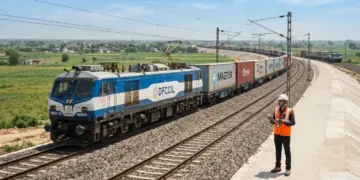
The Container Corporation of India Ltd (Concor) developed special tank containers measuring 20 ft x 8 ft x 8.5 ft with a 26-tonne payload. These containers allow loading and unloading in just 25 to 30 minutes. To support this, silo-based handling is being set up at key terminals to reduce the need for bagged cement and minimize material loss.
What are the benefits of these reforms?
| Feature | Impact of New Policy |
|---|---|
| Transport Cost | Lower freight charges for producers |
| Environment | Reduced fuel use and lower emissions |
| Traffic | Less dependence on road trucks, reducing jams |
| Handling | Less dust and cement leakage |
| Efficiency | Faster rake turnaround and multimodal movement |
Frequently Asked Questions (FAQs)
What is the current charging rate for bulk cement transport?
Indian Railways reduced the charging from 90 paisa to 85 paisa per tonne per kilometre on a Gross Tonne Kilometre (GTKM) basis.
Who is facilitating the new tank containers for cement?
Container Corporation of India Ltd (Concor) developed the special 26-tonne payload tank containers and is setting up silos at terminals.