






Indian Railways has hit a significant milestone in its fiscal roadmap for 2026-27, successfully utilizing over **₹1.14 lakh crore** of its allocated budget by July 2026. This expenditure accounts for **39 percent of the total ₹2.93 lakh crore budget** earmarked for the current fiscal year. A major focus of this financial commitment remains the enhancement of passenger safety and the modernization of rail infrastructure across the country.
Key highlights of the recent railway progress include:
- ₹1.14 lakh crore utilized in the first four months of the 2026-27 fiscal year.
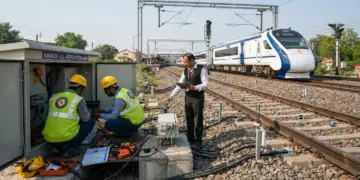
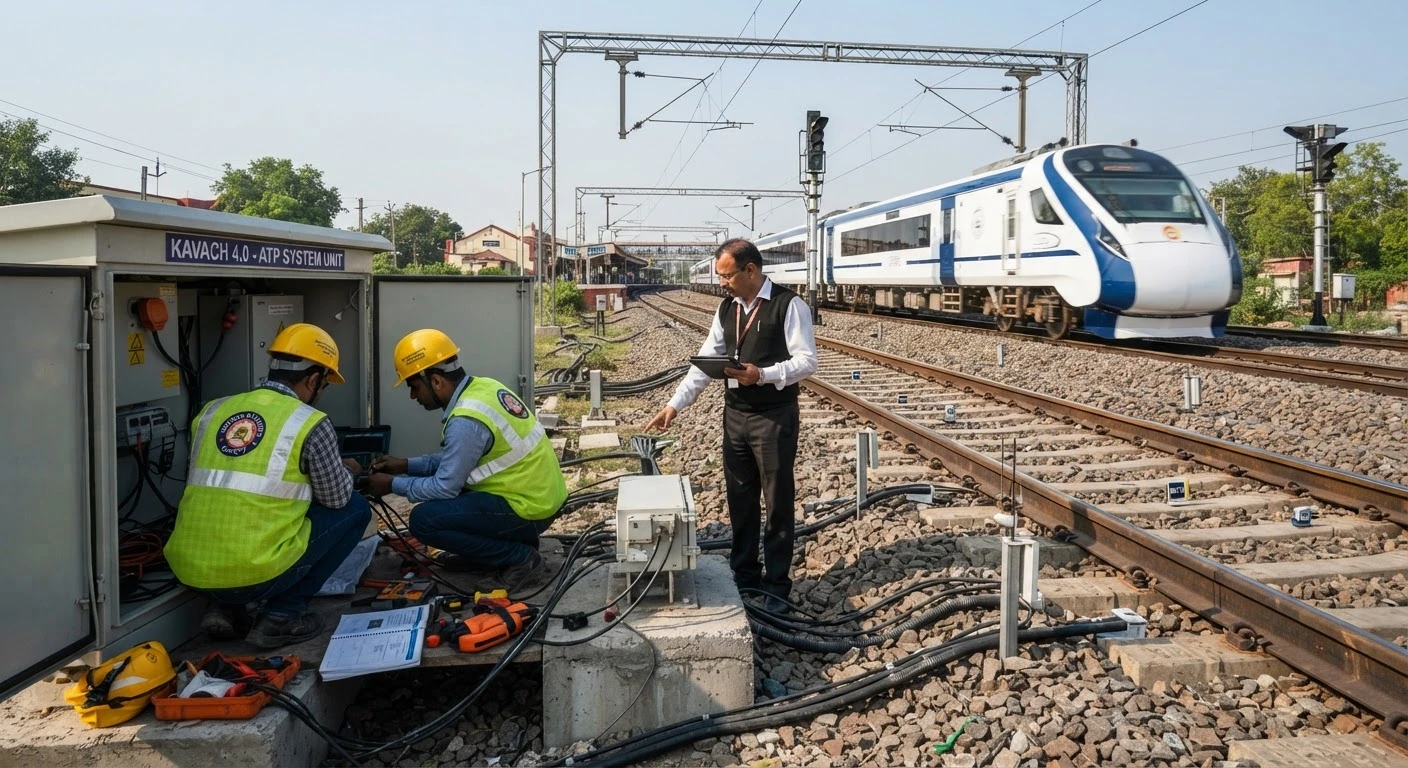
- Kavach 4.0 commissioned across 2,633 route kilometers to boost train safety.
- Deployment covers 1,423 route kilometers on the Delhi-Mumbai corridor and 1,210 route kilometers on the Delhi-Howrah route.
- Total investment in Kavach safety works reached ₹3,875 crore by June 2026.
- Over 514 major infrastructure projects underway covering 40,000 kilometers.
Focus on Safety and Modernization
The introduction of Kavach 4.0 marks a pivotal shift in the national transporter’s safety standards. As an advanced automatic train protection system, its implementation on the high-density Delhi-Mumbai and Delhi-Howrah corridors is designed to significantly reduce the risk of accidents and ensure smoother train operations. With an investment of ₹3,875 crore dedicated specifically to Kavach, the Railways is clearly prioritizing technology-driven safety protocols for millions of daily commuters.
Expanding Infrastructure Capacity
Beyond immediate safety upgrades, the Railways is aggressively pursuing long-term capacity enhancement. Currently, there are 514 sanctioned infrastructure projects in progress, spanning a massive network of 40,000 kilometers. These ambitious projects are estimated to cost approximately ₹8.31 lakh crore, reflecting the government’s intent to decongest the network and improve the overall passenger experience. According to the report released on August 5, 2026, these efforts are part of a broader strategy to modernize the Indian rail network, ensuring that it remains the backbone of the nation’s transport system for years to come.