















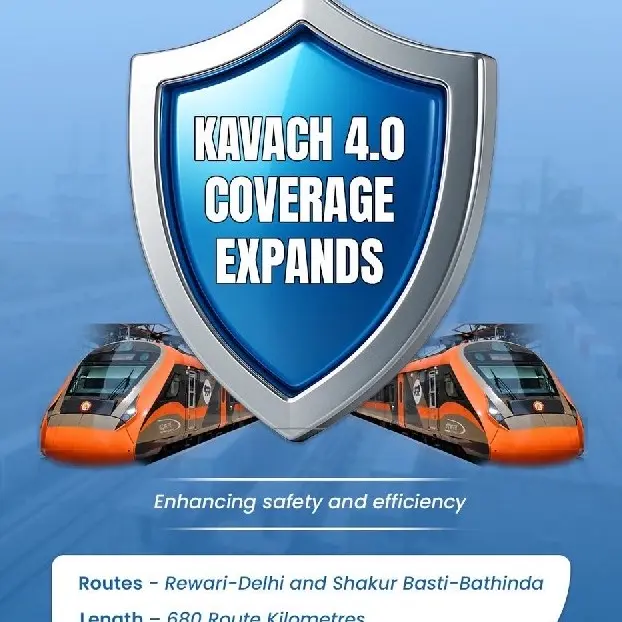

Indian Railways has officially approved the implementation of its advanced indigenous automatic train protection system, Kavach 4.0, across the Rewari-Delhi and Shakurbasti-Bathinda rail sections. Announced on July 10, 2026, this strategic safety initiative covers 680 route kilometers and is set to transform operations within the Northern Railway’s Delhi Division. By integrating the latest version of this technology, the national transporter aims to set a new benchmark for passenger safety and operational efficiency on these vital corridors.
- Safety Upgrade: Kavach 4.0 will be deployed across 680 route kilometers in the Delhi Division.
- Financial Outlay: The project for these specific sections is valued at ₹206 crore, part of a broader ₹381 crore investment plan.
- Advanced Technology: The system is designed to prevent Signal Passed at Danger (SPAD) incidents and mitigate the risk of train collisions.
- Operational Benefits: Enhanced reliability during adverse weather, such as dense fog, and improved movement for both passenger and freight trains.
Strengthening Rail Safety Infrastructure
The decision to deploy Kavach 4.0 follows the formal approval of its technical specifications by the Research Designs and Standards Organisation (RDSO) on July 16, 2024. Unlike older iterations, version 4.0 incorporates significant technological refinements to ensure seamless integration with existing signaling infrastructure. By continuously monitoring train movements and automatically applying brakes if a driver fails to respond, the system serves as a critical safety net that functions even when visibility is severely compromised.
Why Kavach 4.0 Matters for Passengers
For regular commuters and freight operators, the deployment of this system is a game-changer. These sections, which include important feeder branch lines, often experience high traffic density. The implementation of Kavach allows trains to operate at their maximum permissible speeds with greater confidence. This not only reduces the likelihood of human error but also ensures that train operations remain consistent and reliable, regardless of challenging weather conditions. As Indian Railways accelerates its nationwide rollout, projects like the one in the Delhi Division underscore the commitment to modernizing the network, reducing delays, and ultimately ensuring that every journey is as safe as possible for millions of passengers.