


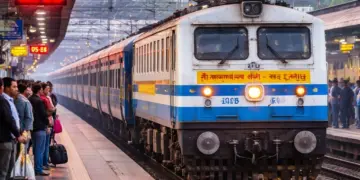












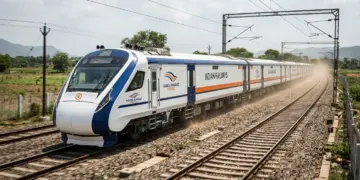



Indian Railways has successfully started the KAVACH 4.0 system on the Delhi-Palwal (PWL) route. This section is a key part of the busy Delhi-Mumbai corridor. The system aims to prevent train collisions and ensure safer travel for passengers by reducing human errors.
What is the scale of Kavach 4.0 installation?
The project on the Delhi-Palwal route covers 21.6 route kilometers. To make this work, the railway installed over 1,200 identification tags, 4 communication towers, and an optical fiber network. Union Railway Minister Ashwini Vaishnav informed the Lok Sabha on May 18, 2026, that KAVACH 4.0 is now operational across 1,452 route kilometers on the high-density Delhi-Mumbai and Delhi-Howrah corridors.
How does the Kavach system work and what are its costs?
The system helps trains stay within their speed limits. If a loco pilot fails to slow down, the system automatically applies the brakes. It is designed to work in various weather conditions, including heavy fog. The cost and training details are as follows:
| Item | Detail/Cost |
|---|---|
| Trackside Installation Cost | ₹50 lakh per km |
| Engine Installation Cost | ₹80 lakh per engine |
| Staff Trained | Over 40,000 employees |
| Total Phase 1 Estimated Cost | ₹7,200 crore |
| RDSO Approval Date | July 16, 2024 |
What are the key features of KAVACH 4.0?
KAVACH 4.0 brings several technical upgrades over older versions. It offers better location accuracy and improved signal information for large railway yards. It also uses an OFC-based station-to-station interface and connects directly with existing electronic interlocking systems. Currently, more than five approved vendors are working on the project, and this number is expected to exceed 20 by 2026.
Frequently Asked Questions (FAQs)
What is the main purpose of the Kavach system?
Kavach is designed to prevent train collisions, ensure trains follow speed limits, and allow safe operations during poor visibility like fog by applying automatic brakes.
How much of the network is covered by KAVACH 4.0 currently?
As of May 18, 2026, KAVACH 4.0 has been commissioned over 1,452 route kilometers on the Delhi-Mumbai and Delhi-Howrah high-density corridors.