









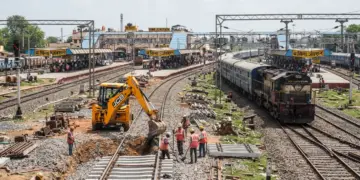


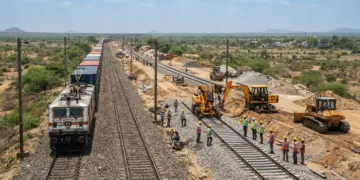










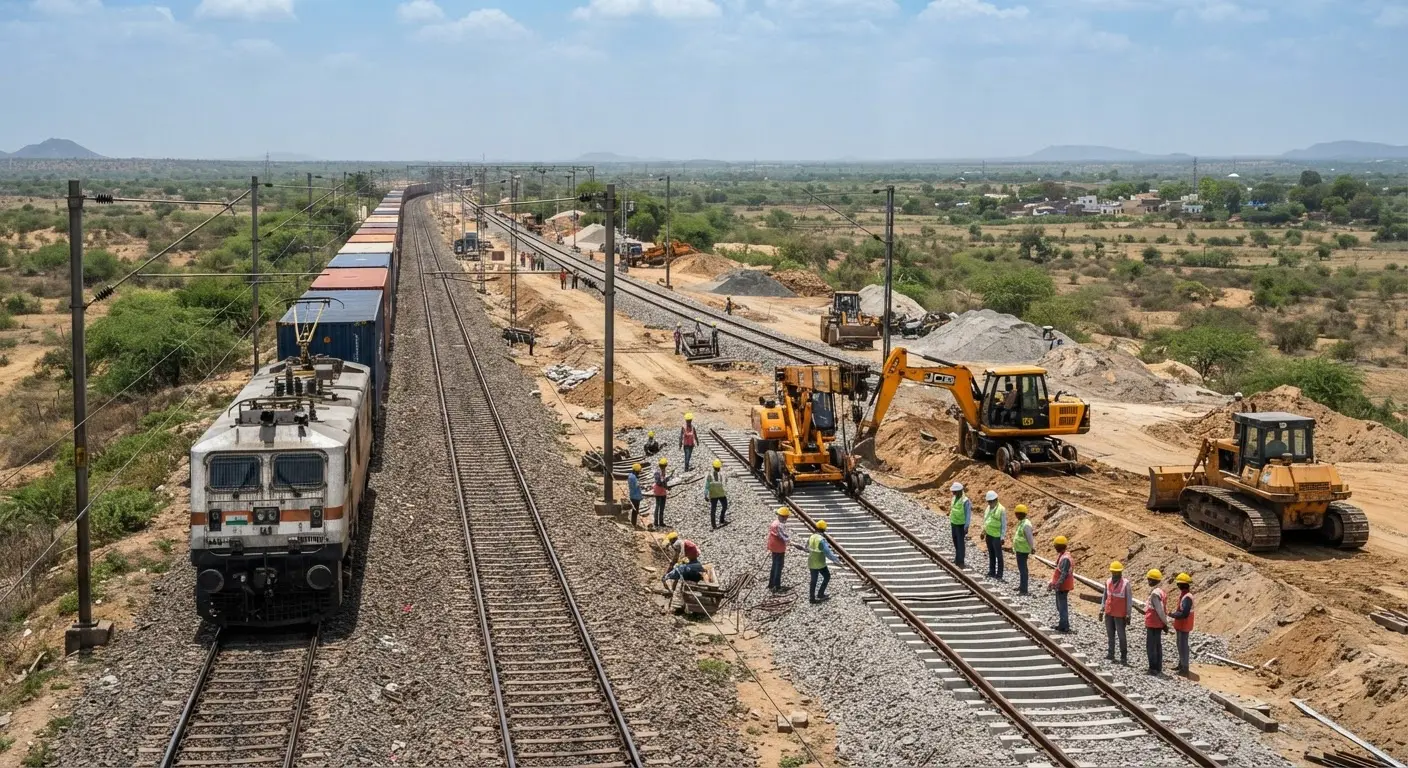

The Cabinet Committee on Economic Affairs, chaired by Prime Minister Narendra Modi, has greenlit a significant infrastructure expansion project aimed at strengthening the Delhi-Mumbai rail corridor. The approval covers the construction of third and fourth rail lines along the 567.86-kilometer Nagda-Mathura section, a vital artery for the nation’s rail network. This major development project, sanctioned in May 2026, is backed by an estimated budget of ₹16,402 crore to ₹16,403 crore.
- Project Scope: Addition of third and fourth rail lines over 567.86 kilometers.
- Budget Allocation: Estimated at ₹16,402 to ₹16,403 crore.
- Strategic Objective: Facilitating 160 km/h train operations by early 2027.
- States Benefited: Madhya Pradesh, Rajasthan, and Uttar Pradesh.
Boosting Capacity and Speed
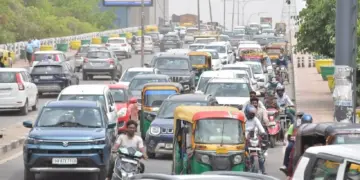
This multi-tracking initiative is a cornerstone of the broader Delhi-Mumbai corridor upgrade. By adding additional tracks, Indian Railways aims to reduce severe congestion that currently plagues this high-traffic route. According to Western Railway General Manager Ramashraay Pandey, the expansion will significantly enhance operational efficiency and ensure better service reliability for both passengers and freight operators.
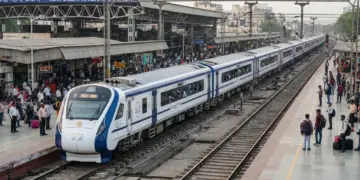
The project is set to play a pivotal role in the government’s vision for high-speed rail travel, with the infrastructure designed to support train operations at speeds of 160 km/h by early 2027. As the construction progresses, the Research Designs and Standards Organization (RDSO) will conduct a confirmatory oscillograph car run to certify the route for these higher speeds, ensuring safety and performance standards are met.
Regional Growth and Logistics
Madhya Pradesh Chief Minister Mohan Yadav has welcomed the approval, highlighting that the project will provide a massive boost to logistics and tourism across Madhya Pradesh, Rajasthan, and Uttar Pradesh. By improving connectivity, the project aligns directly with the PM Gati Shakti National Master Plan, which seeks to integrate infrastructure planning to optimize the movement of goods and passengers across the country. This expansion is expected to be a game-changer for regional economies, streamlining supply chains and making travel faster and more convenient for thousands of daily commuters.