









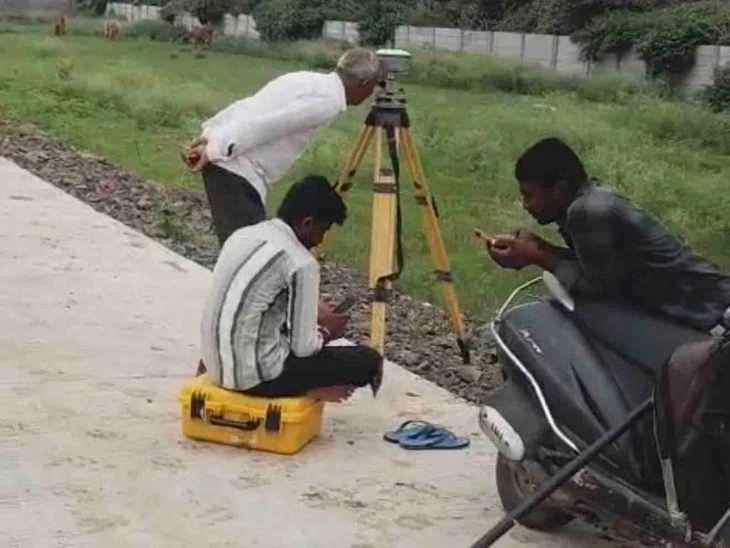

Protests have escalated in Nagda as local residents and stakeholders demand a review of the newly proposed survey route for the third and fourth railway lines. The massive infrastructure initiative is part of a larger government-approved project aimed at improving connectivity and rail capacity across multiple states.
Key highlights of the Nagda railway line project developments:
– The central government approved the 567.86-kilometer expansion between Nagda and Mathura with an investment of ₹16,402.84 crore.
– The project connects Uttar Pradesh, Rajasthan, and Madhya Pradesh, requiring 1,833.40 hectares of land with a five-year completion timeline.
– Local opposition intensified between August 18 and August 22, 2026, over the proposed alignment impacting livelihoods.
– Villagers and local bodies have staged memorandums, protests, and threatened Jal Satyagraha if alternative routes are not considered.
Background of the Nagda Mathura Expansion Project
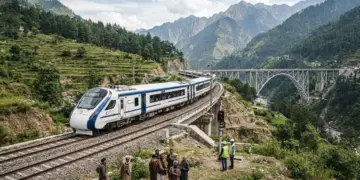
The Union Cabinet greenlit the ambitious 567.86-kilometer expansion project between Nagda and Mathura in May 2026. Backed by an estimated investment of ₹16,402.84 crore, the infrastructure work requires the acquisition of 1,833.40 hectares of land and is slated for completion within five years. According to Kota Division Senior DCM Saurabh Jain, the project is designed to enhance train capacity and support speeds of up to 160 km/h on the busy Delhi-Mumbai corridor. Chief Minister Dr. Mohan Yadav also praised the initiative for boosting logistics and tourism access to key sites like the Mahakaleshwar Temple and Kuno National Park.
Rising Local Opposition and Protests
Despite the long-term benefits, the current survey route has triggered widespread unrest among local communities. Between August 18 and August 22, 2026, protests gained momentum as residents voiced fears of heavy displacement. On August 18, the Nagda Janhit Samiti submitted a memorandum to Governor Thawarchand Gehlot, seeking an alternative route from the New Agriculture Produce Market gate through Ratnyakhedi Road, Bercha Road, Juna Nagda, and Gindwania to near Gurukripa Dhaba on State Highway-17. The group highlighted that the path threatens small farmers holding two to four bighas of land, alongside brick kiln operators, traders, and laborers.
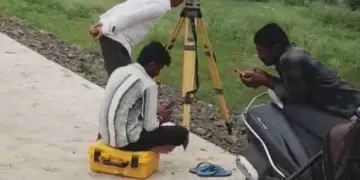
Protests escalated on August 19 as railway officials marked land with lime. Stakeholders formally demanded a ‘transition curve’ connecting the Rohalkhurd-Bedawanya rail bypass to the Nagda-Ratlam track. On August 21, villagers from seven affected areas demonstrated at the Sub-Divisional Magistrate office, demanding the cancellation of the Batisura-Rohalkhurd railway bypass and warning of road blockades and ‘Jal Satyagraha’ if their grievances are ignored.