



















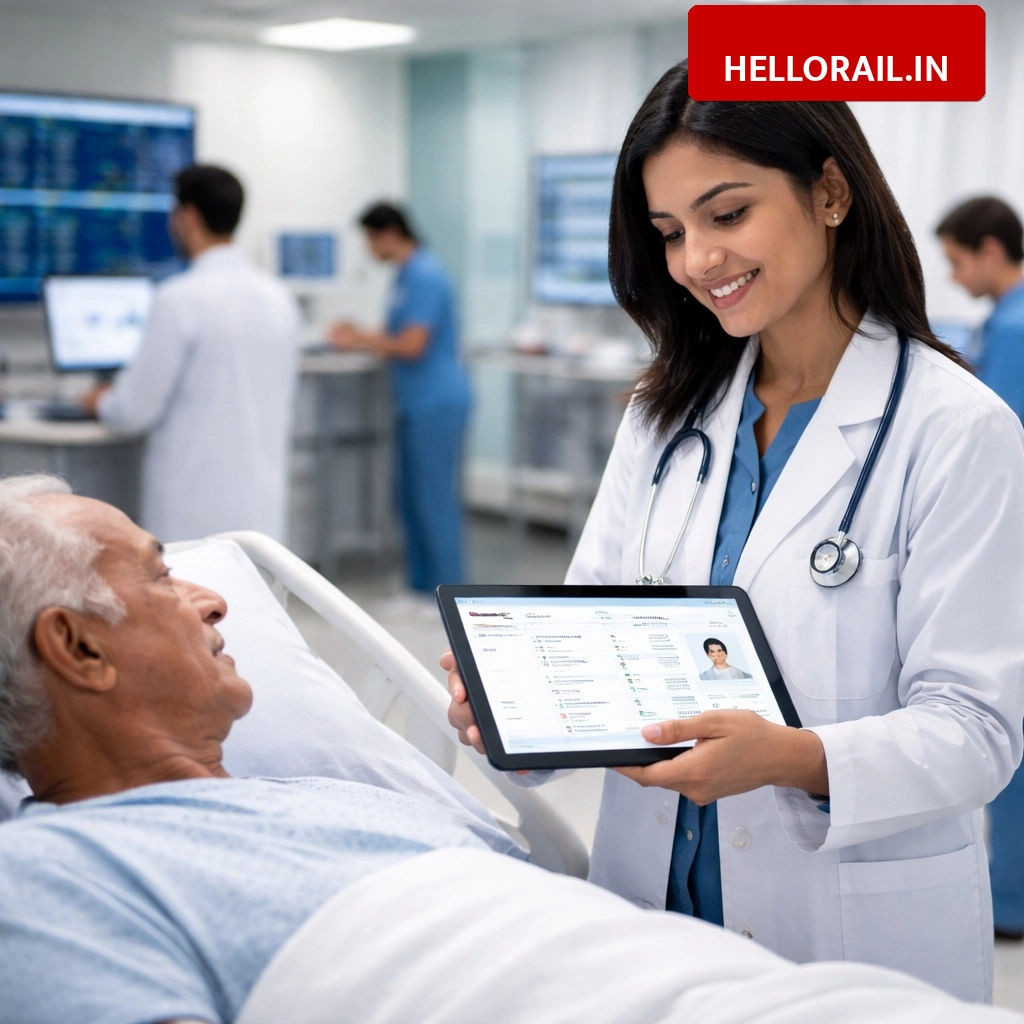

Indian Railways has transitioned to a 100% paperless medical system across 128 hospitals and 582 health units. This digital shift aims to make healthcare easier for railway employees, pensioners, and their dependents. The new system, based on the Hospital Management Information System (HMIS), is now fully operational across various zones, including Muzaffarpur.
👉: New Train Announcement: Indian Railways to launch direct rail service between Ramnagar and Dehradun।
What documents are needed for treatment?
Patients no longer need to carry physical files or paper prescriptions. To get treatment, a patient only needs to carry their Unique Medical Identity Card (UMID) and a registered mobile number. Doctors will enter prescriptions directly into the HMIS portal, and patients can collect their medicines from the pharmacy by simply providing their UMID number.
How does the new digital referral system work?
The referral process is now divided into two categories to ensure faster care:
- Normal Referral (Green Flag): Patients referred to empaneled private hospitals can access treatment using their UMID and an OTP.
- Emergency (Red Flag): Patients can go directly to private hospitals. The hospital must update the HMIS portal within 24 hours, and railway doctors will review the case within 48 to 72 hours.
Additionally, referral extensions can now be applied for online via the HMIS app, so patients do not have to visit the hospital physically for paperwork.
What are the benefits for senior pensioners?
Pensioners above 70 years of age who do not receive the Fixed Medical Allowance will now get cashless OPD and diagnostic services at private hospitals. They no longer need a separate RELHS card as the UMID card is now sufficient for all these services.
| Feature | Old System | New Paperless System |
|---|---|---|
| Prescriptions | Paper-based | Digital (HMIS) |
| Referrals | Physical Application | Online/Digital |
| Identification | Multiple Cards/Files | UMID Card & Mobile No. |
| Senior Citizen Care | RELHS Card required | UMID Card sufficient |
Frequently Asked Questions (FAQs)
What is the role of the UMID card in the new system?
The UMID card serves as the primary identity for all medical processes. It is used for doctor consultations, collecting medicines from the pharmacy, and accessing cashless services at private hospitals.
How can a patient apply for a referral extension?
Patients can now apply for referral extensions online through the HMIS app, which removes the need to visit the hospital for manual paperwork.
{“@context”: “https://schema.org”, “@type”: “FAQPage”, “mainEntity”: [{“@type”: “Question”, “name”: “What is the role of the UMID card in the new system?”, “acceptedAnswer”: {“@type”: “Answer”, “text”: “The UMID card serves as the primary identity for all medical processes. It is used for doctor consultations, collecting medicines from the pharmacy, and accessing cashless services at private hospitals.”}}, {“@type”: “Question”, “name”: “How can a patient apply for a referral extension?”, “acceptedAnswer”: {“@type”: “Answer”, “text”: “Patients can now apply for referral extensions online through the HMIS app, which removes the need to visit the hospital for manual paperwork.”}}]}