

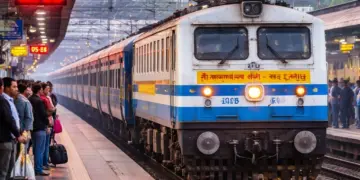


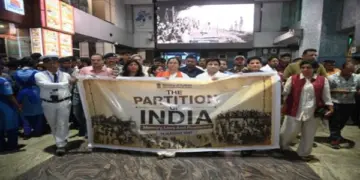



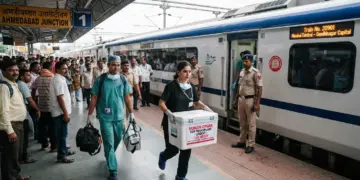


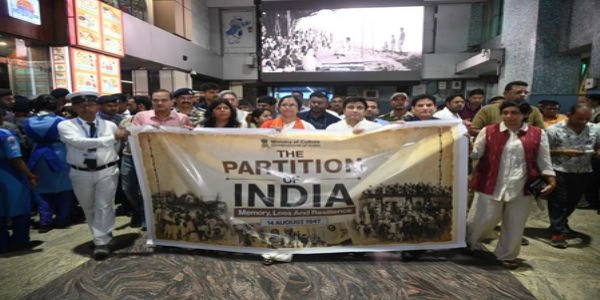

A significant step was taken on Friday as a ‘Bhoomi Pujan’ ceremony was conducted at Sealdah Railway Station to mark the beginning of a memorial dedicated to the victims of the 1947 partition. This initiative, organized in coordination with the Union Ministry of Culture and the Indira Gandhi National Centre for the Arts (IGNCA), aims to honor the millions who faced displacement, violence, and profound tragedy during the partition of India.
Key highlights of the event include:
• Formal commencement of construction through a ‘Bhoomi Pujan’ ceremony.
• A special photo exhibition showcasing the struggle and resilience of displaced families.
• Historical recognition of Sealdah Station as a primary transit point for refugees from East Pakistan (now Bangladesh).
• Commitment from Eastern Railway to preserve the memories of those who survived the ordeal.
A Historic Gateway of Resilience
Following the partition, Sealdah Station served as the lifeline for countless Bengali Hindu refugees. Historical records indicate that between 1947 and 1950, more than 20,000 refugees were present at the station at any given time, with many living on the platforms for years while facing unimaginable hardships. Eastern Railway General Manager Geetika Pandey emphasized that the station is a living witness to this human tragedy, and the memorial is a duty to ensure future generations remember the courage of these survivors.
More Than Just a Monument
Sealdah Divisional Railway Manager (DRM) Rajiv Saxena stated that the division is honored to host this memorial. It is designed to be a symbol of courage, hope, and memory rather than just a static statue. The project aims to document the stories of those who arrived with nothing and managed to rebuild their lives from scratch.
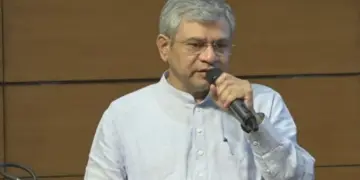
The event saw the presence of several dignitaries, including West Bengal ministers Agnimitra Paul, Purnima Chakraborty, and Tapas Ray, alongside partition survivor Himanshu Gangopadhyay. By integrating the photo exhibition with a permanent memorial structure, the Indian Railways intends to turn the station into a site of reflection, ensuring that the resilience of the partition victims remains etched in the national consciousness for years to come.