
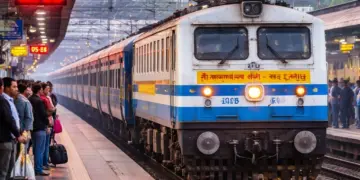




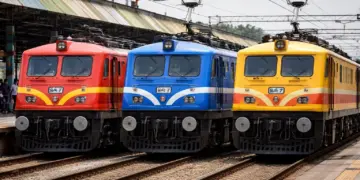
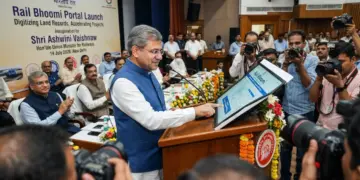


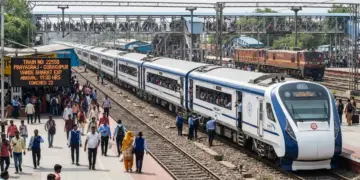
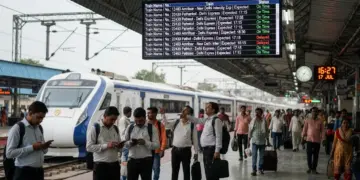

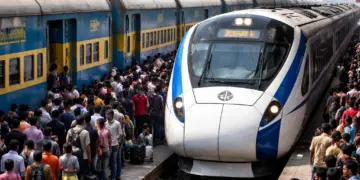






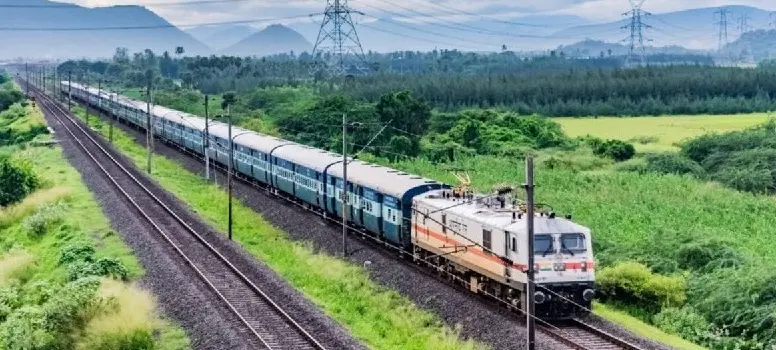

The Cabinet Committee on Economic Affairs, chaired by Prime Minister Narendra Modi, has officially approved two major multi-tracking rail projects in Odisha and Jharkhand. Announced by Information and Broadcasting Minister Ashwini Vaishnaw on Wednesday, July 15, 2026, these initiatives are set to transform regional connectivity with a total investment of INR 3,907 crore. The developments are part of the broader PM Gati Shakti National Master Plan, aimed at streamlining logistics and enhancing passenger movement across the region.
Key highlights of the approved rail projects:
- Total investment of INR 3,907 crore for infrastructure expansion.
- Doubling of the Paradip-Haridaspur rail line.
- Construction of a fourth line on the Rajkharsawan-Dangoaposi section.
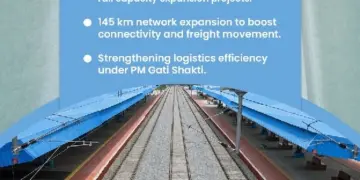
- Expansion of the network by approximately 145 kilometers across four districts.
- Target completion date set for 2030-31.
Boosting Industrial and Passenger Mobility
These infrastructure upgrades are designed to alleviate congestion on some of the busiest routes in eastern India. By adding 145 kilometers of new track, the projects will significantly improve operational efficiency. Beyond passenger convenience, these lines serve as critical arteries for the transport of essential minerals, including coal, iron ore, dolomite, limestone, and gypsum. Once operational, the projects are projected to increase freight carrying capacity by an additional 44 million tonnes per annum (MTPA), providing a massive boost to local industries.
Environmental and Economic Impact
Beyond the industrial advantages, the projects carry significant social and environmental weight. An estimated 1.4 million people across 1,526 villages are expected to gain improved rail access. Furthermore, the initiative emphasizes sustainable growth; the government estimates an annual saving of 6 crore liters of oil and a reduction of 29 crore kilograms of CO2 emissions, which is environmentally equivalent to planting 1 crore trees.
Tourism is also expected to flourish, with better rail connectivity to prominent cultural and religious sites such as the Lalitgiri Buddhist Complex and the Shri Baladevjew Temple. By fostering economic development and creating new employment opportunities, these projects mark a significant milestone in the modernization of India’s railway network.