















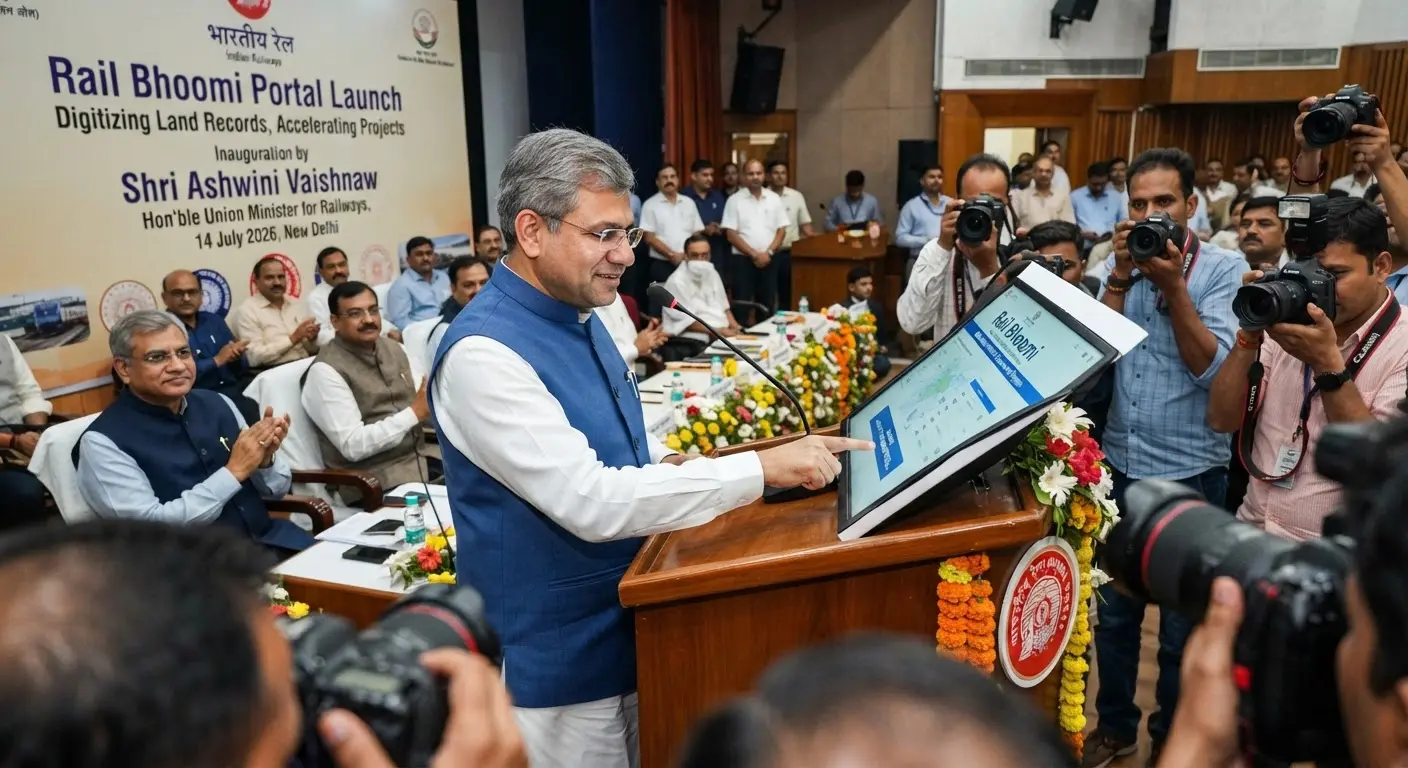

Indian Railways has taken a significant leap toward modernization with the official launch of the Rail Bhoomi Portal on July 14, 2026. This web-based platform is set to replace the traditional, time-consuming manual record-keeping system, bringing transparency and efficiency to land acquisition for railway projects across the country. Union Railways Minister Ashwini Vaishnaw inaugurated the portal, marking a key milestone in the national transporter’s commitment to faster infrastructure development.
Key highlights of the new initiative include:
• Rail Bhoomi Portal aims to digitize the entire land record management system of Indian Railways.
• The system is projected to reduce land acquisition timelines by 30-40% depending on the state.
• Developed by the Centre for Railway Information Systems (CRIS) following an extensive four-month study.
• Integrated with existing platforms like IRPSM, IPAS, and HRMS for seamless monitoring.
• Part of the broader “52 Reforms in 52 Weeks” initiative to improve project execution.
Streamlining Infrastructure Development
The Rail Bhoomi Portal is designed to eliminate procedural bottlenecks that have historically delayed critical railway projects. By providing officials with comprehensive, real-time dashboards, the platform tracks everything from compensation status to statutory timelines. Minister Vaishnaw highlighted that the primary goal is to ensure fair compensation and total transparency for all stakeholders, particularly farmers, while significantly reducing the potential for long-term litigation.
New Construction and Contractor Reforms
Alongside the portal launch, the Ministry has introduced stricter guidelines for construction contracts to ensure quality and timely completion. Under the new reforms, contractors are now mandated to provide 10% performance security upfront at the start of a contract. Furthermore, the Railways has implemented a strict eligibility clause that bars contractors with pending litigation exceeding 50% of their net worth from participating in new railway contracts.
These measures, combined with the digital efficiency of the Rail Bhoomi portal, reflect a proactive approach to clearing hurdles in the nation’s railway expansion. By digitizing legacy records and enforcing higher accountability for contractors, Indian Railways is positioning itself to deliver infrastructure projects with greater speed and reliability, ultimately benefiting passengers and the national economy.