






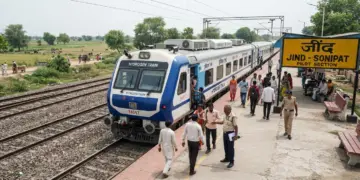

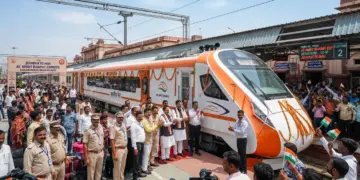



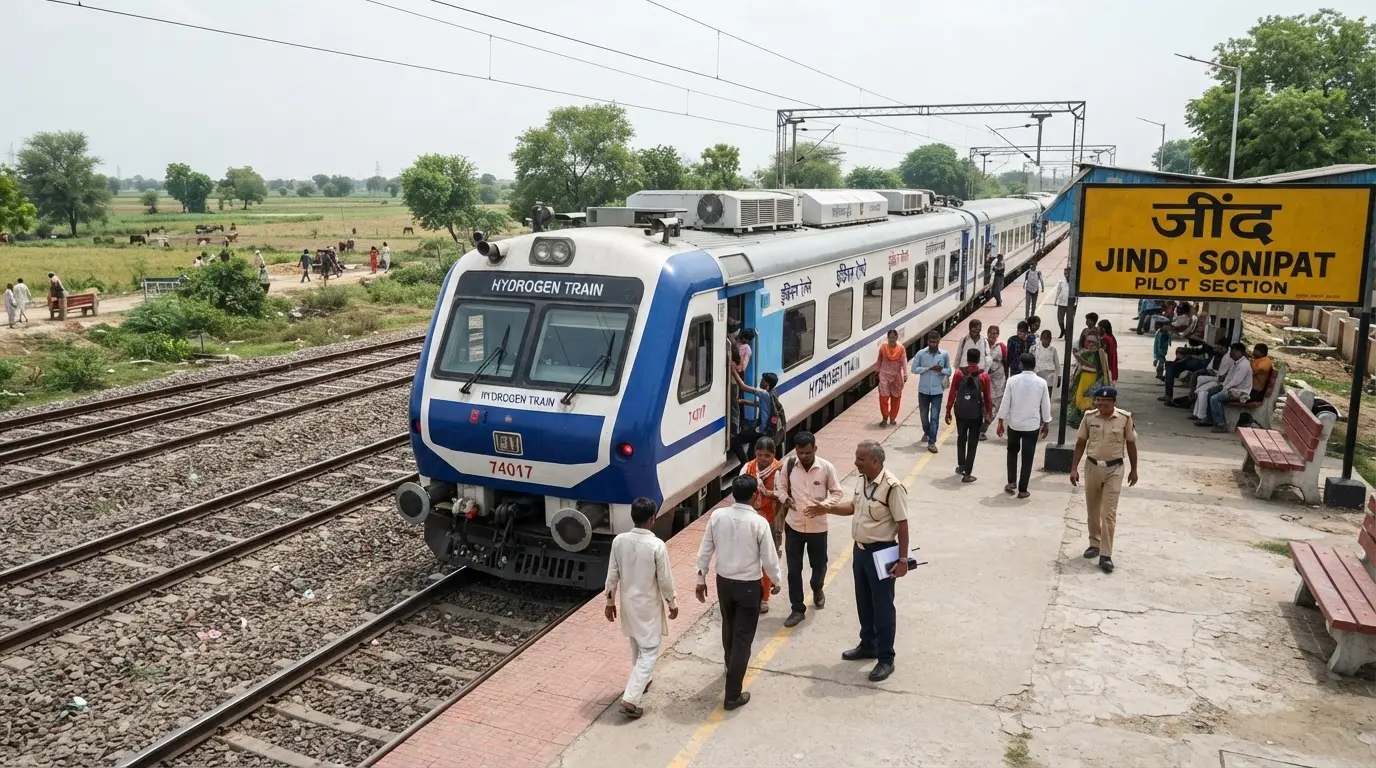

Indian Railways is currently evaluating the future roadmap for hydrogen-powered trains following the successful launch of the pilot project between Jind and Sonipat. While the technology marks a major milestone in India’s green energy transition, officials have confirmed that further expansion depends on resource availability and operational performance.
Key updates on the hydrogen train project include:
• The “NaMo Green Rail” pilot service operates on an 89-km route between Jind and Sonipat.
• Commercial operations began on July 19, 2026, following an inauguration on July 17, 2026.
• The train has already completed 2,492 km of service as of August 3, 2026.
• The project is part of the broader “Hydrogen for Heritage” initiative aiming for 35 trainsets.
• Total development cost for the pilot project stands at Rs 141 crore.
Operational Success and Technical Specifications
Prime Minister Narendra Modi officially inaugurated the nation’s first domestically built hydrogen train at Jind railway station on August 7, 2026. Designed and manufactured by the **Integral Coach Factory (ICF) in Chennai**, the train is engineered for sustainability, emitting only water vapor instead of carbon dioxide. The trainset features two hydrogen-powered driving cars alongside eight passenger coaches, with a **passenger capacity of approximately 2,600 people**. During its trial phase on the Jind–Sonipat section, the train has been cleared for a **maximum operating speed of 75 km/h**.
To support this technology, a dedicated hydrogen plant has been established at Jind. This facility is capable of producing, storing, and compressing hydrogen, boasting a **storage capacity of nearly 3,000 kg** to ensure seamless refueling for the fleet.
Future Outlook for Hydrogen Rail
Railway Minister Ashwini Vaishnaw informed the Rajya Sabha that the Jind-Sonipat route is serving as a vital testing ground to prove the safety and reliability of hydrogen fuel cells in real-world conditions. While the “Hydrogen for Heritage” program remains a priority, the Ministry is taking a cautious approach toward scaling up. **Broader deployment across the national network is anticipated after 2030**, contingent on significant reductions in hydrogen production costs and improvements in fuel-cell durability. This initiative remains a cornerstone of India’s long-term commitment to achieving **net-zero emissions by 2070**.