





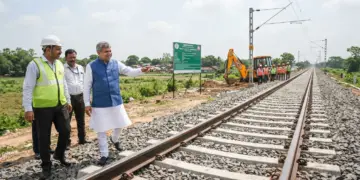

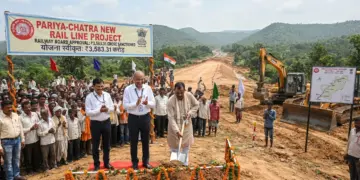




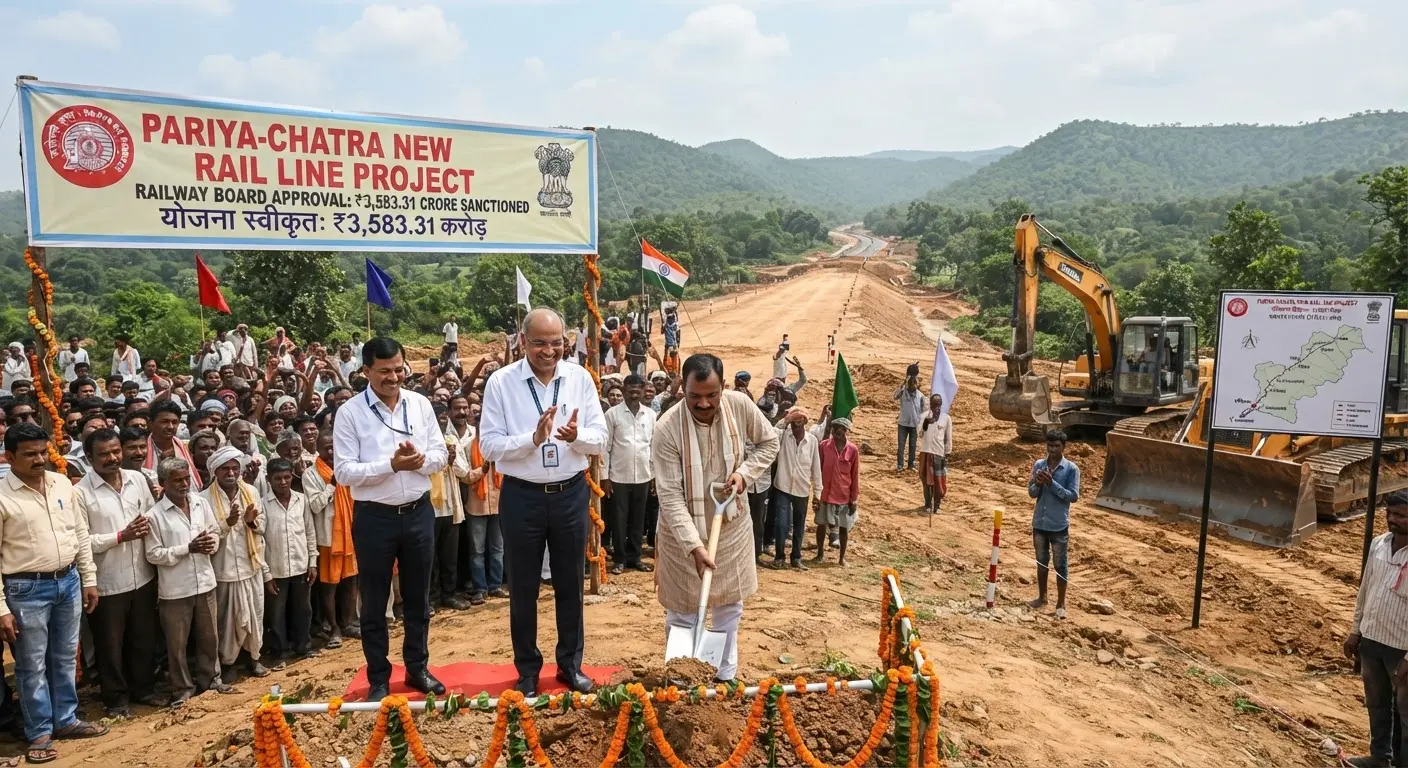

The Indian Railways has officially greenlit a major infrastructure project aimed at transforming connectivity in the region. On August 8, 2026, the Railway Board sanctioned the detailed cost estimate for the new Pariya-Chatra rail line, a project that promises to bridge critical gaps in the existing network. With a total budget of ₹3,583.31 crore, this initiative has received the President’s formal approval and is now moving toward the construction phase.
Key highlights of the Pariya-Chatra rail project include:
- Total length of the new rail line is 75.1 kilometers.
- Includes a strategic 4.95-kilometer Y-connection at Kashta (Kasya).
- Total project cost is ₹3,583.31 crore, covering civil, electrical, and signal works.
- Project is classified as a special railway project under the East Central Railway (ECR) zone.
- Land acquisition process is already underway to expedite construction.
Breakdown of Project Costs
To ensure the highest standards of safety and efficiency, the budget has been allocated across three primary technical sectors. The largest portion, ₹3,116.40 crore, is earmarked for civil engineering works. Furthermore, ₹343.86 crore has been allocated for electrical and traction (TRD) infrastructure, while ₹123.05 crore is dedicated to modern signal and telecommunication (S&T) systems. This comprehensive investment ensures that the new route will be equipped with modern railway technology from the outset.
Boosting Regional Growth
Falling under the jurisdiction of the East Central Railway (ECR), the project is expected to be a major catalyst for economic growth. Local leaders, including Chatra MP Kalicharan Singh, have been instrumental in pushing this project forward, emphasizing its potential to open new avenues for trade, education, and healthcare.
By connecting key areas like Gaya, Pariya, Kashta, and Chatra, the rail line is set to improve daily commute times and stimulate tourism in the region. As the land acquisition process gains momentum, residents can look forward to enhanced connectivity that will link these previously underserved pockets to the broader national rail network, ultimately fostering better employment and development opportunities for the local population.