





















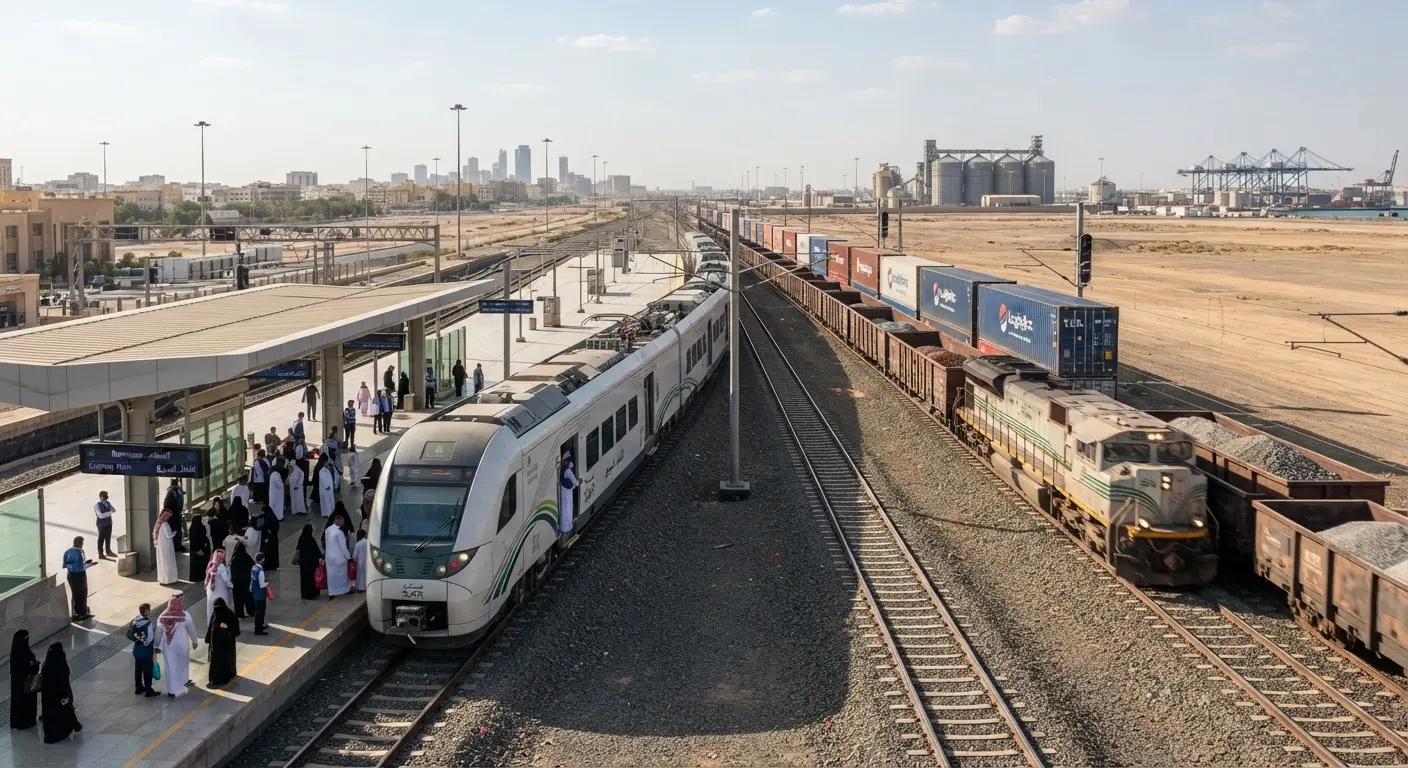

Saudi Arabia’s rail network has demonstrated robust growth in the second quarter of 2026, with the Transport General Authority (TGA) reporting that over 38 million passengers utilized the country’s train services. Beyond passenger travel, the rail system played a pivotal role in logistics by transporting 3.7 million tons of minerals and goods, supplemented by the movement of 47,000 standard containers. These figures highlight the expanding importance of rail as a sustainable and efficient backbone for the Kingdom’s infrastructure.
Key highlights from the Q2 2026 rail performance include:
- Urban Rail Dominance: A total of 36 million passengers utilized metro and automated people mover services.
- Riyadh Metro Success: The network served 29.7 million commuters, leading the urban transit statistics.
- High-Speed Connectivity: The Haramain High Speed Railway recorded 1.6 million passengers between Makkah and Madinah.
- Freight Strength: Saudi Arabia Railways (SAR) successfully moved 3.7 million tons of goods across its North and East lines.
Urban Connectivity and Metro Performance
Urban rail services continue to be the primary driver of passenger growth in Saudi Arabia. The Riyadh Metro led the way with 29.7 million users, while the Al-Mashaaer Metro recorded 1.9 million passengers. Specialized transit systems also performed well, with the automated people mover at King Abdulaziz International Airport serving 3.9 million passengers, and the Princess Nourah bint Abdulrahman University line recording 635,000 passengers. These numbers underscore a significant shift toward rail-based urban mobility to reduce road congestion.
Inter-City and Freight Operations
For inter-city travel, the Haramain High Speed Railway remains a vital link, connecting major hubs including Makkah, Madinah, Jeddah, and King Abdullah Economic City, with 1.6 million passengers during the quarter. The Eastern Train, connecting Riyadh to Dammam, carried 389,000 passengers, while the Northern Train served 246,000 travelers across its various stops including Hail and Al-Jouf.
On the logistics front, freight operations are essential to the Kingdom’s supply chain. The SAR North Train moved 3.3 million tons of goods, while the SAR East Train transported 396,000 tons. By moving 47,000 twenty-foot equivalent units (TEUs), Saudi Arabia is effectively strengthening the logistical connection between its major ports and economic zones, directly boosting national economic activity and supporting long-term sustainability goals.