
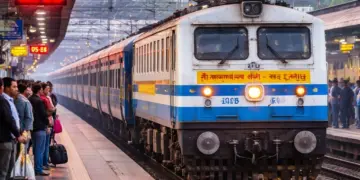

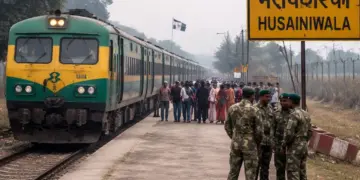
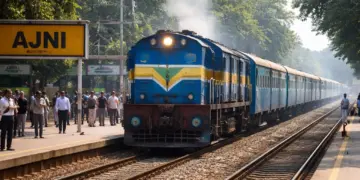



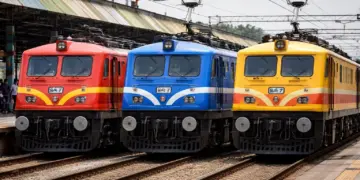



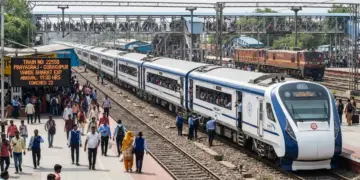






Indian Railways has sanctioned several major projects worth ₹1,236 crore to strengthen its communication infrastructure and expand the indigenous Kavach train protection system. This move by the Ministry of Railways aims to enhance operational safety and modernize the digital network across various zones including Central, Western, and Southern Railway. The announcement marks a significant step toward preventing train accidents through advanced technology and secure data management.
👉: Meerut to Haridwar and Rishikesh Namo Bharat Train Extension: CM Dhami Proposes New Route to PM Modi।
How will the ₹1,236 crore budget be utilized across railway zones?
The Ministry of Railways has allocated these funds to specific regions for upgrading digital and safety systems. A significant portion is dedicated to the Central Railway for building a dual-fiber communication network across its five divisions. Western Railway will focus on completing optical fiber networks in Gujarat while Southern Railway targets busy routes for safety upgrades. The projects are designed to improve safety and generate revenue by leasing out extra fiber capacity.
| Railway Zone | Project Focus | Estimated Cost |
|---|---|---|
| Central Railway | Dual-fiber network in Mumbai, Pune, Nagpur, Bhusawal, Solapur | ₹623.63 crore |
| Southern Railway | Kavach 4.0 on 548 km routes in Tamil Nadu, Kerala, Karnataka | ₹310.18 crore |
| Western Railway | Optical fiber network in Rajkot and Bhavnagar divisions | ₹302.26 crore |
| Security Operations | Cybersecurity (IR-SOC) to be completed by March 2026 | Digital Safety |
What are the key features of the Kavach 4.0 and IR-SOC projects?
The Kavach 4.0 system will be deployed on busy routes like Jolarpettai-Erode and Chennai Beach-Chengalpattu. Developed by RDSO, this indigenous technology automatically applies brakes in critical situations to prevent collisions. Alongside physical safety, the Indian Railway Security Operations Center project has been approved to protect digital data from cyber threats. This project will include a central hub at the Railway Board level and 26 sub-centers across different units to ensure a secure digital environment.