







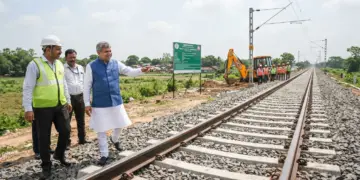






Commuters in Bihar’s Buxar district have received a major relief as the construction of the Railway Over Bridge (ROB) near Dumraon railway station has officially resumed. The project, which faced a temporary setback, is set to resolve long-standing traffic issues at the busy level crossing. Key highlights of the development include:
- The project work was formally inaugurated by local MLA Rahul Singh on Sunday, August 9, 2026.
- The ROB construction is estimated at a total cost of 44 crore rupees.
- The broader Dumraon ROB project carries an overall budget of 57.44 crore rupees.
- The construction agency has been strictly instructed to maintain high-quality standards throughout the build.
Resolving Procedural Hurdles
The project had hit a roadblock in July 2026, leading to a month-long halt. The delay was primarily caused by a procedural disagreement regarding a No Objection Certificate (NOC) required for tree felling. While railway officials, including Sujit Singh, pointed to the lack of an NOC as the primary barrier, Bhojpur DFO Praduman Gaurav clarified that the delay stemmed from a failure to follow the correct protocols for acquiring permission on central government land. With these issues now addressed, the project has gained fresh momentum.
Progress on Sahibganj ROB Project
In addition to the progress in Bihar, infrastructure development is also moving forward in Jharkhand. Eastern Railway General Manager Milind Deuskar announced on Monday, July 27, 2026, that the construction of a long-pending ROB at the Western Railway crossing in Sahibganj is nearing its start date. The tender process for the project has been successfully completed, and officials are currently awaiting final approval from the district administration to begin work on the ground.
These infrastructure projects are part of a larger push by the Indian Railways to eliminate busy level crossings, thereby enhancing both road traffic flow and railway safety. Residents in both Dumraon and Sahibganj are hopeful that these bridges will significantly reduce transit times and improve daily travel experiences for thousands of commuters.