



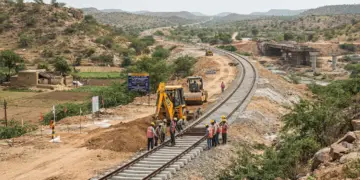
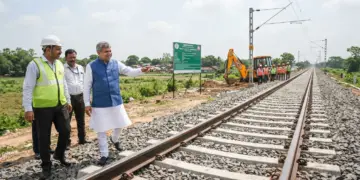
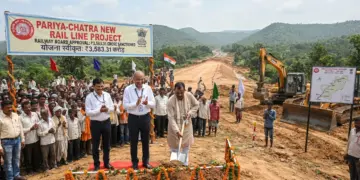


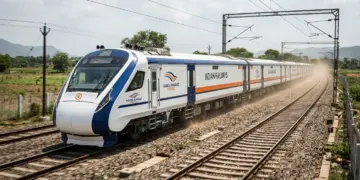


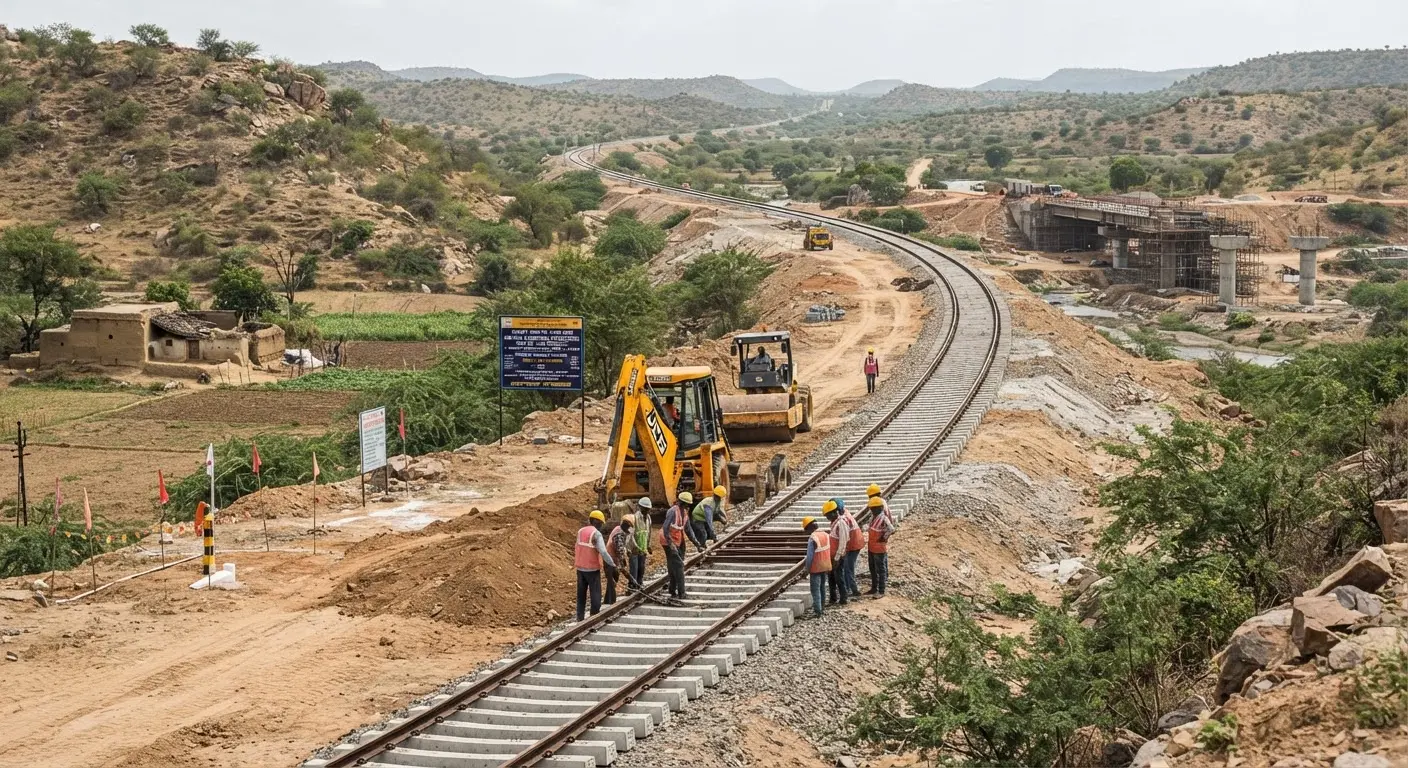

The ambitious Ratlam-Banswara-Dungarpur new rail line project in Rajasthan is witnessing steady progress as authorities work to overcome long-standing land acquisition challenges. This infrastructure development aims to transform regional connectivity, with the following key updates regarding the project status:
- The 189-kilometer rail line has an approved cost of 2,083 crore rupees.
- The project is funded on a 50:50 cost-sharing basis between the Rajasthan government and the Ministry of Railways.
- To date, 646 hectares of land have been acquired out of the 1,736 hectares required.
- Total expenditure incurred on the project reached 243 crore rupees by March 2026.
- A new survey for the 380-kilometer Neemuch-Banswara-Dahod-Alirajpur-Nandurbar line has been approved.
Project Background and Challenges
Initially approved in the 2011-12 fiscal year, the project has faced a delay of approximately 15 years. Union Railway Minister Ashwini Vaishnaw addressed the Rajya Sabha on August 7, 2026, highlighting that the primary bottlenecks have been the state government’s cost-sharing obligations and the complexities involved in acquiring land. Under the current agreement, the Rajasthan state government holds the responsibility for the costs associated with land acquisition.
Increased Focus on Rajasthan Infrastructure
The central government has significantly ramped up its financial commitment to Rajasthan’s railway network. Data indicates that the annual budget allocation for the state’s rail infrastructure has surged nearly 15-fold, increasing from an average of 682 crore rupees per year between 2009 and 2014 to a massive 10,228 crore rupees in 2026-27.
Factors Influencing Project Timelines
While funding has increased, the completion of such large-scale rail projects remains subject to several external variables. According to the Ministry of Railways, the pace of work depends heavily on the timely handover of land by state authorities, the procurement of forest and statutory clearances, and the shifting of existing utilities. Additionally, site-specific conditions, including geological and topographical challenges, as well as local law and order situations, play a critical role in determining the final completion date. The railway administration continues to coordinate with state officials to expedite these processes and bring the project to fruition.