




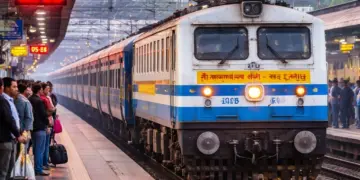


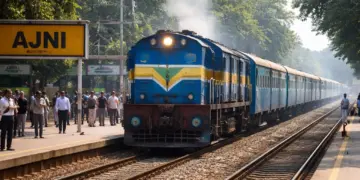


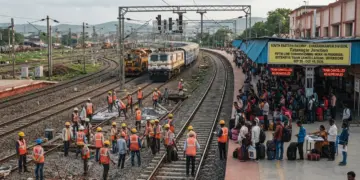
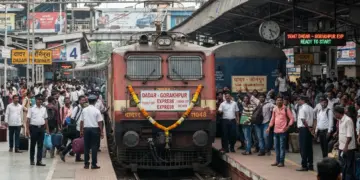

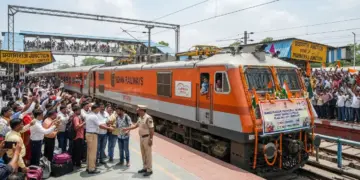





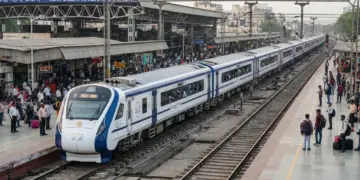

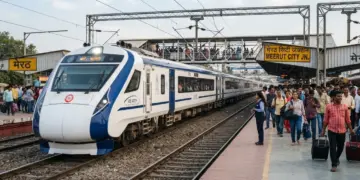



India is aggressively scaling up its transport infrastructure by pivoting from the 2021-2030 network plan toward a long-term 2050 roadmap. This strategic shift aims to modernize the nation’s connectivity, ensuring that the Indian Railways remains future-ready while significantly boosting freight movement. Key highlights of this massive infrastructure overhaul include:
- A record ₹2,93,000 crore capital expenditure allocated to Indian Railways for 2026-27.
- The ambitious National Rail Plan (NRP) 2030 targeting a 45% share in freight transport.
- Approval for seven new high-speed rail corridors covering 4,000 km at an estimated cost of ₹16 lakh crore.
- A massive push for safety with Indian Railways committing to 100% funding for all new Road Over Bridges (ROB) and Road Under Bridges (RUB) to eliminate level crossings.
- Achieving 99.6% electrification of the broad gauge network as of July 2026.
Expanding Network Capacity and Efficiency
Indian Railways is working at a brisk pace to clear a backlog of 514 projects spanning 40,000 kilometers, with a target to lay 4,000-5,000 kilometers of track annually over the next five years. Recent project approvals highlight this momentum: on July 24, 2026, the Cabinet cleared a ₹1,264 crore project for a third and fourth line on the Ballari-Guntakal section, expected to be ready by 2028-29. Additionally, a ₹440 crore project was sanctioned on July 23, 2026, for a 14.52-kilometer third line between Nimpura West Outer Cabin and Midnapore to decongest the South East Railway zone.
The Rise of High-Speed Rail and Indigenous Technology
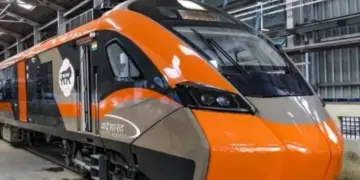
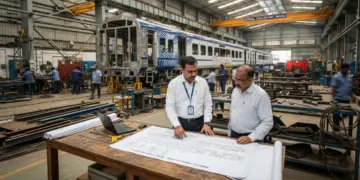
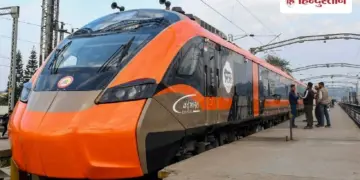
India’s high-speed ambitions are turning into reality with the Mumbai-Ahmedabad High-Speed Rail (MAHSR) project nearing its first operational milestone; the Surat-Bilimora section is slated for launch on August 15, 2027. Furthermore, the country is developing its own high-speed prowess with the B-28 train, an indigenous marvel capable of speeds between 250-280 km/h, manufactured by BEML and ICF. To support these corridors, the government is also rolling out the indigenous Bharat Train Control System (BTCS) across 7,000 kilometers of new tracks.
Road Infrastructure Milestones
Complementing the rail growth, India has built the world’s second-largest road network. National highways have expanded by 61% since 2014, reaching over 146,572 kilometers by FY 2025-26. The construction pace has seen a massive jump, rising from 11.6 km per day in 2013-14 to approximately 34 km per day in 2025. With 36 new express highways currently under development, India is positioning its logistics and passenger travel networks for sustained economic growth through 2050.