





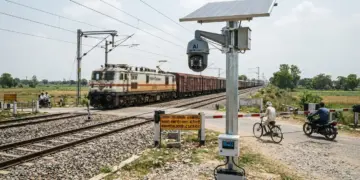






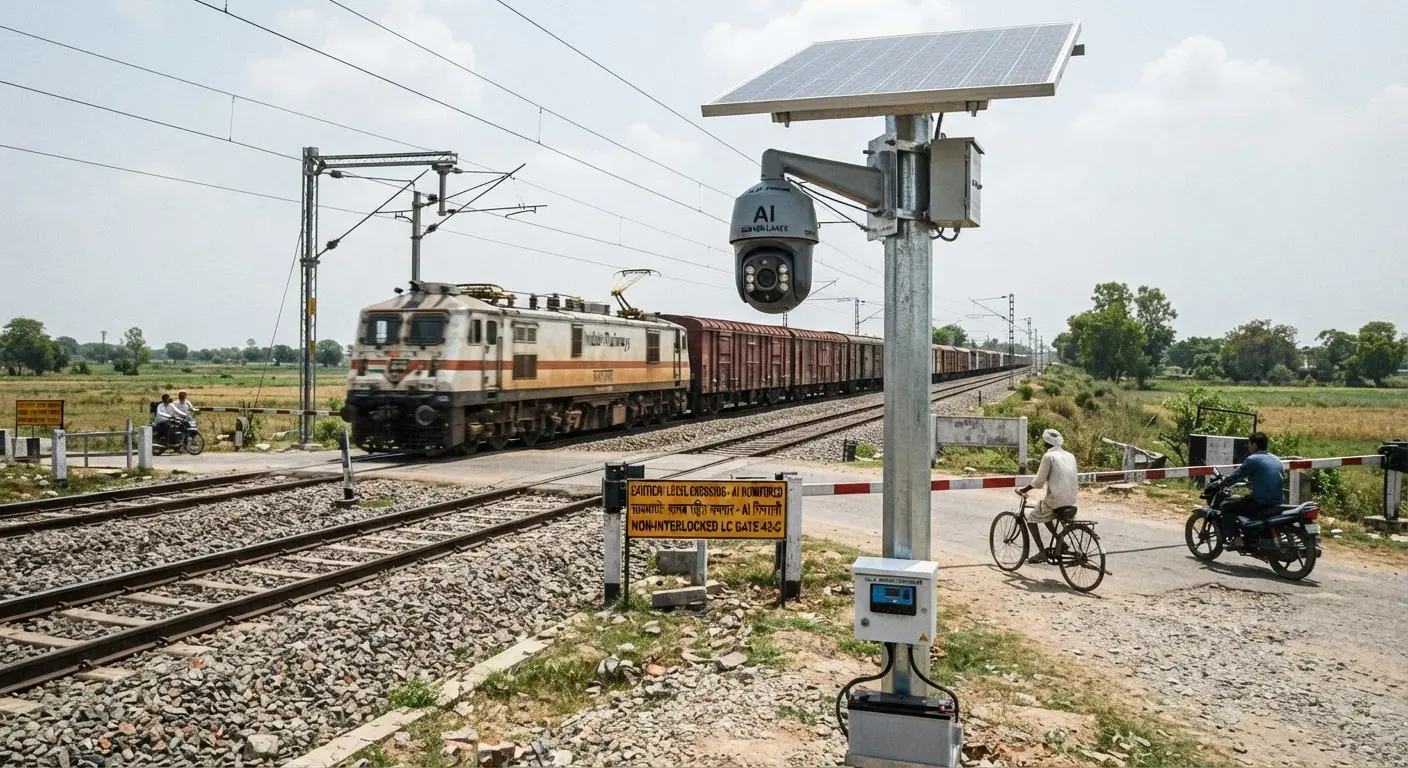

Indian Railways has officially launched a nationwide initiative to bolster safety at non-interlocked level crossings by integrating advanced AI-powered surveillance and solar-backed CCTV systems. This strategic move, directed by the Railway Board, is designed to eliminate the risks associated with manual gatekeeper dependency. By providing real-time visual verification, the national transporter aims to ensure that gate statuses are monitored with precision, even in the most remote corners of the country.
Key highlights of this safety upgrade include:
- AI-driven surveillance to provide real-time visual verification of gate status.
- Solar-powered systems to ensure continuous monitoring in areas without grid connectivity.
- Automated alert mechanisms that notify station masters and engineering control rooms instantly.
- Independent infrastructure that functions separately from primary signaling systems.
Enhancing Operational Safety Protocols
The implementation of this technology marks a significant shift in how Indian Railways manages level crossing safety. Previously, reliance on manual confirmation often posed challenges in high-traffic or isolated sections. With this new system, the AI is specifically programmed to detect if a level crossing gate remains open during a period when it should be closed. If such a discrepancy is detected, the system triggers an immediate alert to station masters and engineering control rooms, allowing for rapid intervention.
Reliability Through Innovation
A standout feature of this deployment is the integration of solar power. By utilizing renewable energy, the cameras remain operational 24/7, regardless of whether the location has access to a consistent power grid. This ensures that the critical coverage remains uninterrupted, providing officials with live video feeds to monitor and prevent potential accidents before they occur. This technological leap is expected to drastically reduce human error and enhance the overall safety record of the Indian Railways network, particularly at non-interlocked crossings where the risk of manual oversight is higher. As the deployment continues, passengers and railway staff can expect a more robust and responsive safety framework across the country.