






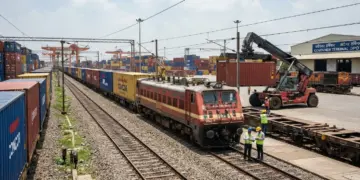
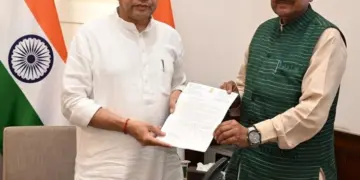


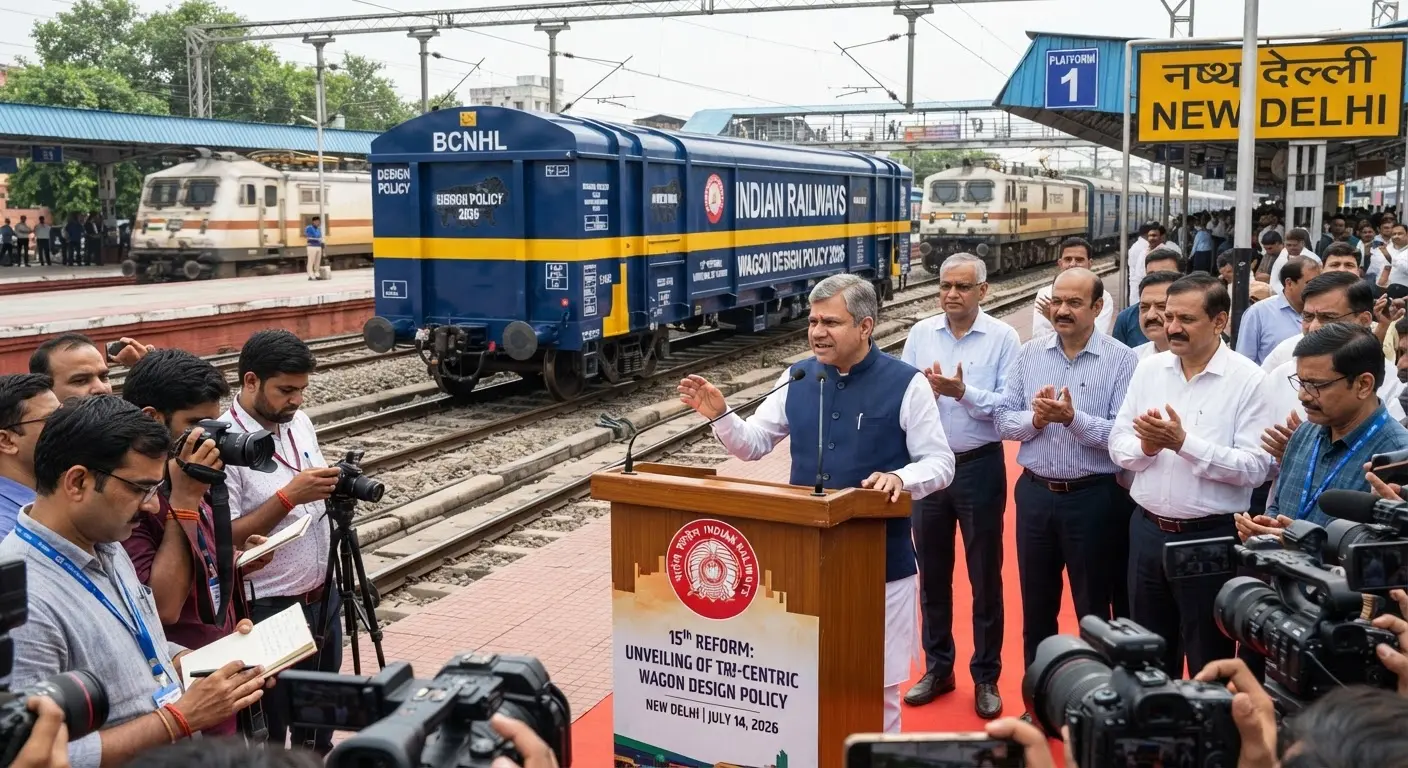

Indian Railways has officially launched its 15th major reform, the new ‘Wagon Design Policy,’ unveiled by Union Railway Minister Ashwini Vaishnaw on July 14, 2026. This landmark policy shifts the control of wagon design from the Research Designs and Standards Organisation (RDSO) to industries, allowing major freight customers to create custom-tailored wagons for their specific operational needs. By moving toward a customer-centric model, the national transporter aims to enhance logistics efficiency, attract new cargo streams, and significantly boost freight volumes across the network.
- Policy Shift: Industries can now propose and design freight wagons tailored to specific commodities like cement, steel coils, salt, and milk.
- Strategic Objective: The move aims to shift freight from road to rail, supporting the ‘Green Railways’ and ‘Green Logistics’ vision.
- Stringent Safety Protocol: A new five-stage approval process ensures that all custom designs meet rigorous safety and regulatory standards.
- Testing Requirements: New designs must undergo 50,000 kilometers of testing over six months to ensure operational reliability.
A New Era for Freight Logistics
The introduction of this policy represents a significant departure from the traditional, centralized design approach. Previously, the RDSO held total control over wagon specifications, which often restricted businesses from optimizing their logistics. With this reform, companies can now design specialized wagons that improve loading and unloading efficiency, thereby making rail transportation a more competitive and attractive option compared to road freight.
The Five-Stage Approval Process
Safety remains the top priority for Indian Railways. To ensure that innovation does not compromise operational integrity, the policy mandates a strict five-stage process for all new wagon designs. This journey begins with the conceptualization phase and submission to the RDSO, followed by in-principle approval. Once the design is cleared, the industry proceeds to detailed design and parallel prototype manufacturing.
After a prototype is built, it undergoes rigorous static and dynamic testing, followed by rake testing conducted by the RDSO. The final hurdle is an inspection by the Chief Commissioner of Railway Safety (CCRS), which leads to the formal sanction from the Railway Board. During the evaluation phase, wagons must undergo comprehensive testing for six months over a distance of 50,000 kilometers. By adhering to the Schedule of Design (SOD), the RDSO and CCRS ensure that every new wagon introduced to the tracks meets the highest quality and safety standards, ultimately strengthening the backbone of India’s logistics sector.