




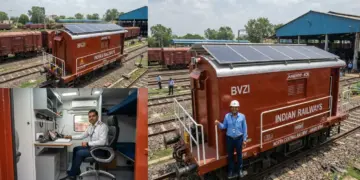




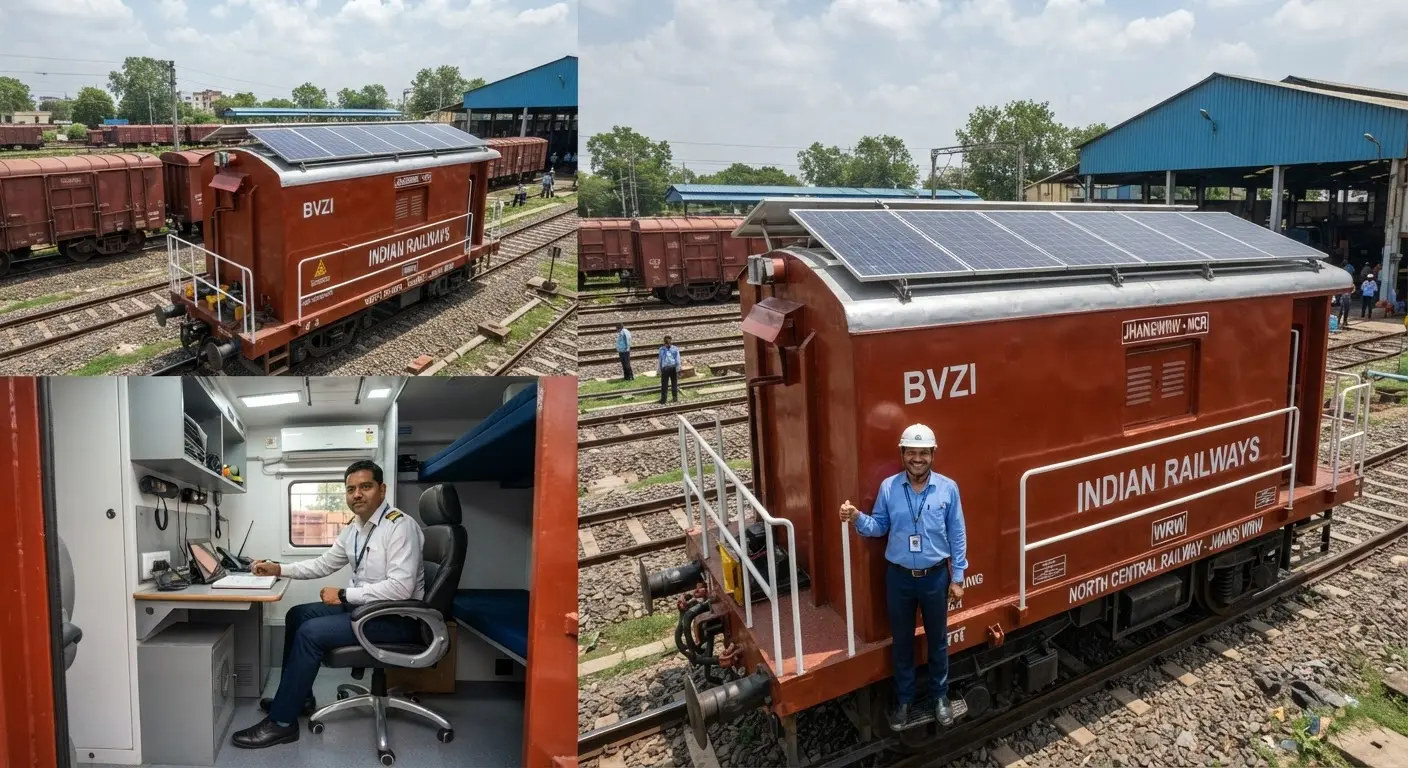

The Indian Railways is set to transform the working conditions for train managers, formerly known as guards, following a successful prototype upgrade of brake vans by the Jhansi Wagon Repair Workshop (WRW). Under the North Central Railway (NCR), this initiative focuses on enhancing both safety and ergonomics within the cabin. Key highlights of the upgrade include:
- Introduction of 360-degree swivel chairs with footrests for improved comfort.
- Integration of rooftop solar panels and lithium ferro phosphate batteries for eco-friendly power.
- Upgraded cabin interiors featuring polyamine epoxy resin flooring and hygienic commodes.
- National rollout approved by the Railway Board on August 6, 2026, for all zonal railways.
A Leap Toward Modernization
Following the successful completion of the first prototype on February 27, 2026, the Railway Board has mandated that all zonal railways incorporate these design improvements during Periodic Overhauling (POH) and Routine Overhauling (ROH). The project, which is being closely monitored by NCR General Manager Naresh Pal Singh, aims to turn standard brake vans into highly functional workspaces that prioritize the well-being of the crew during long-distance operations.
Features and Technical Specifications
The upgraded brake vans are equipped with a sophisticated solar-powered electrical system, utilizing a 12.8V, 110Ah lithium ferro phosphate battery and a Combined Control Unit (CCU). This ensures that lights and fans remain operational without relying on conventional energy sources. Beyond power, the cabins have been redesigned for practicality, including a dedicated stand for walkie-talkies, coat hooks, bottle holders, and door locks that operate with a universal key.
Project Scale and Implementation
With an estimated modification cost of Rs 5 lakh per wagon, the project is moving ahead at a steady pace. Currently, 42 brake vans have already been upgraded to the new design, and a tender for the modification of 400 BVZI and BVCM brake vans is already underway. This initiative aligns with the 2024 directives from the Research Designs & Standards Organisation (RDSO) and the Railway Board, which initially pushed for better seating and lighting infrastructure. NCR Chief Public Relations Officer Shivam Sharma noted that these changes represent a significant shift in how Indian Railways approaches staff operational environments, ensuring that train managers are well-equipped to perform their duties safely and comfortably.