










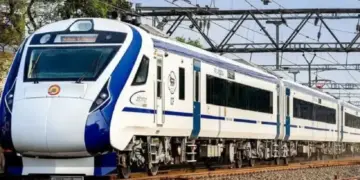



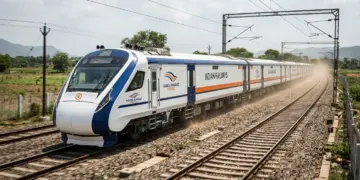
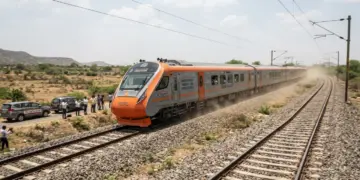



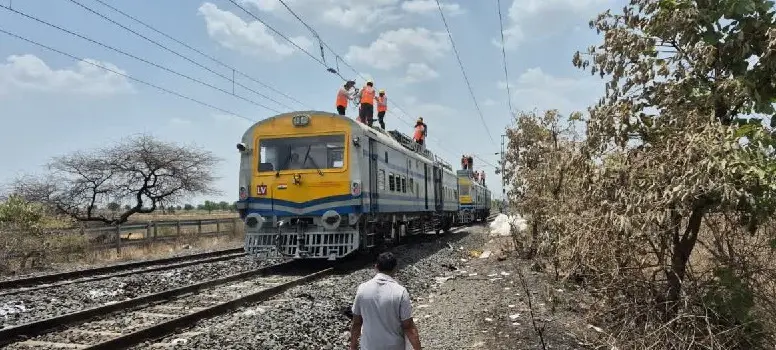

In a major boost to Indian Railways’ ambitious Mission Raftaar, the Kota rail division has successfully readied a 549-kilometer stretch of the Delhi-Mumbai corridor for high-speed operations. This vital segment is now prepared to handle trains running at 160 km/h and features the complete integration of the indigenous Kavach automatic train protection system. This achievement stands as the longest railway track in the country ready for such speeds, with the final compliance report now awaiting inspection and clearance from the Chief Commissioner of Railway Safety (CCRS).
- 549 km of track in Kota division upgraded for 160 km/h operations.
- Full integration of Kavach 4.0 safety system across the section.
- Target to reduce Delhi-Mumbai travel time to 12 hours by early 2027.
- Completion of remaining bridge and crossing works expected by December 2026.
- Modernization of signaling systems via a Rs 4.19 crore project.
Advancing the Delhi-Mumbai Corridor
According to Kota Senior Divisional Commercial Manager Saurabh Jain, the project is a cornerstone of the broader effort to transform the Delhi-Mumbai trunk route. Western Railway officials have confirmed that major civil engineering works are already complete in key sections, including Nagda-Mumbai Central and Vadodara-Ahmedabad. While some minor tasks like bridge repairs in the Virar-Surat section remain, the entire New Delhi-Mumbai route is on track to facilitate 160 km/h operations by March 2027.
Safety and Infrastructure Upgrades
The deployment of Kavach 4.0 remains a top priority. As of June 2026, the safety system is operational on the 122 km route between Vadodara and Mangalwadi. This builds upon the successful testing conducted on the New Delhi-Tughlakabad stretch. In total, approximately 1,258 kilometers of the corridor now benefit from this advanced anti-collision technology. To further enhance reliability, Indian Railways is investing Rs 4.19 crore in fuse auto changeover systems to ensure signaling remains uninterrupted.
Broader Railway Developments
Beyond the high-speed corridor, Indian Railways is pushing forward with other major initiatives. Central Railway is exploring the feasibility of an underground suburban station at Byculla, with Japanese consultancy PADECO conducting technical studies. Meanwhile, passengers can now experience the beta version of the new IRCTC website, which launched on July 15, 2026. Additionally, the Cabinet has greenlit multi-tracking projects in Odisha and Jharkhand, which will add 145 kilometers to the national rail network, further improving capacity and efficiency across the country.