







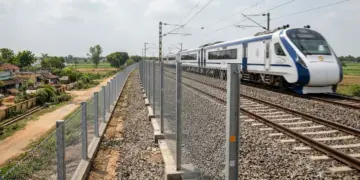

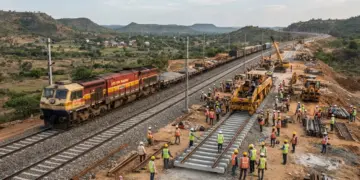
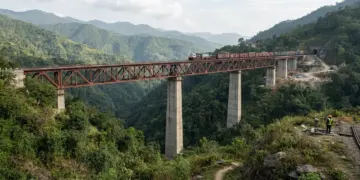

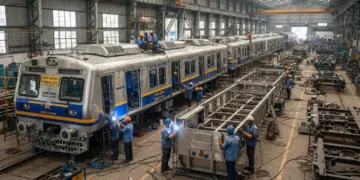


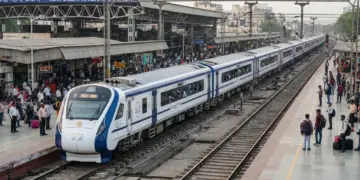

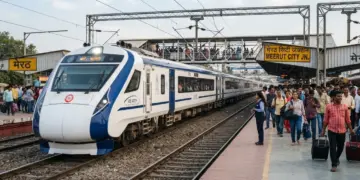
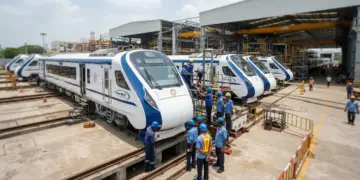
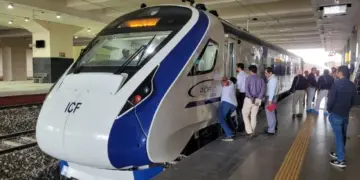
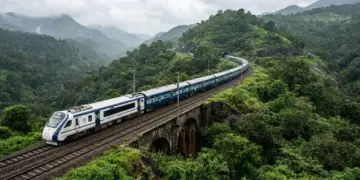
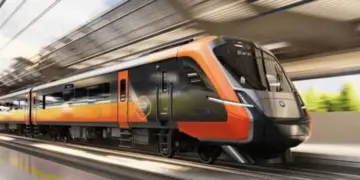
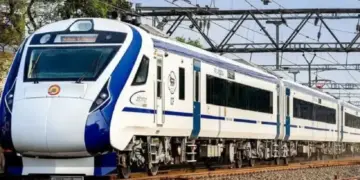





The Ministry of Railways showcased the design of India’s first Bullet Train for the Mumbai-Ahmedabad route in New Delhi on May 18, 2026. This high-speed rail service is designed to modernize travel between the two cities. Along with the design, significant engineering progress has been made in the Mumbai section to ensure the project stays on track.
What are the key highlights of the new Bullet Train design?
The design of the train is modern and aerodynamic, taking inspiration from Japan’s Shinkansen trains. It features a sleek look similar to the front of an airplane with a color scheme of saffron and black stripes. This design is intended to reduce air resistance and allow the train to reach high speeds efficiently.
What is the update on the tunnel construction in Mumbai?
On May 17, 2026, a 350-tonne cutter head of a Tunnel Boring Machine (TBM) was successfully lowered into a shaft in Vikhroli, Mumbai. This machine is critical for building a 21-kilometer tunnel, which includes a 7-kilometer section under the sea at Thane Creek. This will be India’s first underwater rail tunnel.
Technical details of the Tunnel Boring Machine (TBM)
| Feature | Details |
|---|---|
| TBM Diameter | 13.6 Meters |
| TBM Weight | Approximately 3,000 Tonnes |
| Total Tunnel Length | 21 Kilometers |
| Underwater Section | 7 Kilometers (Thane Creek) |
| Route Path | Vikhroli to BKC Station |
Frequently Asked Questions (FAQs)
What is special about the Mumbai Bullet Train tunnel?
The project includes a 21-km tunnel with a 7-km underwater section at Thane Creek, making it India’s first underwater rail tunnel.
Who is managing the construction of the Bullet Train project?
The National High-Speed Rail Corporation Limited (NHSRCL) is responsible for the funding, construction, and management of the corridor.