

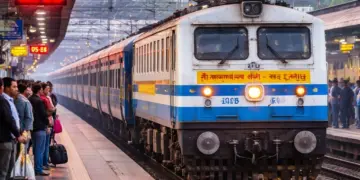



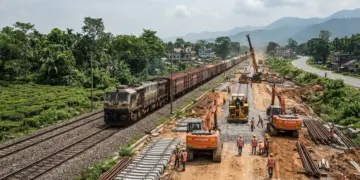




The Union Government has officially greenlit a significant infrastructure project in Punjab, approving a budget of ₹1,419.05 crore for the construction of a new 39.68-kilometer broad-gauge railway line. This ambitious project will connect Qadian in Gurdaspur to Beas in Amritsar, reviving a historical rail link that was first proposed nearly a century ago in 1928-29. The announcement was made by BJP leader and former Union Minister of State for Railways, Ravneet Singh Bittu, who highlighted that the project is set to address long-standing connectivity challenges in the Majha region.
- Total Budget: ₹1,419.05 crore approved for the project.
- Project Scope: A new 39.68-km broad-gauge line connecting Qadian to Beas.
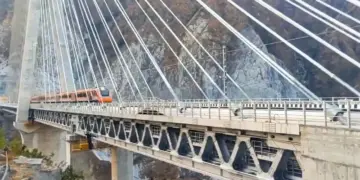
- Infrastructure: Includes 11 major bridges, 121 minor bridges, and 54 road under-bridges.
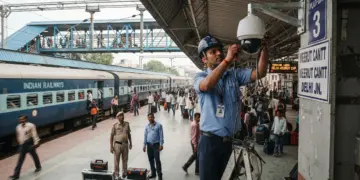
- Safety Integration: The line will be equipped with the indigenous Kavach train collision avoidance system.
- Land Requirement: 166.682 hectares of land will be acquired for the construction.
Connecting Regions and Boosting Regional Growth
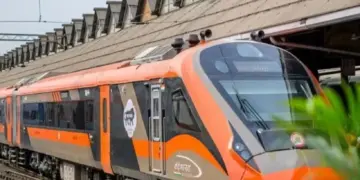
The new rail corridor is designed to traverse critical areas including Dhapai, Ghuman, Butala, and Sathiala. By establishing this link, the Indian Railways aims to provide a massive boost to regional trade, tourism, and industrial potential in Punjab. Beyond local connectivity, the line will serve as a vital alternate corridor for the Amritsar-Pathankot section, which will significantly strengthen the overall resilience and flexibility of the railway network in Northern India.
Modern Infrastructure and Safety Standards
The project is not merely about laying tracks but involves building a modern, safe, and efficient transport network. The inclusion of two crossing stations and extensive bridge work—comprising 11 major and 121 minor bridges—demonstrates the scale of the engineering effort. Furthermore, the commitment to installing the Kavach system ensures that this new route meets the highest safety standards currently being implemented across the national network. As this project moves from the planning phase to execution, it marks the fulfillment of a long-awaited demand for better rail accessibility in the Majha region, turning a nearly 100-year-old vision into a modern reality for commuters and businesses alike.