

















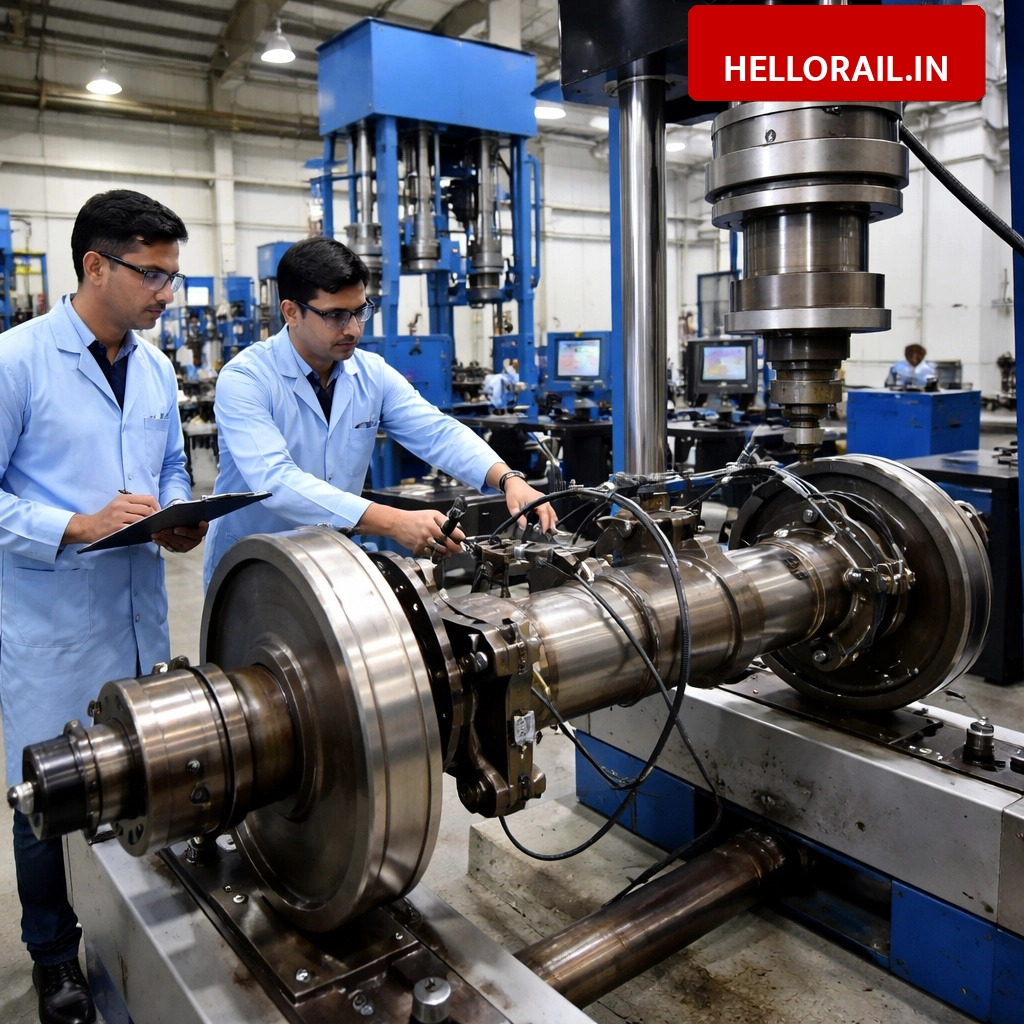

Rail State Minister Ravneet Singh Bittu visited the Fatigue Testing Laboratory at RDSO in Lucknow on July 1, 2026. This world-class facility is designed to test the strength and durability of essential train components. The goal is to make Indian Railways safer and more reliable for all passengers.
👉: Vande Bharat Sleeper: Kinet Railway Solutions to launch first prototype by December 2026।
What does the Fatigue Testing Laboratory do?
The laboratory conducts rigorous tests on critical train parts like springs, side frames, and bogie frames. These parts are subjected to cyclic loads to simulate real-world wear and tear. This process ensures that the components are robust enough to handle long-term use without failing.
How long does the testing process take?
Testing is a detailed and time-consuming process to ensure maximum safety. For example, testing a single bogie can take between eight to nine months to complete. This thorough approach helps in identifying potential weaknesses before the parts are used in actual trains.
Who manages this facility?
The facility is managed by the Research Designs and Standards Organisation (RDSO) in Lucknow. RDSO is the sole R&D arm of Indian Railways. It is responsible for setting the standards, specifications, and testing protocols that maintain the performance excellence of the entire railway network.
Frequently Asked Questions (FAQs)
RDSO की Fatigue Testing Laboratory का मुख्य उद्देश्य क्या है?
इसका मुख्य उद्देश्य ट्रेन के जरूरी पार्ट्स जैसे स्प्रिंग और बोगी फ्रेम की मजबूती की जांच करना है ताकि भविष्य में यात्रा और सुरक्षित हो सके।
एक बोगी की टेस्टिंग में कितना समय लगता है?
एक सिंगल बोगी की पूरी टेस्टिंग प्रक्रिया को पूरा करने में लगभग आठ से नौ महीने का समय लगता है।