






















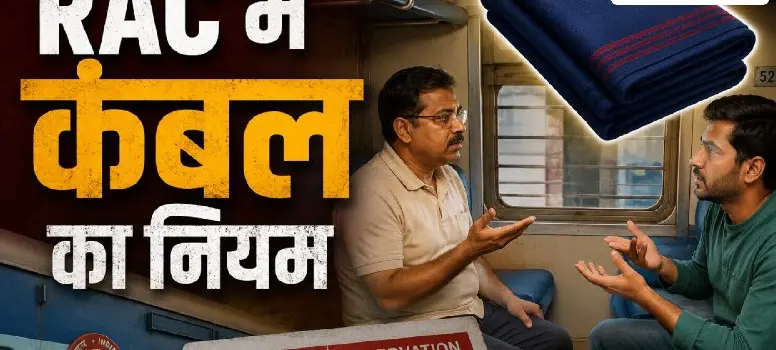

In a significant ruling regarding passenger rights, the Delhi Consumer Dispute Redressal Commission has imposed a penalty of **₹25,000 on Indian Railways** for deficiency in service. The case pertains to an incident where a passenger traveling on a Reservation Against Cancellation (RAC) ticket was forced to share a single blanket with a stranger while traveling from Prayagraj to Delhi on October 28, 2022.
Key details of the ruling include:
- The commission ordered a compensation of ₹20,000 for mental harassment and physical discomfort.
- An additional ₹5,000 was awarded to the complainant for litigation costs.
- The ruling highlights a clear violation of a September 23, 2009, Railway circular which entitles AC class RAC passengers to individual bedrolls.
- The Railways had internally fined their linen contractor only ₹1,000, which the commission deemed insufficient and inadequate.
The Importance of Passenger Rights
The complainant, who had promptly reported the lapse at New Delhi Railway Station and via social media, highlighted the lack of accountability displayed by the national transporter. Although Indian Railways had taken internal action against their service contractor, the commission noted that this was neither communicated to the passenger nor did it provide any form of redress for the discomfort caused during the journey.
Current Rules for Bedroll Provisions
Historically, RAC passengers were not entitled to bedrolls. However, this policy underwent a major shift in 2017 when the Railway Board acknowledged that since RAC passengers pay the same fare as those with confirmed tickets, they are entitled to the same amenities.
Following subsequent updates in December 2023, March 2025, and April 2025, the regulations have been further strengthened. It is now mandatory for the Railways to provide a complete sealed bedroll kit—including two bedsheets, a blanket, a pillow, and a towel—to every individual RAC passenger. This ruling serves as a stern reminder to the authorities that the provision of basic amenities is a right, not a privilege, and that service standards must be maintained uniformly for all passengers, regardless of their ticket status.