

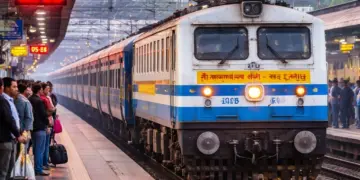


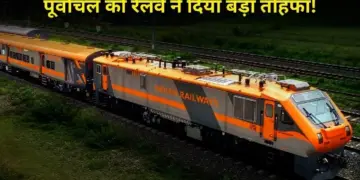


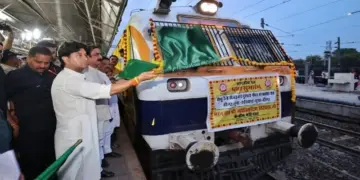
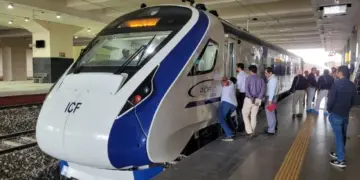
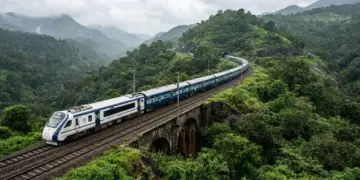
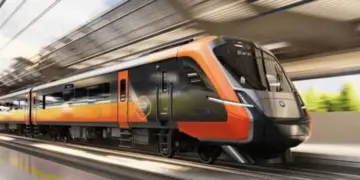
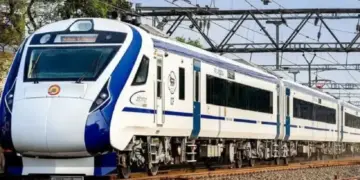


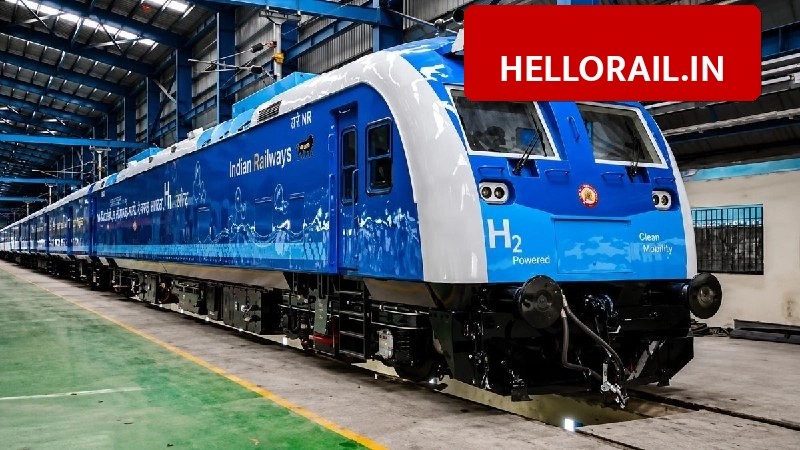

Indian Railways has approved the introduction of the country’s first 10-coach hydrogen-powered trainset. This train will operate on the Jind-Sonipat section of the Northern Railway. The project is part of the Hydrogen for Heritage initiative to reach net-zero carbon emissions by 2030.
What are the technical details of the Hydrogen train?
The train was developed and manufactured by the Integral Coach Factory (ICF) in Chennai. It consists of 10 coaches, including eight passenger coaches and two driving power cars. Each power car has a capacity of 1200 kW, giving the train a total power of 2400 kW. While it can technically reach higher speeds, the Railway Board approved a maximum speed of 75 kmph for the Jind-Sonipat route.
How does the train work and where will it run?
This train does not cause pollution and only releases water vapor into the air. It will run on a 90-kilometer stretch between Jind and Sonipat in Haryana. To support this, a hydrogen production and refueling plant was built at Jind railway junction at a cost of Rs 120 crore. This plant uses electrolysis to produce green hydrogen and has a storage capacity of 3,000 kilograms.
Key Project Specifications
| Feature | Details |
|---|---|
| Route | Jind-Sonipat (Haryana) |
| Total Coaches | 10 (8 Passenger + 2 Power Cars) |
| Total Power | 2400 kW |
| Approved Speed | 75 kmph |
| Emissions | Zero CO2 (Only water vapor) |
| Manufacturing | ICF Chennai |
| Maintenance Site | Shakurbasti |
Frequently Asked Questions (FAQs)
Which route will the first hydrogen train operate on?
The train will operate on the Jind-Sonipat section in Haryana, covering a distance of approximately 90 kilometers.
What is the maximum speed approved for this train?
The Railway Board has approved a maximum operational speed of 75 kmph for the Jind-Sonipat section.