








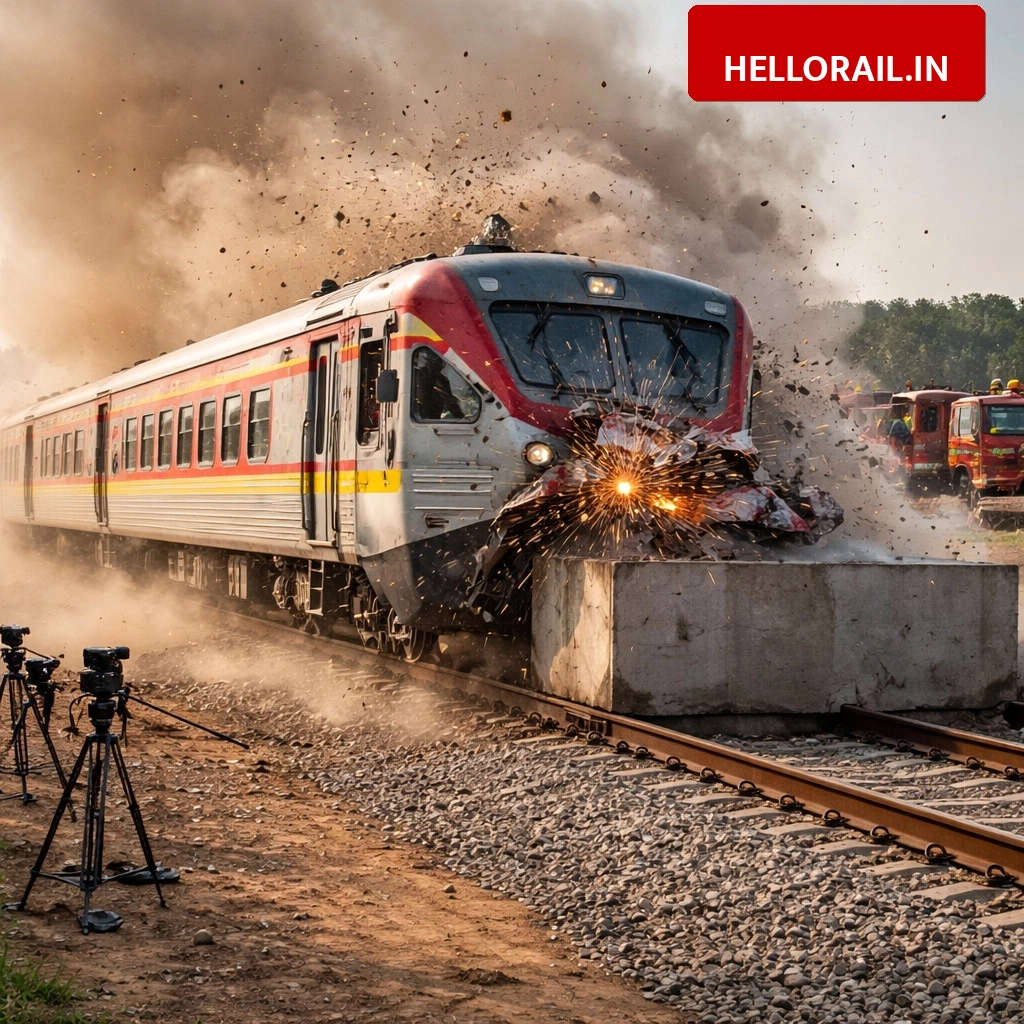

Indian Railways conducted its first full-scale physical crash test of LHB coaches on June 24, 2026. This test took place at the Research Designs and Standards Organisation (RDSO) facility in Lucknow. The process was carried out with the support of the Automotive Research Association of India (ARAI) to check the safety and strength of the coaches.
How was the crash test performed?
For this test, two types of LHB coaches were used, including an LSLRD (Luggage, Guard and Divyangjan) coach and an LWSPP (LHB Wheel Slide Protection Passenger) coach. These coaches were released from a specially designed ramp and crashed into a stationary ballast wagon at a speed of about 43-44 km/h. The entire process followed the international crashworthiness standard EN 15227.
What are the key details of the test?
| Feature | Details |
|---|---|
| Test Date | June 24, 2026 |
| Location | RDSO Facility, Lucknow |
| Collaborating Agency | ARAI, Pune |
| Impact Speed | 43-44 km/h |
| Standard Used | EN 15227 |
| Equipment Used | High-speed cameras and multiple sensors |
Why is this test important for passengers?
The main goal of this test was to get real-world data on how coaches behave during a collision. High-speed cameras and sensors recorded the structural deformation and impact forces. This data will help engineers refine the design of future coaches to make them safer and better at absorbing energy during accidents, which will increase overall passenger safety.
Frequently Asked Questions (FAQs)
यह क्रैश टेस्ट कहाँ और कब किया गया?
यह टेस्ट 24 जून, 2026 को लखनऊ स्थित RDSO की क्रैश टेस्ट सुविधा में ARAI के सहयोग से किया गया।
इस टेस्ट में किन कोचों का इस्तेमाल हुआ और रफ्तार क्या थी?
इसमें LSLRD और LWSPP कोच का इस्तेमाल किया गया, जिन्हें लगभग 43-44 किमी/घंटा की रफ्तार से एक स्थिर वैगन से टकराया गया।